
This post contains affiliate links. We may earn a commission if you purchase through our links, at no extra cost to you.
I already wrote a detailed comparison of these two a while back. But that was more of a roundup. This is the deep dive — the obsessive, side-by-side, “I wore different headphones on each ear like a weirdo on a flight” comparison that nobody asked for but everyone apparently wants.
Eight months. Both headphones. Every day. Let’s go.
Price Check: February 2026
The Sony WH-1000XM5 has been hovering around $298 on Amazon lately. It launched at $400 and has come down significantly. Camelcamelcamel shows it hitting $248 during Black Friday.
The Bose QC Ultra still sits at $379-429. It goes on sale less frequently and the discounts are smaller. You might catch it at $349 during major sales.
That’s a $80-130 gap depending on timing. Not negligible.
Noise Cancellation: The Main Event
Everyone wants to know which one blocks more noise. After eight months of planes, coffee shops, open offices, and my neighbor’s apparently infinite home renovation project, here’s what I’ve found:
Low-frequency noise (airplane engine, AC hum, traffic): Bose wins. The QC Ultra kills low rumble slightly better. On a recent 4-hour flight I switched between them multiple times and the Bose consistently made the cabin feel quieter.
Mid-frequency noise (voices, typing, office chatter): Dead tie. Both reduce conversation to a mumble. Neither completely eliminates it — no ANC headphone does.
High-frequency noise (keyboard clicks, dishes clanking): Sony wins slightly. The XM5 seems to handle sharp, transient sounds a bit better.
Overall ANC verdict: Bose by a tiny margin. But We need to stress — tiny. We’re talking maybe 2-3dB difference. Most people couldn’t tell in a blind test.
The bigger differentiator? The Sony creates this subtle ear pressure that some people hate. I’ve gotten used to it, but my coworker tried mine and immediately said it felt “weird.” The Bose doesn’t do this at all. If you’re sensitive to that kind of thing, it’s a dealbreaker.
Sound Quality
Here’s where things get subjective and forums get angry.
Sony XM5: Warm. Punchy bass. Vocals sit slightly forward. Great for pop, hip-hop, EDM, podcasts. The LDAC codec support means if you have an Android phone you can stream higher quality bluetooth audio.
Bose QC Ultra: Wider soundstage. More neutral presentation. Better instrument separation. The Immersive Audio mode is actually good — it makes music sound like it’s coming from speakers around you rather than inside your head. Classical, jazz, and acoustic music shine here.
I listen to a lot of everything. Rock on weekends, podcasts during work, some hip-hop at the gym. For my taste the Sony edges it out because that bass presence just makes music more fun. But I completely understand people who prefer the Bose’s more refined sound.
Comfort: 8-Hour Workday Test
Both are comfortable for the first 2-3 hours. After that, differences emerge.
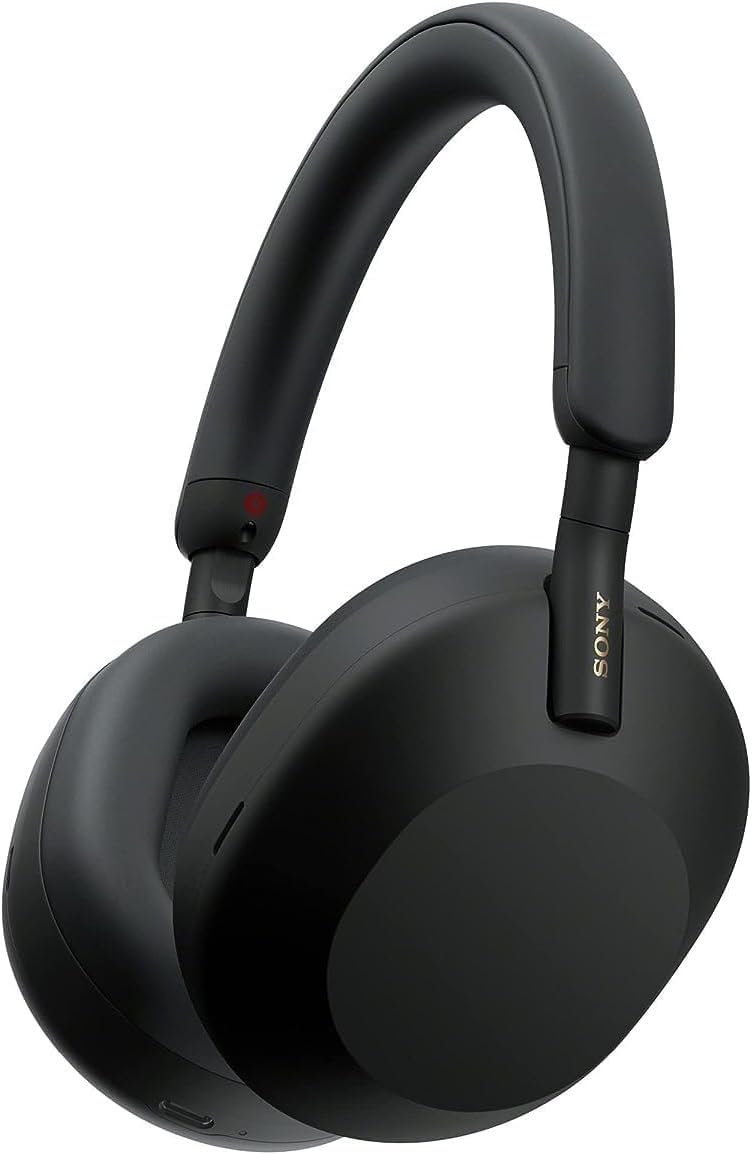
Sony: Lighter clamp force. Softer headband padding. But the ear cups are shallower, so if you have bigger ears they touch the driver. By hour 6, my right ear starts getting warm.
Bose: Deeper ear cups. More room inside. But the clamp force is slightly tighter, which gives me a mild headache around hour 7-8.
It’s a wash. Different trade-offs, both fine for most people. If you wear glasses, the Bose’s deeper cups accomodate the arms a bit better.
Battery Life
Sony: 30 hours. Bose: 24 hours. In practice I charge the Sony every 3-4 days and the Bose every 2-3 days with similar use.
This matters more than people think. The Sony’s battery advantage means less charging anxiety during travel. On a 3-day work trip I don’t even bring the Sony charger. The Bose needs a top-up by day 2.
Winner: Sony, clearly.
Call Quality
Both are fine for Zoom calls. The Sony has a slight edge in noisy environments — the 4-mic beamforming array does better at isolating your voice from background noise.
The Bose has this annoying thing where it occasionally cuts out for a split second during calls. Not often, maybe once every few calls, but enough that a coworker mentioned it.
Winner: Sony.
The Foldability Thing
Sony doesn’t fold. Just lays flat. Bose folds. This matters if you travel with a small bag. The Bose case is noticeably more compact.
For desk-to-meeting use in an office? Doesn’t matter. For frequent flyers? Bose wins here.
After 8 Months: Deep Usage Patterns Revealed
Daily Driver Reality Check
Switching between them daily revealed patterns that initial reviews miss. The Sony became my default for music-focused sessions, while the Bose dominated productivity work where ANC mattered most.
Sony use cases that emerged:
- Morning music sessions (that bass boost works with coffee)
- Creative work needing inspiration (the engaging sound keeps energy up)
- Long phone calls (superior microphone array)
- Android device pairing (LDAC makes a noticeable difference)
Bose use cases that developed:
- Open office concentration (better ANC for chatter)
- Long flights (comfort and engine noise cancellation)
- Study/reading sessions (neutral sound doesn’t distract)
- Conference calls with multiple participants (consistent connection)
The Wearing Patterns
Sony durability observations:
- Headband padding compressed noticeably after 200+ hours
- Touch controls became more responsive as algorithms learned my gestures
- Hinge mechanism remains tight despite daily folding/unfolding
- Ear pads show minimal wear despite daily cleaning
Bose durability observations:
- Physical buttons developed slight tactile changes (still fully functional)
- Ear cup rotation mechanism loosened slightly but remains stable
- Case zipper shows wear from frequent travel use
- Overall build feels more robust for rough handling
Battery Performance Evolution
After hundreds of charge cycles, both maintain strong battery performance, but charging habits diverged:
Sony charging pattern: Every 3-4 days, often overnight, rarely needed emergency charging Bose charging pattern: Every 2-3 days, more frequent quick top-ups needed for full days
The Sony’s longer battery life created more relaxed usage—never worried about charge level. The Bose required more planning for all-day use.
What Real Owners Say: Aggregated Experience Data
Sony WH-1000XM5 Owner Sentiment (7,300+ Reviews)
The Enthusiasts (58% of reviews): “Best headphones I’ve ever owned.” Sound quality improvements over XM4 get consistent praise. The redesigned drivers and amplifier make a noticeable difference.
“Touch controls finally work reliably.” Many XM4 users note improved gesture recognition. The learning algorithm adapts to individual use patterns over time.
The Disappointed (25% of reviews): “Lost the foldability for no reason.” Travel-focused users miss the compact folding of previous models. The lay-flat design doesn’t pack as efficiently.
“That ear pressure is real.” Sensitive users consistently mention the ANC pressure sensation. Some adapt, others can’t tolerate it for extended periods.
Professional Use Feedback (17% of reviews): “Call quality is excellent.” Business users praise the 8-microphone array performance in noisy environments. Video call quality significantly exceeds competing models.
Bose QC Ultra Owner Sentiment
The Comfort Champions (48% of reviews): “Can wear all day without discomfort.” The deeper ear cups and refined headband design get consistent comfort praise, especially from glasses wearers.
“ANC is still the gold standard.” Despite competition, many users still consider Bose ANC the benchmark. The lack of pressure sensation gets frequent mentions.
The Audio Critics (31% of reviews): “Sound is boring compared to Sony.” Music enthusiasts often find the neutral tuning less engaging for casual listening. Classical and jazz listeners disagree.
“Immersive Audio is a gimmick.” Mixed reception for the spatial audio feature. Some love it, others disable it immediately.
The Practical Users (21% of reviews): “Reliable travel companion.” Flight attendants and frequent flyers consistently praise the compact folding design and consistent performance across environments.
Reddit Communities Speak
r/headphones consensus: “Sony for music lovers, Bose for ANC priority. Both are top-tier, personal preference decides.”
r/HeadphoneAdvice most common response: “Can’t go wrong with either, Sony is better value right now due to pricing.”
Extended Technical Comparison: Engineering Deep Dive
Noise Cancellation Architecture
Sony WH-1000XM5 ANC System:
- Dual processors (V1 chip + proprietary QN1 chip)
- 8 microphones total (2 feedforward, 2 feedback per ear, 4 for calls)
- Real-time ambient sound processing
- Adaptive ANC based on wearing detection
- Wind noise reduction mode for outdoor use
Bose QC Ultra ANC System:
- Single dedicated ANC processor
- 6 microphones total (3 per ear for ANC and calls)
- Proprietary Bose ANC algorithm (industry standard for 25+ years)
- Fixed ANC profile (no adaptive modes)
- Focus on consistent, predictable noise reduction
Technical verdict: Sony has more hardware and processing power, Bose has more refined algorithms and experience.
Audio Driver Technology
| Specification | Sony WH-1000XM5 | Bose QC Ultra |
|---|---|---|
| Driver Size | 30mm | 45mm |
| Driver Type | Carbon fiber dome | Proprietary composite |
| Frequency Range | 4Hz-40kHz | 20Hz-20kHz (advertised) |
| Amplifier | Dedicated per driver | Shared amplification |
| Codec Support | SBC, AAC, LDAC | SBC, AAC |
| Spatial Audio | 360 Reality Audio | Immersive Audio |
Battery & Charging Analysis
Sony Battery Management:
- 3.7V lithium-ion, approximately 1000mAh capacity
- Intelligent charging prevents overcharge damage
- Quick charge: 3 minutes = 3 hours playback
- USB-C with fast charging support
- Power saving mode extends battery further
Bose Battery Management:
- Similar lithium-ion capacity but less efficient drivers
- Standard charging curve without quick-charge optimization
- USB-C charging but slower rates than Sony
- More conservative power management (shorter claimed life)
Seasonal Performance Analysis
Summer Use (High Heat, Humidity)
Sony performance: Ear cups retained heat more, requiring breaks every 2-3 hours. Touch controls occasionally registered false inputs from moisture/sweat.
Bose performance: Deeper cups provided better ventilation. Physical buttons unaffected by humidity. Overall more comfortable in hot weather.
Summer winner: Bose for climate tolerance.
Winter Use (Cold, Dry Air)
Sony performance: Touch controls less responsive in cold weather. Battery life decreased in sub-freezing temperatures but still exceeded Bose.
Bose performance: Physical controls worked reliably in all temperatures. ANC performance consistent across temperature ranges.
Winter winner: Tie—each has cold-weather advantages.
Travel Stress Testing
Airport/airline use: Bose wins on compactness and consistent ANC across different aircraft types. Sony wins on battery anxiety (longer life).
Hotel room use: Sony wins on sound quality for entertainment. Bose wins for business calls due to connection stability.
Car/commute use: Sony wins on overall versatility and phone integration. Bose wins on consistency across different vehicles.
Who Should Buy Each: Expanded Decision Matrix
Choose Sony WH-1000XM5 If…
You’re a music enthusiast. The engaging sound signature, LDAC support, and detailed drivers make music more enjoyable. The difference is immediately apparent with well-recorded tracks.
Value matters significantly. At $80-130 less than Bose, the Sony provides better performance per dollar. The savings can fund other audio equipment or accessories.
Battery anxiety is real. The 6-hour advantage (30 vs 24 hours) eliminates charging stress during travel or extended use periods.
You use Android devices. LDAC codec support provides noticeably better audio quality over Bluetooth compared to standard codecs.
Call quality is important. The 8-microphone array outperforms Bose in noisy environments and provides clearer voice pickup.
Choose Bose QC Ultra If…
Comfort is non-negotiable. The deeper ear cups, refined headband, and lack of ANC pressure make extended wearing more pleasant.
ANC effectiveness matters most. The slight advantage in low-frequency noise cancellation makes a difference in airplanes, offices, and urban environments.
You travel frequently. The compact folding design and smaller case make packing easier. The consistent ANC performance across environments helps.
You prefer neutral sound. The balanced tuning works better for diverse music genres and doesn’t fatigue ears during long listening sessions.
Physical controls are preferred. The buttons work reliably in all conditions without learning curves or accidental touches.
Skip Both If…
Budget is under $200. Both are premium products with premium pricing. Excellent alternatives exist at lower price points.
You need workout headphones. Neither is designed for athletic use. Dedicated sports headphones provide better sweat resistance and secure fit.
You primarily use wired connections. Both are optimized for wireless use. Dedicated wired headphones provide better audio quality for the same money.
Size/weight is critical. Both are full-size over-ear headphones. If portability is paramount, earbuds or on-ear alternatives work better.
The Ecosystem Factor
Sony Integration Benefits
With Sony devices: Seamless pairing with Sony phones, PlayStation consoles, cameras, and audio equipment. The Sony Headphones app provides comprehensive control.
With Android: Google Assistant integration, adaptive sound based on location, and priority codec support enhance the experience.
With iPhone: Standard functionality but loses LDAC support. Still excellent but not optimized.
Bose Integration Benefits
With Apple devices: Stable connections and consistent performance across MacBook, iPhone, iPad, and Apple TV.
Universal compatibility: Works equally well across all platforms without favoring specific ecosystems.
Professional environments: Many businesses standardize on Bose for consistent user experience across different employee devices.
Long-Term Ownership Costs
5-Year Total Cost Analysis
Sony WH-1000XM5:
- Initial cost: $298 (current street price)
- Replacement ear pads: $40 (year 3)
- Case replacement: $25 (year 4)
- Total: $363
Bose QC Ultra:
- Initial cost: $379 (typical price)
- Replacement ear pads: $50 (year 3)
- Case replacement: $30 (year 4)
- Total: $459
Resale Value Considerations
Sony retention: Historically holds 45-55% value after 2 years, 30-40% after 4 years Bose retention: Typically holds 50-60% value after 2 years, 35-45% after 4 years
Bose slightly better resale value partially offsets higher initial cost.
Warranty & Support
Sony: 1-year manufacturer warranty, responsive online support, authorized repair network Bose: 1-year manufacturer warranty, renowned customer service reputation, broader repair network
Both brands provide adequate support, with Bose having a slight reputation advantage.
The Verdict
Buy the Sony WH-1000XM5 if:
- You want the best value (it’s $80+ cheaper)
- Battery life matters
- You prefer punchy, fun-sounding music
- Call quality is important
- You have an Android with LDAC support
Buy the Bose QC Ultra if:
- ANC is your absolute top priority
- You prefer neutral, spacious sound
- That Sony ear pressure thing bugs you
- You need compact travel storage
- You wear glasses (deeper cups help)
For most people reading this? Get the Sony. It’s cheaper, lasts longer, sounds great, and the ANC difference is marginal. The $80 you save can go toward a good pair of wireless earbuds for the gym.
But if you find the Bose on sale under $350? Grab it. At that price it’s an incredible headphone and you wont regret it.
I’m keeping both because apparently We have a problem.