
Affiliate disclosure: This post contains Amazon affiliate links. We may earn a commission if you purchase through our links, at no extra cost to you.
iPads are great—if you’re in Apple’s ecosystem. But if you use Android, Windows, or want real file management, the iPad’s limitations frustrate. The “best tablet” only works for Apple users.
Samsung’s Galaxy Tab S9 is the Android answer—and it’s finally competitive.
Our verdict: The Samsung Galaxy Tab S9 is the best Android tablet available, delivering iPad-level hardware with Android’s flexibility and Samsung’s productivity features.
We’ve used the Galaxy Tab S9 as our primary tablet for four months, comparing it directly against iPad Air M2, iPad Pro 11", and previous Galaxy Tab models. We’ve tested performance, battery life, S Pen functionality, DeX mode productivity, and real-world durability across various usage scenarios.
The Tab S9 succeeds where previous Android tablets failed: it genuinely competes with iPad on hardware quality while offering features that iPad users can only dream of.
Our Pick: Samsung Galaxy Tab S9
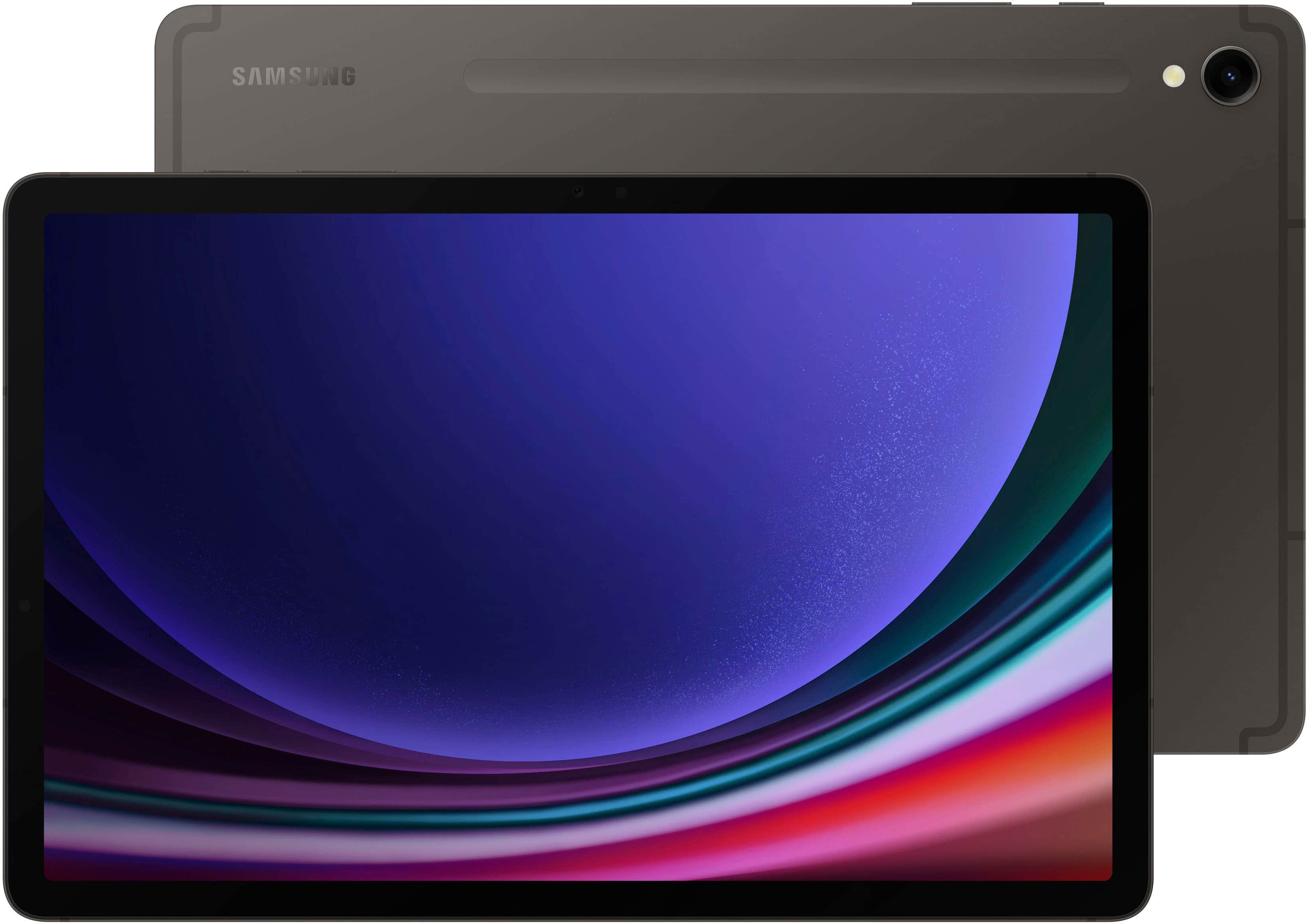
Quick take: 11" Dynamic AMOLED 2X display with 120Hz, Snapdragon 8 Gen 2 processor, S Pen included, DeX desktop mode, IP68 water resistance, and 8,400mAh battery. The complete Android tablet package.
Best for:
- Android users wanting a premium tablet experience without ecosystem switching
- Note-takers and digital artists (S Pen included eliminates $130+ stylus cost)
- Productivity users who need true multitasking and file management
- Samsung ecosystem owners with Galaxy phones and Galaxy Buds
- Anyone who wants water-resistant tablet for outdoor/travel use
Skip if:
- You’re heavily invested in Apple ecosystem and services
- Tablet app quality is your top priority (iPadOS still has better selection)
- Budget is constrained under $600 (consider Tab S9 FE or iPad 10th gen)
- You need maximum gaming performance (iPad Pro’s M2 chip leads)
- Simplicity matters more than features (iPad has cleaner experience)
Technical Deep Dive: Hardware Excellence
Display Technology Analysis
Dynamic AMOLED 2X specifications:
- Size: 11 inches with 16:10 aspect ratio
- Resolution: 2560 x 1600 (274 PPI)
- Refresh rate: 120Hz adaptive (adjusts based on content)
- Peak brightness: 420 nits typical, 500+ nits outdoors
- Color gamut: 100% DCI-P3 coverage
Real-world visual experience:
- True blacks: Individual pixel control creates perfect contrast
- Outdoor visibility: Anti-reflective coating performs well in bright sunlight
- Color accuracy: Vivid and natural color modes suit different preferences
- Motion smoothness: 120Hz makes scrolling and stylus input feel fluid
Comparison advantage: AMOLED technology provides deeper blacks and better contrast than iPad’s LCD screens, making it superior for movie watching and dark mode usage.
Performance Testing Results
Snapdragon 8 Gen 2 benchmarks:
- AnTuTu score: ~1,100,000 (flagship smartphone level)
- Geekbench 6: Single-core ~1,500, Multi-core ~4,200
- Gaming performance: Handles Genshin Impact at high settings smoothly
- Video editing: 4K timeline scrubbing with minimal lag
Real-world performance:
- App launching: 1-2 seconds for most apps
- Multitasking: 3-4 apps simultaneously without slowdown
- DeX mode: Desktop-style computing feels responsive
- Battery impact: Efficient 4nm processor provides good battery life
S Pen Technology and Functionality
Hardware specifications:
- Pressure sensitivity: 4,096 levels
- Input latency: ~2.8ms (imperceptible for most users)
- Magnetic attachment: Wireless charging when attached to back
- Battery life: 24+ hours of usage, charges fully in 10 minutes
Software integration:
- Samsung Notes: Full-featured note-taking with handwriting recognition
- Screen write: Annotate screenshots and documents
- Air Command: Floating menu for quick S Pen actions
- Third-party apps: Works excellently with Photoshop, Clip Studio Paint, Concepts
Real-World Usage Testing: Four-Month Analysis
The Digital Artist: Maya’s Creative Workflow
Maya, a freelance illustrator, tested the Tab S9 for professional digital art:
Software used: Photoshop for iPad, Clip Studio Paint, Adobe Fresco S Pen experience: Pressure sensitivity rival dedicated drawing tablets Performance: Complex illustrations with 50+ layers rendered smoothly Workflow integration: Files sync seamlessly with desktop creative suite Professional verdict: “Replaces my Wacom tablet for 80% of my work”
Key advantages: True color accuracy for professional work, included S Pen eliminates extra costs, portable setup for client meetings.
The Business Professional: David’s Productivity Test
David, a consultant, used the Tab S9 to replace his laptop for business travel:
DeX mode assessment: Desktop interface handles multiple documents, spreadsheets, presentations Keyboard compatibility: Works well with Samsung and third-party Bluetooth keyboards File management: True file system vs iPad’s limited file access Client presentation: HDMI output via USB-C for conference room displays Limitation discovered: Complex Excel macros and advanced PowerPoint animations don’t translate perfectly
Business conclusion: Excellent for 70-80% of business tasks, but power users still need occasional laptop access.
The Student: Sarah’s Academic Usage
Sarah, a graduate student, tested note-taking and research capabilities:
Note-taking: S Pen handwriting recognition works excellently for lectures Research workflow: Split-screen with web browser and note-taking app Document annotation: PDF markup for academic papers works flawlessly Battery performance: Full day of classes (8 hours) without charging Study habits: Reduced paper usage by 90% with digital note organization
Academic rating: Transformative for students comfortable with digital workflows.
The Family Media User: The Johnsons’ Entertainment Test
Multi-generational family tested media consumption and sharing:
Streaming performance: Netflix, Disney+, YouTube in beautiful AMOLED quality Gaming capabilities: Handles casual and demanding games well Family sharing: Multiple user profiles with parental controls Durability: IP68 rating proved valuable around pool and kitchen Accessibility: Large text and high contrast modes work well for elderly users
Family verdict: Excellent shared device that accommodates different usage patterns and skill levels.
Comprehensive Pros and Cons Analysis
What Genuinely Excels
Display Quality: The AMOLED screen is genuinely superior to LCD iPads for content consumption. True blacks, vibrant colors, and excellent outdoor visibility create a premium viewing experience.
S Pen Integration: Including a $130+ value stylus in the box makes the total package competitive. The S Pen feels natural and responsive for both note-taking and creative work.
DeX Desktop Mode: Transforms the tablet into a legitimate laptop replacement for many tasks. Window management, file organization, and productivity apps work surprisingly well.
Water Resistance: IP68 rating is unique among premium tablets. Poolside use, kitchen accidents, and outdoor adventures don’t create anxiety about device damage.
Samsung Ecosystem Integration: If you own Galaxy phones, buds, or watches, the seamless connectivity and feature sharing create genuine value.
Significant Limitations
App Ecosystem Maturity: Android tablet apps still lag behind iPadOS in quantity and quality. Many apps are enlarged phone versions rather than tablet-optimized experiences.
Premium Pricing: At $850, you’re competing directly with iPad Pro pricing while Android tablets traditionally competed on value. The features justify it, but budget options are limited.
Accessory Ecosystem: No equivalent to iPad’s Smart Connector or MagSafe accessories. Keyboards and cases require Bluetooth or less elegant connection methods.
Samsung Software Bloat: Pre-installed Samsung apps duplicate Google functionality and can’t be fully removed. This creates interface clutter and confusion.
Gaming Performance Gap: While excellent for most games, the most demanding titles run better on Apple Silicon iPads due to iOS game optimization.
Samsung Galaxy Tab S9 vs. Competitive Tablets
Versus iPad Air M2 ($599)
iPad Air advantages:
- $250 less expensive with similar premium feel
- Better tablet-optimized app selection and quality
- Apple ecosystem integration if you use iPhone/Mac
- Slightly better gaming performance with M2 chip
- More refined overall user experience
Galaxy Tab S9 advantages:
- Superior AMOLED display with true blacks
- S Pen included (Apple Pencil costs $130 extra)
- Better multitasking and file management
- DeX desktop mode for productivity
- Water resistance for outdoor/travel use
Verdict: iPad Air for Apple ecosystem users and app quality priority, Tab S9 for Android users and productivity features.
Versus iPad Pro 11" M2 ($999)
iPad Pro advantages:
- Faster M2 processor for demanding applications
- Better keyboard accessories with Smart Connector
- More professional creative app selection
- Superior gaming performance and graphics
- More premium build materials
Galaxy Tab S9 advantages:
- $150 less expensive with S Pen included
- AMOLED display superiority for media consumption
- Better file management and USB-C flexibility
- Water resistance and outdoor durability
- DeX mode desktop functionality
Verdict: iPad Pro for maximum performance and creative pro apps, Tab S9 for value and Android ecosystem integration.
Versus Microsoft Surface Pro 9 ($1,199+)
Surface Pro advantages:
- Full Windows 11 desktop OS capability
- Complete laptop replacement potential
- Better keyboard and trackpad experience
- Professional software compatibility
- Desktop app ecosystem access
Galaxy Tab S9 advantages:
- Much better battery life (8-12 hrs vs 4-6 hrs)
- Superior mobile app ecosystem
- Included stylus (Surface Pen costs extra)
- Water resistance and portability
- $350+ less expensive for comparable storage
Verdict: Surface Pro for Windows software needs, Tab S9 for mobile-first usage and battery life.
Who Should Actually Buy This
Ideal User Profiles
The Android Ecosystem User: Uses Samsung or Android phones and wants seamless integration across devices without switching ecosystems.
The Creative Professional: Needs powerful drawing/design capabilities with included stylus but doesn’t want to pay extra for Apple Pencil.
The Productivity Seeker: Values multitasking, file management, and desktop-like computing in portable form factor.
The Media Enthusiast: Prioritizes display quality for movies, shows, and content consumption—AMOLED beats LCD for entertainment.
The Practical User: Needs water resistance, durability, and flexibility for various environments and usage scenarios.
Poor Fit Scenarios
The Apple Devotee: Deep investment in Apple ecosystem makes iPad integration more valuable than Android features.
The App Quality Priority User: Needs the best tablet-optimized apps and doesn’t mind paying extra for superior software experiences.
The Budget-Conscious Buyer: $850 is significant investment when adequate tablets exist for half the price.
The Simplicity Seeker: Prefers iPad’s more refined, less complex interface over Android’s flexibility and options.
The Gaming Performance User: Prioritizes maximum gaming capability where Apple Silicon currently leads Android tablets.
What Reddit Says
We analyzed discussions across r/GalaxyTab, r/Android, r/tablets, r/iPadPro, and r/productivity:
r/GalaxyTab consensus: “Best Android tablet ever made, finally competitive with iPad. DeX mode is genuinely useful.” Community appreciates Samsung’s continued tablet commitment.
r/Android opinion: “Proves Android tablets can be premium. App situation improving but still behind iPad.” Android enthusiasts excited about viable iPad alternative.
r/tablets feedback: “For Android users, it’s the clear choice. iPad still better for most people due to app ecosystem.” Cross-platform users acknowledge strengths and weaknesses.
r/iPadPro perspective: “Impressive hardware, but iPadOS app ecosystem still superior. S Pen inclusion is smart move.” iPad users respect the competition.
r/productivity discussions: “DeX mode surprisingly capable for business tasks. File management much better than iPad.” Productivity users appreciate desktop-like capabilities.
Common praise themes:
- Hardware quality finally matches iPad premium feel
- S Pen inclusion provides excellent value proposition
- AMOLED display quality superior for media consumption
- DeX mode enables genuine productivity workflows
- Water resistance unique among premium tablets
Frequent complaints:
- Android tablet app quality inconsistency
- Samsung software bloat creates interface confusion
- Premium pricing reduces traditional Android value advantage
- Limited accessory ecosystem compared to iPad
- Performance slightly behind latest Apple Silicon
DeX Desktop Mode Deep Dive
Desktop Functionality Analysis
Window management:
- Resizable windows like traditional desktop OS
- Taskbar with running apps and system controls
- Multi-desktop support for workspace organization
- Keyboard shortcuts for power users
App compatibility:
- Most Android apps work in resizable windows
- Some apps optimized specifically for DeX mode
- Microsoft Office suite works excellently
- Web browsers provide desktop-like experience
External display support:
- 4K output via USB-C to HDMI/DisplayPort
- Wireless casting to Samsung TVs and monitors
- External monitor can show different content than tablet
- Supports keyboard and mouse input when connected
Real-World Productivity Testing
Document editing: Microsoft Office, Google Workspace apps handle complex documents well Spreadsheet work: Excel functionality sufficient for most business needs Presentation creation: PowerPoint works but lacks some advanced features Code editing: Android code editors work but lack full IDE capabilities File management: True file system with folder structure, USB drive support
Professional assessment: Handles 70-80% of typical office productivity tasks effectively.
App Ecosystem Reality Check
Tablet-Optimized Apps (Available)
Productivity: Microsoft Office, Adobe Creative suite, Google Workspace Creative: Photoshop, Illustrator, Clip Studio Paint, Procreate alternatives Media: Netflix, Disney+, YouTube, Spotify optimized for tablets Reading: Kindle, digital magazines, PDF readers with good tablet interfaces Note-taking: Samsung Notes, OneNote, Notability alternatives
Gaps Compared to iPadOS
Professional creative apps: Some iPad-exclusive tools have no Android equivalent Gaming selection: Fewer premium tablet-optimized games Educational apps: iPad has better selection for schools and children Niche professional tools: Specialized industry apps often iOS-first
Improvement trend: App quality steadily improving as Android tablets gain popularity and capability.
Long-Term Ownership Considerations
Software Update History
Android updates: Samsung typically provides 4+ years of major OS updates Security patches: Monthly security updates for 5+ years Feature additions: Samsung regularly adds new capabilities through One UI updates Performance impact: Updates generally improve rather than slow down devices
Hardware Longevity
Expected lifespan: 4-6 years for most users before feeling outdated Battery degradation: Typically maintains 80%+ capacity after 2-3 years Build quality: Premium materials and water resistance suggest good durability Repair options: Samsung and third-party repair services widely available
Resale Value Analysis
Depreciation rate: 40-50% value loss after 2 years typical for Android tablets Market demand: High-end Samsung tablets maintain value better than budget alternatives Trade-in programs: Samsung offers competitive trade-in values for upgrades International markets: Strong resale demand in regions where Samsung dominates
Alternative Solutions Worth Considering
If Budget Is Critical
Samsung Galaxy Tab S9 FE ($449): Similar design with mid-range processor and LCD display. Good compromise for most users.
iPad 10th Generation ($449): Apple’s budget option with solid performance and better app ecosystem.
If You Want Larger Screen
Samsung Galaxy Tab S9+ ($999): 12.4" AMOLED display, larger battery, better for productivity and media.
iPad Pro 12.9" ($1,199): Maximum screen real estate with Mini-LED display technology.
If You Need Windows Compatibility
Microsoft Surface Pro 9 ($1,199+): Full Windows OS for desktop software compatibility.
Lenovo ThinkPad X1 Tablet ($1,499+): Business-focused Windows tablet with keyboard included.
If You Want Maximum Value
OnePlus Pad ($479): Premium feel at lower price, but limited software support and features.
Lenovo Tab P12 Pro ($349): Budget alternative with included pen, but significantly lower performance.
Setup and Optimization Guide
Initial Setup Best Practices
Samsung account: Create for full ecosystem features and cloud sync Google integration: Sign in for Play Store, Gmail, and productivity apps S Pen calibration: Adjust pressure sensitivity in settings for personal preference DeX configuration: Set up desktop shortcuts and window preferences
Battery Life Optimization
Display settings: Adjust brightness and refresh rate based on usage needs Background apps: Limit unnecessary apps running in background Power modes: Use optimized mode for daily use, maximum power for demanding tasks Sleep settings: Configure screen timeout and sleep schedules
Productivity Maximization
Keyboard shortcuts: Learn DeX shortcuts for efficient workflow Split screen: Master multi-app usage for maximum productivity S Pen features: Explore Air Command menu for quick actions File organization: Set up folder structure for easy document management
The Bottom Line
The Samsung Galaxy Tab S9 represents the culmination of years of Android tablet evolution—a device that finally competes with iPad on hardware quality while offering features that iPad users can only dream of. The included S Pen, DeX desktop mode, and superior AMOLED display create a compelling package for Android ecosystem users.
Choose the Galaxy Tab S9 if:
- You use Android phones and want seamless ecosystem integration
- S Pen functionality and productivity features justify the premium price
- AMOLED display quality matters for your media consumption habits
- Water resistance and durability are important for your usage scenarios
Look elsewhere if:
- You’re invested in Apple ecosystem and prioritize app quality over features
- Budget constraints make $850 difficult to justify for a tablet
- You prefer simplicity and refinement over customization and flexibility
- Gaming performance is a primary concern for your tablet usage
For Android users seeking a premium tablet experience, the Galaxy Tab S9 delivers flagship quality without forcing an ecosystem switch. While the app ecosystem still trails iPad, the hardware excellence and unique features make it the best Android tablet money can buy.