Affiliate disclosure: This post contains Amazon affiliate links. We may earn a commission if you purchase through our links, at no extra cost to you.
Your home lighting is stuck in 1990. On or off. Harsh or dim. No ambiance, no automation, no way to control lights without walking to switches.
Smart lighting changes everything—if it actually works reliably. Most budget options don’t.
Our verdict: Philips Hue remains the gold standard in smart lighting, delivering unmatched reliability and ecosystem depth. The premium price buys you lights that actually work when you need them.
Our Pick: Philips Hue Starter Kit
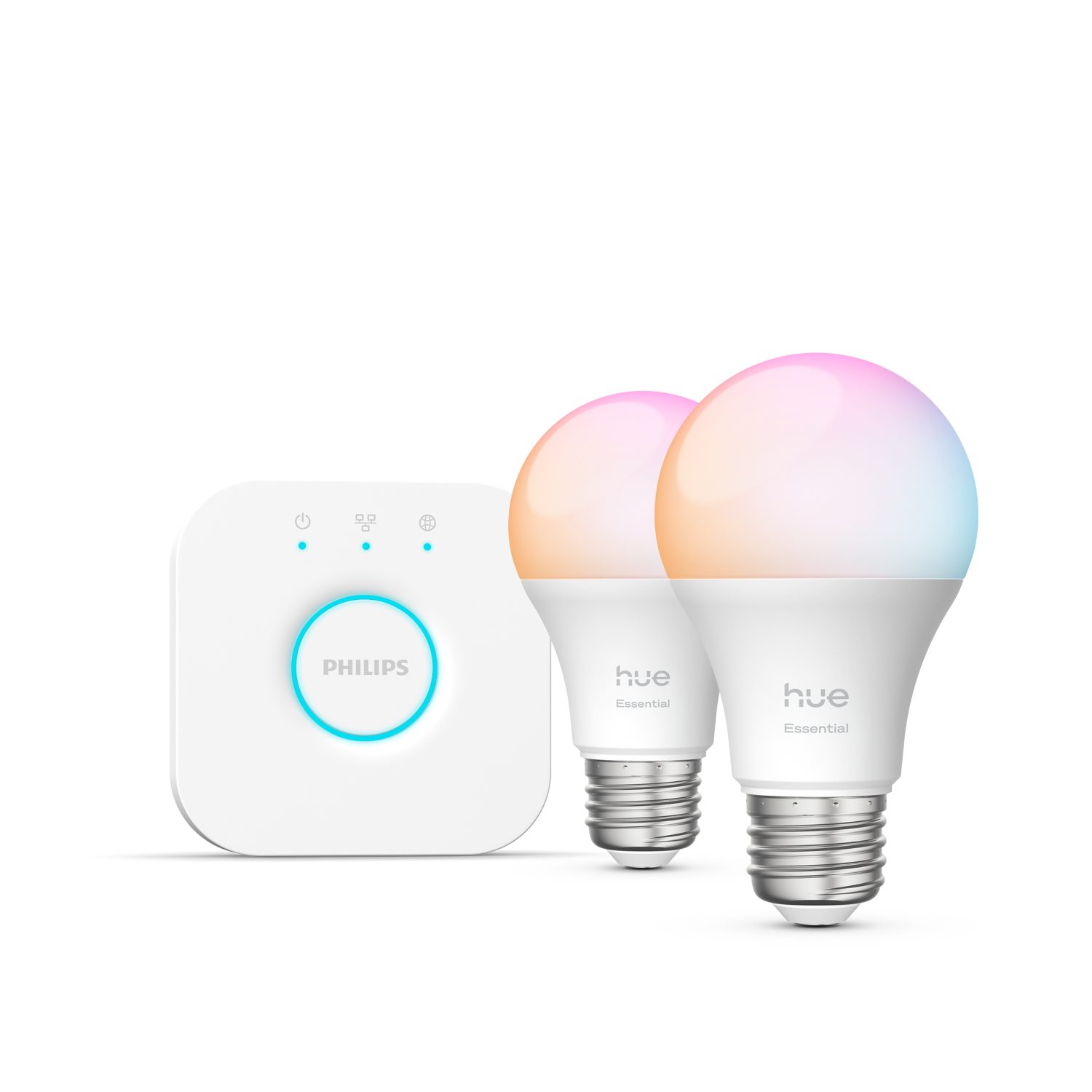
Quick take: Three color-capable bulbs, Hue Bridge, and optional dimmer switch. 16 million colors, warm-to-cool white, and rock-solid reliability that budget bulbs can’t match.
Best for:
- Smart home enthusiasts building ecosystems
- Anyone frustrated by unreliable budget bulbs
- Renters wanting upgradeable lighting
- HomeKit, Alexa, and Google Home users
Skip if:
- You just want basic smart bulbs (cheaper options exist)
- Hub-based systems frustrate you
- Budget is primary concern
Why Hue Remains King
Reliability That Budget Bulbs Lack
Hue bulbs connect through the Zigbee protocol via the Bridge—not WiFi. This means:
- No dropped connections when your router restarts
- Lights respond instantly, not with a 2-second delay
- Your WiFi network isn’t congested with 20 smart bulbs
One reviewer captured it: “I’ve used tons of imitators and they’re all lacking in brightness, color quality, or connectivity. Hue still is the market leader.”
16 Million Colors Done Right
Budget bulbs claim 16 million colors but deliver muddy approximations. Hue’s color accuracy is noticeably better—especially in greens, oranges, and pastels that cheap bulbs can’t reproduce.
The Ecosystem Effect
Hue integrates with everything:
- Apple HomeKit
- Amazon Alexa
- Google Home
- Samsung SmartThings
- IFTTT
- Hundreds of third-party apps
Build automations across platforms. Sync lights to music, movies, and games. The possibilities expand over time.
The Honest Downsides
The App Is Overly Complex
Users consistently complain the Hue app is “overcomplicated” with occasional connectivity bugs. Setup can involve frustrating trial-and-error.
The Bridge Requires Ethernet
The Hue Bridge must connect to your router via ethernet cable—no wireless option. This adds to the cable mess behind your router.
Premium Pricing Per Bulb
After the starter kit, individual bulbs run $50+ each. Building out a whole home gets expensive fast.
No Dimmer Compatibility
If bulbs are on conventional dimmer switches, they’ll flash on and off. You’ll need Hue dimmer switches or smart wall switches.
Who Should Buy Philips Hue
Perfect for you if:
- Reliability is non-negotiable
- You’re building a smart home ecosystem
- Color accuracy matters
- You’ll expand over time
Consider alternatives if:
- Budget is primary concern (Wyze, Sengled)
- You want no-hub simplicity (LIFX)
- You only need a couple bulbs
The Bottom Line
Philips Hue costs more because it works better. After years of budget bulbs dropping connections and responding slowly, Hue’s reliability feels like magic.
The ecosystem depth means your investment grows over time. Pay the premium now; enjoy it for years.