
We spent years making fun of sous vide people.
“You need a special machine to boil water?” I’d say. Very clever. Very original. My buddy got one for Christmas a few years back and I gave him crap about it for months. Seemed like the ultimate kitchen gadget for people with more money than common sense — cook a steak for 2 hours in a plastic bag instead of 10 minutes on a grill? Please.
Then We tried his steak.
Perfectly medium-rare from edge to edge. No grey band. No guessing. Just… exactly what a steak should be. He could’ve cooked it blindfolded and gotten the same result.
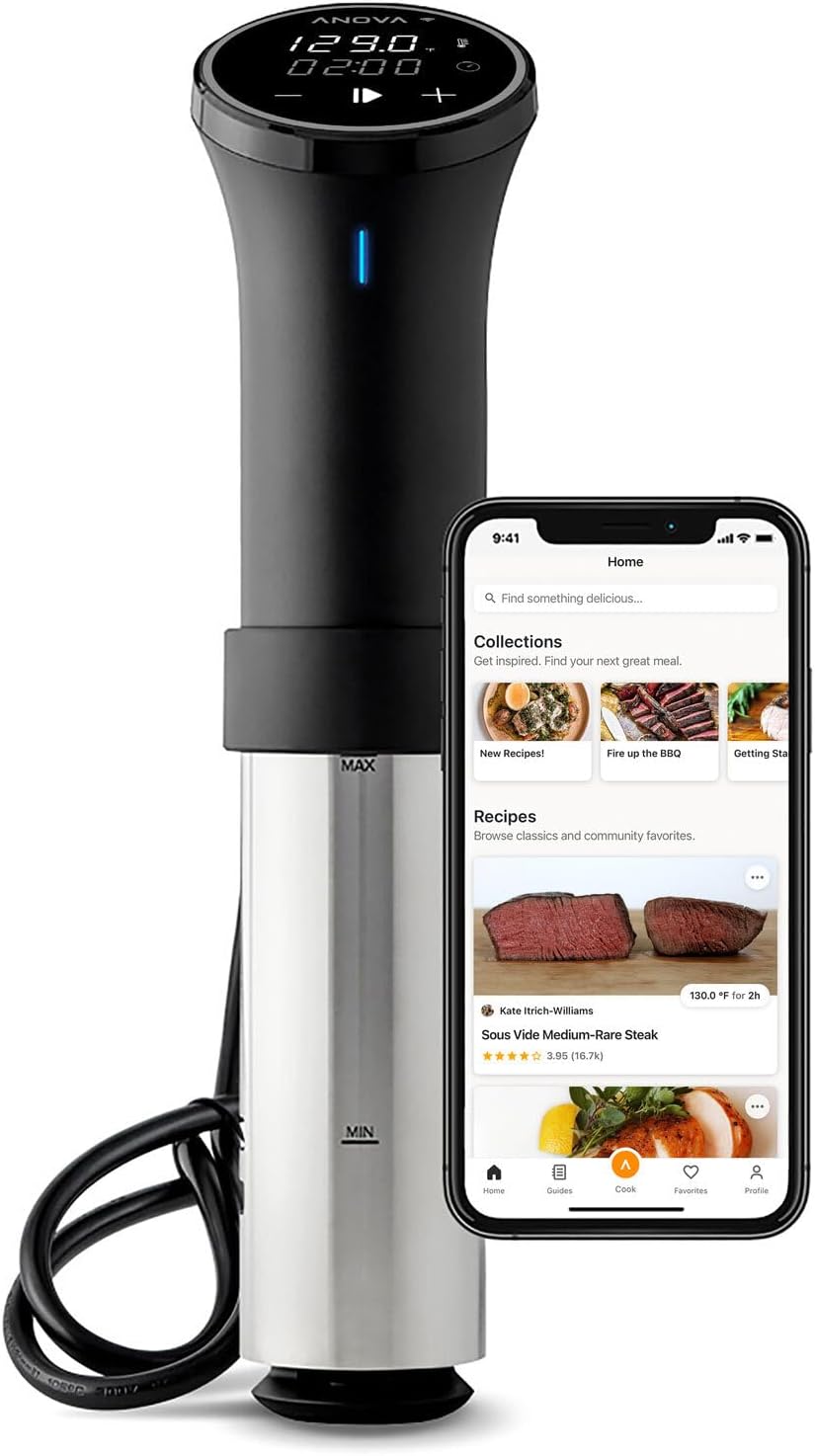
We bought an Anova Precision Cooker the following week. That was six months ago. I’ve used it probably 50+ times since then, and I’m here to admit I was wrong.
Sous vide isn’t about being fancy. It’s about being lazy and still getting perfect results.
The way it works is stupidly simple. You clip this stick thing to the side of a pot, fill it with water, set a temperature, and drop your food in (sealed in a bag). The circulator keeps the water at exactly that temperature — like, down to the degree — for however long you want.
The food can’t overcook because it physically cannot exceed the water temperature. Set it to 130°F and walk away for 3 hours. Come back and your steak is exactly 130°F all the way through. Sear it for 60 seconds per side and you’re eating.
That predictability is the whole point. We used to think precision cooking was for food nerds who cared about decimal points. But really it’s for people who don’t want to babysit their food or risk screwing up a $30 piece of meat.
My wife does batch cooking on Sundays. She throws 4-5 chicken breasts in the sous vide, sets it to 148°F for 90 minutes, then shreds them for the week’s meals. Every single breast comes out moist and consistent. No thermometer poking. No wondering if the thick one is done while the thin one dries out.
That’s the killer app right there. Set it, forget it, results every time.
So which one should you actually buy? After reading way too many Amazon reviews and testing my buddy’s Joule, here’s my take.
The Anova Precision Cooker 3.0 runs about $119 and does everything most people need. 1100 watts heats water reasonably fast. WiFi works for starting cooks remotely (I’ve used this maybe twice). The app is free for basic temp/time control — don’t bother with the premium version, just Google recipes instead.
The physical controls on the unit are intuitive enough. Twist the dial to set temperature, push to start. My parents could figure it out without an app which matters if you’re gifting one.

The Breville Joule Turbo costs around $250 and is genuinely better — but double the price for maybe 15% better performance. It’s smaller (easier to store), heats faster (1110 watts with their “turbo” mode), and the app is really well designed with visual guides for doneness.
The catch? No physical controls at all. Hundred percent app-dependent. If your phone dies or you cant find it, you’re staring at an expensive metal stick you can’t use. That tradeoff isn’t worth it for us.
My recommendation for most people: get the Anova. Spend the $130 you saved on good meat instead.
Common complaints I’ve seen in Amazon reviews — and whether they matter:
“The app is buggy / requires premium” — Partially true. The free app does exactly what you need: set temp, set timer, start/stop. The premium stuff with recipes and visual guides is nice but not necessary. I’ve never paid for it. One reviewer wrote that the free portion is “very basic” but honestly, how hard is it to type in numbers for temp and time? Hit Google for recipes.
“It’s loud” — Nah. The circulation pump makes a quiet hum. My dishwasher is louder. Someone on the reviews said their dog got scared of it but that seems like a dog problem not a sous vide problem.
“The clip isn’t stable” — Fair criticism. The clamp on the Anova works fine on most pots but can be finicky with certain shapes. We use my Le Creuset dutch oven and it holds solid. If you’re using a weird container, might need to fiddle with it.
“You still need to sear after” — Yes, you do. Sous vide alone leaves meat looking pale and unappetizing. A 60-second sear in a screaming hot cast iron fixes that. If you hate the idea of an extra step, sous vide might not be for you. But the sear takes literally one minute.
“Food comes out of plastic bags” — I mean… yes? You seal the food in bags. Some people use dedicated vacuum sealers, but regular freezer ziplock bags work fine for most cooks. We use the Kirkland freezer bags from Costco. No issues.
What I actually cook with it now:
Steaks. Obviously. Medium-rare at 130°F for 1-2 hours, then sear. Restaurant quality every time. I’ve converted multiple friends just by feeding them steaks at my house.
Chicken breasts. 148°F for 90 minutes. Cannot overcook. The texture is noticeably better than oven-baked.
Pork tenderloin. 140°F for 2 hours. Stays pink and juicy instead of turning into shoe leather like it does in my oven.
Eggs. 167°F for 12 minutes gets you perfect soft-boiled consistency. This is genuinely useful if you’re meal prepping or making ramen.
Burgers. Sound weird but they come out incredibly juicy. 137°F for an hour, then sear hard.
Things I wouldn’t bother with: fish (works but doesn’t gain much over pan cooking), vegetables (just roast them), anything you want crispy. The sous vide is best for things that benefit from precise temperature control and long cook times.
One thing nobody mentions — starting with hot tap water speeds everything up significantly. Cold water takes forever to heat. I fill my pot with the hottest water from the tap and the Anova gets to temperature in like 10 minutes instead of 25.
Also, you don’t need fancy containers. A regular stock pot works perfectly. We know people sell dedicated sous vide containers with lids and racks but that’s overkill for home use. A pot you already own and some chip clips to hold the bags in place. Done.
The biggest revelation for us was realizing how forgiving sous vide is. Unlike grilling where 2 minutes can be the difference between medium and well-done, sous vide has huge timing windows. A steak at 130°F is perfect at 1 hour and still perfect at 3 hours. You’re not racing against the clock.
That’s why it’s actually perfect for lazy people. Not food snobs. Lazy people who don’t want to hover over their stove or stress about timing.
Six months ago I thought sous vide was pretentious garbage.
Now We use it 2-3 times a week and I’m genuinely annoyed when I travel because hotel steak is never as good as what I make at home. Which is probably the most obnoxious thing I’ve ever typed but its true.
If you cook meat regularly and want consistently good results with minimal effort, get the Anova Precision Cooker. If money is no object and you want the absolute best, get the Breville Joule Turbo.
But honestly? The Anova at $119 is the sweet spot. Spend the difference on ribeyes.
Frequently Asked Questions
Do We need a vacuum sealer? No. Freezer ziplock bags work fine for 90% of cooks. Just use the water displacement method — slowly lower the bag into water and the pressure pushes the air out. Close the seal right before submerging completely.
How long do cooks actually take? Depends on thickness and desired doneness. A 1-inch steak takes 1-2 hours. Chicken breast 1-1.5 hours. Pork tenderloin 2 hours. The timing is very forgiving though — an extra hour usually doesn’t hurt.
Is it safe to cook in plastic bags? At sous vide temperatures (typically under 185°F), food-grade bags don’t release harmful chemicals. This has been studied extensively. Use bags labeled freezer-safe or meant for cooking and you’re fine.
Can I leave it running overnight? Yes, for long cooks like tough beef cuts (36-72 hours). The device is designed for extended operation. Just make sure you have enough water — cover the pot to minimize evaporation.
What container should We use? A large stock pot or dutch oven you already own. No need for specialized containers unless you’re doing very long cooks where evaporation matters.