
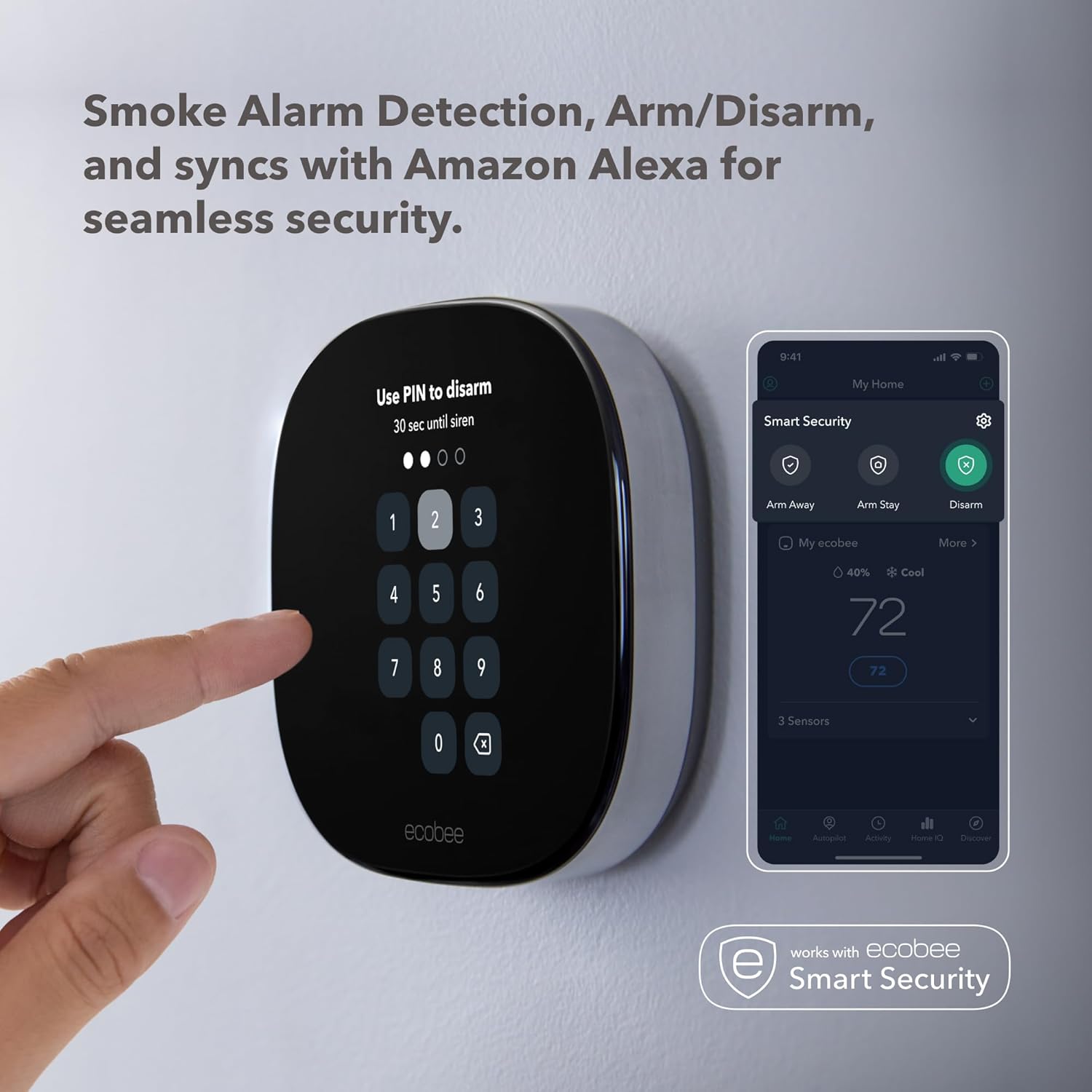
I was one of those people who thought smart thermostats were a scam.
“Just turn your thermostat down when you leave the house” I’d say to anyone who’d listen. “You don’t need a $250 gadget to do what a Post-it note reminder can do for free.”
Three months later, I’m writing a blog post about smart thermostats.
What changed? My January electricity bill came in $47 lower than January last year. Same house. Same winter. Colder, actually — we had that weird cold snap around the 15th. The only difference was the Ecobee I installed in November.
We hate being wrong. But I really hate overpaying for heating.
Here’s what I didn’t understand about smart thermostats: they’re not just programmable thermostats with WiFi.
The good ones — and I stress good ones, because there’s plenty of garbage out there — actually learn when you’re home, adjust based on humidity, and make micro-changes throughout the day that a human would never bother with.
My old thermostat had a schedule. 68° when I’m awake, 62° when I’m sleeping, 58° when I’m at work. Seemed reasonable.
But it couldn’t know that I left early on Tuesdays. Or that I worked from home randomly. Or that my upstairs runs 4 degrees warmer than the main floor so the system was constantly overcooling downstairs trying to get the bedroom comfortable.
The Ecobee figured all of that out in about two weeks.
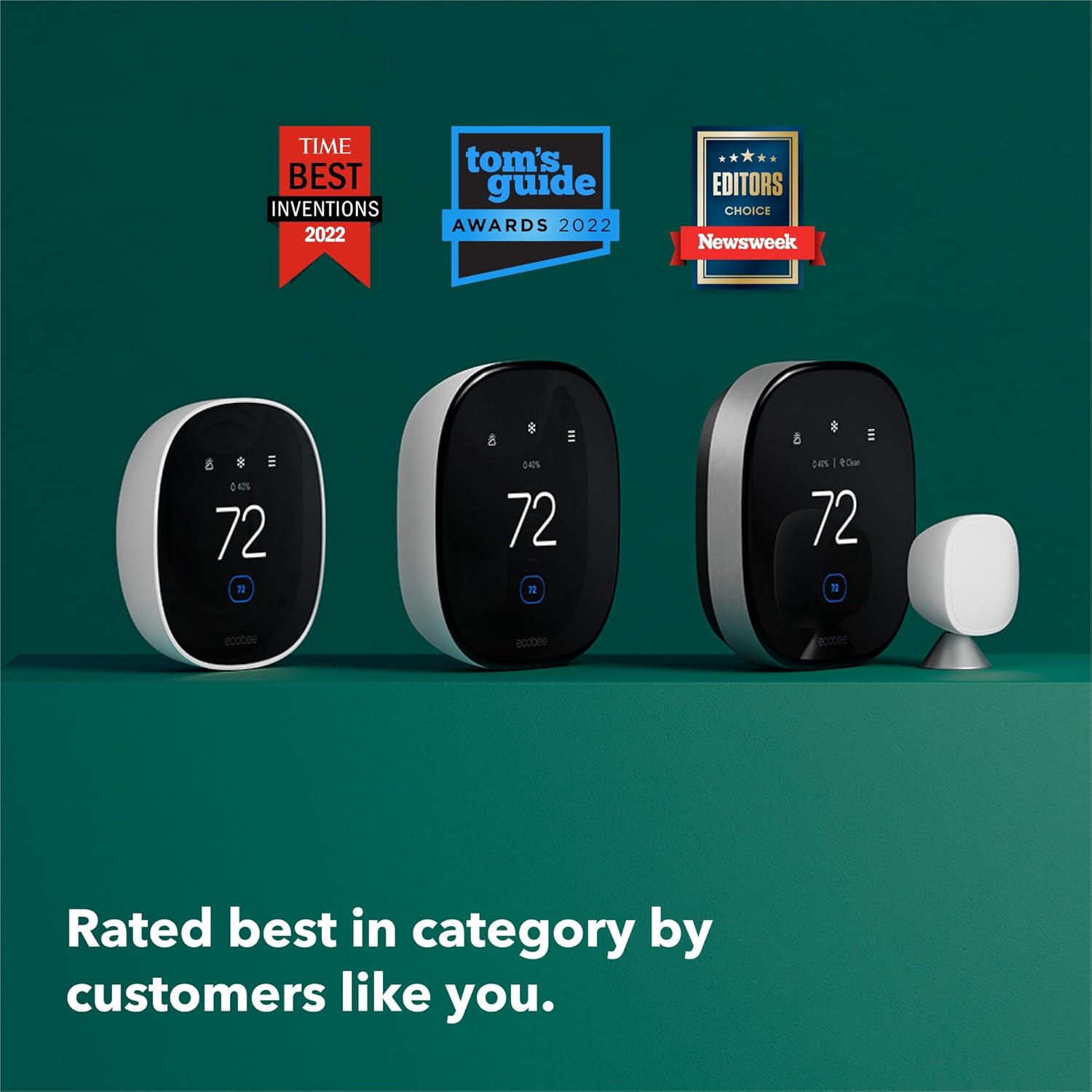
I did way too much research before buying. Like, an embarassing amount.
The r/smarthome subreddit has a religous war going between Ecobee and Nest fans. Google fanboys swear by the Nest Learning Thermostat. HomeKit people gravitate toward Ecobee because of better Apple integration. And there’s a small but loud contingent who insist that “real” smart home enthusiasts use Honeywell T6 Pro because it works locally without cloud dependence.
Wirecutter picked the Ecobee Premium as their top choice. PCMag agreed. Both specifically called out the remote sensors as a major differentiator.
That sensor thing ended up being more important than I expected.
So here’s the problem with most thermostats, smart or dumb: they only measure temperature in one spot.
My thermostat is in the hallway. The hallway is always the most moderate temperature in the house because it’s in the middle, near the return vent, and gets zero direct sunlight. When the hallway says 68°, my office (south facing windows) is 74° and my basement is 61°.
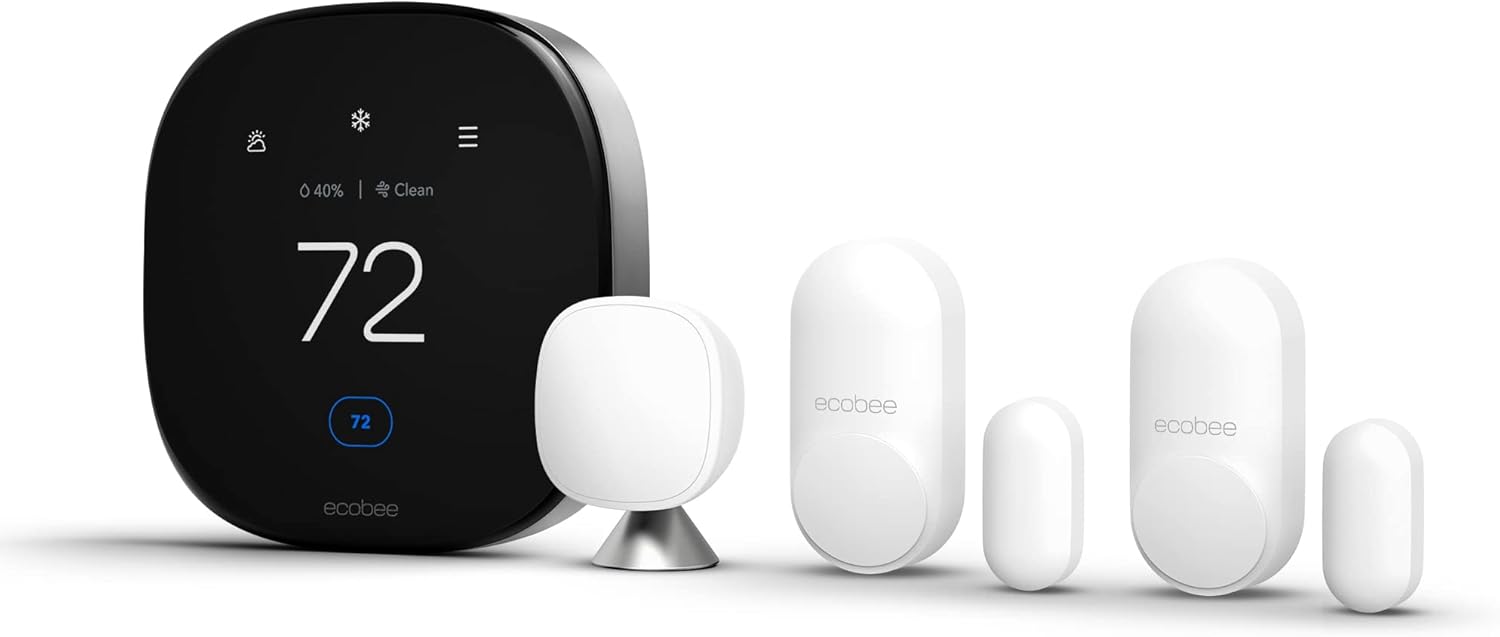
The Ecobee came with one remote sensor. We bought a two-pack of extras. Now We have sensors in the bedroom, office, and living room.
During the day, it prioritizes the office sensor because that’s where I am. At night, it switches to the bedroom. The hallway sensor basically becomes irrelevant except as a tiebreaker.
Result: my office no longer feels like a sauna at 2pm, and I don’t wake up freezing at 3am.
This alone was worth the price of the thermostat.
The Ecobee Smart Thermostat Premium runs about $250. Not cheap. But let us break down what you’re actually getting.
It has a built-in Alexa speaker. I didn’t think I’d use this but it’s genuinly convenient for quick commands. “Alexa, set thermostat to 70” from the couch is easier than getting up or opening an app.
Air quality monitoring. Tracks VOCs, CO2, and humidity. Sends alerts if something gets weird. I got a notification about high CO2 in my basement that led me to discover a crack in my furnace exhaust — potentially life-saving, not exaggerating.
The remote sensors I mentioned. One included, more available seperately.
Works with basically everything — Alexa, Google Assistant, Apple HomeKit, SmartThings, IFTTT. If you’ve got a smart home ecosystem, Ecobee plays nice with it.
And the actual energy savings. Energy Star says smart thermostats save at least 8% on heating and cooling. Ecobee claims up to 23% depending on your setup. My anecdotal evidence: 12-15% based on comparing same-month bills year over year.
At 15% savings on a $200/month heating bill, the thermostat pays for itself in about 8 months. After that, it’s pure savings.
What about the Nest?
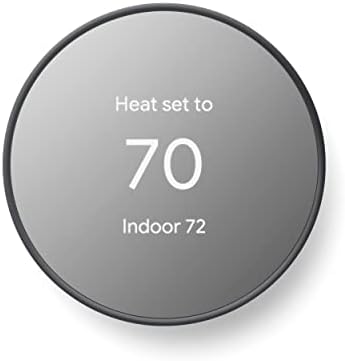
Google’s Nest Learning Thermostat has a cult following. The 4th generation just came out and it looks gorgeous — minimal, modern, that iconic round design.
The learning AI is supposedly improved. It watches when you adjust the temperature and eventually figures out your schedule automatically. Set it and forget it, for real.
Problem is, plenty of Reddit users report the learning feature being… annoying. It’ll decide you want 74° because you bumped it up once when you had a cold. Then you’re fighting it for a week trying to reset its “learning.”
The Nest also doesn’t come with remote sensors, which for us is a dealbreaker. You can add them, but they’re sold separately and don’t have motion detection like Ecobee’s sensors do.
If you’re deep in the Google ecosystem — Nest cameras, Nest speakers, Nest everything — the Nest thermostat makes sense for the integration. The Nest-to-Nest communication is slick. Smoke detector goes off? Thermostat shuts down the HVAC to prevent smoke spread. Pretty cool.
But if you’re ecosystem-agnostic or prefer Apple stuff, the Ecobee wins.
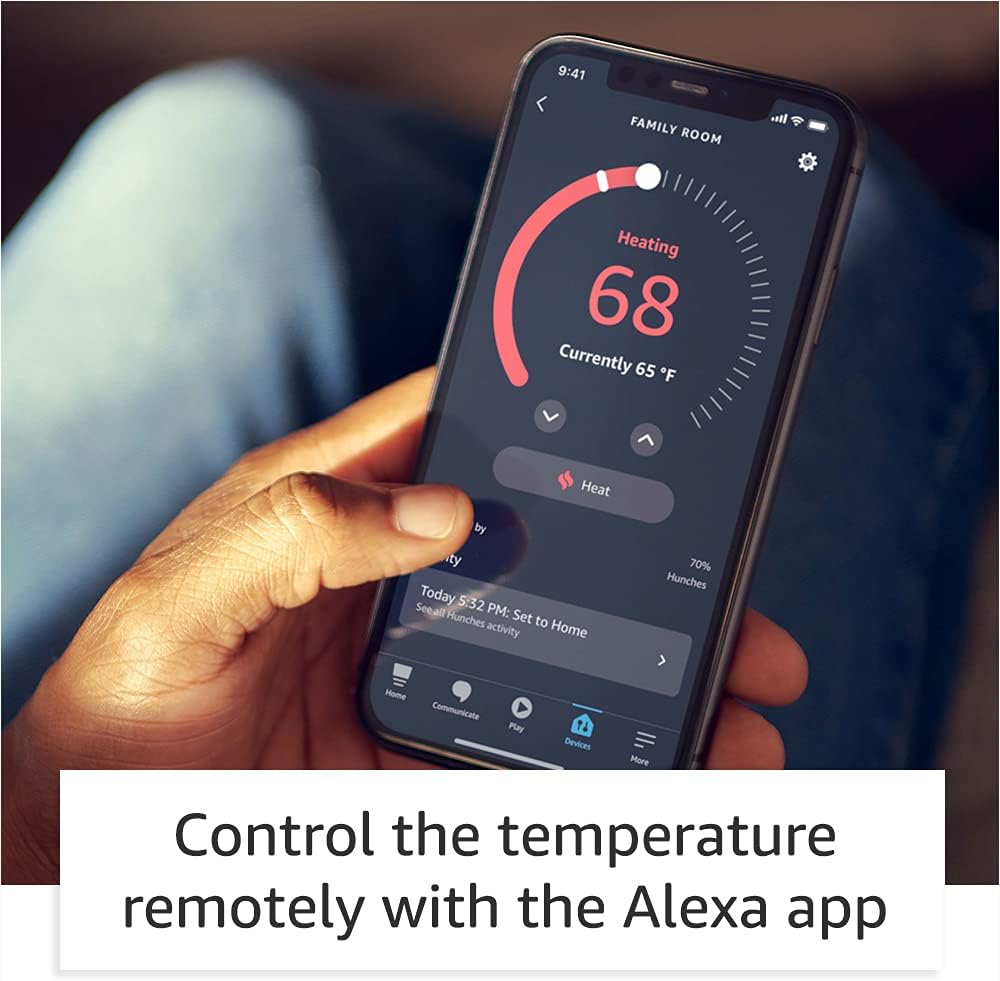
Budget option: the Amazon Smart Thermostat at around $80.
We tested this one first, actually. It’s… fine. Does what it says. Connects to Alexa, lets you control temperature from your phone, has basic scheduling.
What it doesn’t have: remote sensors. Learning capability is rudimentary — they call it “Alexa Hunches” which sounds made up and kind of is. No humidity compensation. No air quality monitoring.
If you just want to turn your heat down from the couch and get reminders when you leave the house, sure, the Amazon thermostat does that. But the energy savings will be minimal compared to something that actually optimizes your system intelligently.
I returned it after two weeks. The $170 difference between it and the Ecobee pays for itself within a year anyway. False economy.
Quick hits on stuff that matters:
Installation: I’m not handy. Like, at all. The Ecobee installation took me about 40 minutes following the app instructions. My house has a C-wire, which makes it easier — if yours doesn’t, Ecobee includes a power extender kit. Most people can DIY this.
Privacy: Ecobee has the best privacy policy in the industry according to Wirecutter. They don’t sell your data. Google’s Nest privacy situation is… less clear. If that matters to you, factor it in.
Compatibility: Works with most 24V HVAC systems — gas, oil, heat pumps, electric, conventional. Check the Ecobee compatibility tool on their site before buying.
App quality: Ecobee’s app is solid. Not amazing, not frustrating. It works. That’s more than I can say for a lot of smart home apps.
Looks: The Ecobee is a black rectangle. The Nest is a pretty circle. Both look fine. Neither is ugly.
I still think most smart home stuff is overhyped.
Smart light bulbs? Gimick unless you’re doing whole-house automation. Smart plugs? Useful in like two scenarios. Smart fridges? Don’t get me started.
But smart thermostats actually deliver on their promises. The energy savings are real, the comfort improvements are real, and the set-it-and-forget-it convenience is real.
If I had to pick one smart home device to recommend to anyone — even the most tech-skeptical person We know — it would be the Ecobee Smart Thermostat Premium.
The remote sensors are what push it over the edge. Having accurate temperature readings from the rooms you actually use, instead of wherever your thermostat happens to be mounted, makes a noticeable difference in comfort. And comfortable at a lower temperature means savings.
I was wrong about smart thermostats. It happens. At least my energy bill is lower now.