
The best smart plug is the TP-Link Kasa EP25. Four pack, about $28. That’s $7 per plug. Done.
Ok I’ll explain.
I’ve had smart plugs in my house for over a year now. Started with two, now I’m up to eleven. Living room lamps, bedroom fan, the christmas lights I still haven’t taken down (don’t judge me), coffee maker, a space heater in my office — basically anything with a dumb on/off switch got a smart plug.
And after cycling through six different models from four brands, I keep coming back to the same one.
The Short Version
Best overall: TP-Link Kasa EP25 (4-pack) — $28 for four. Works with Alexa, Google Home, Siri, and SmartThings. Energy monitoring. Never drops connection. Just works.
Best with Matter: TP-Link Kasa KP125M (2-pack) — $20 for two. If you care about Matter compatibility and want energy monitoring, this is it. Slightly more per plug but future-proofed.
Best if you’re all Alexa: Amazon Smart Plug — $25 (usually on sale for $13-15). Setup takes literally 30 seconds if you already have Echo devices. But it ONLY works with Alexa.
Budget Matter option: TP-Link Tapo P125M — $15. Matter support, works everywhere, but no energy monitoring.
Why I Keep Buying the Kasa EP25
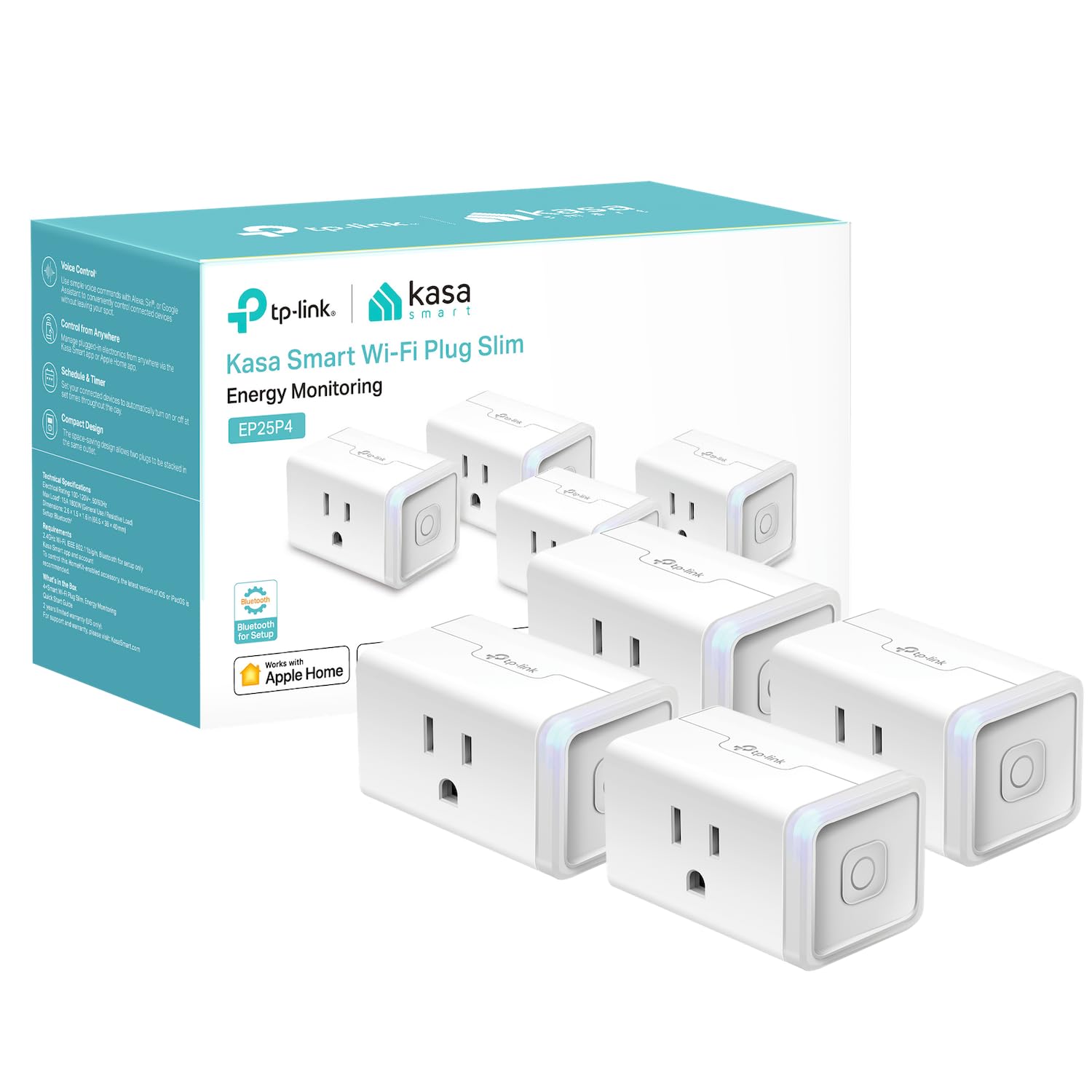
I’m not exaggerating when I say this plug has never given me a single problem.
I set up the first two in maybe 10 minutes total. Opened the Kasa app, scanned the QR code on the box, connected to wifi, named them “Living Room Lamp” and “Bedroom Fan.” That was it. I said “Hey Siri, turn off the living room lamp” and it just… worked.
Some things that surprised me:
The plug is small enough that it doesnt block the second outlet. This seems minor but my first smart plug — some off-brand thing from Amazon — was so chunky it covered both outlets. Immediately returned it.
Energy monitoring actually changed how We think about power usage. We discovered my old space heater was pulling 1,400 watts. Replaced it with a more efficient one after seeing that number stare at me from the app every day. (Ended up getting the Vornado which pulls way less.)
The scheduling is rock solid. My living room lamps turn on at sunset every single day — the app adjusts automatically for daylight changes. Coffee maker kicks on at 6:15 AM. Christmas lights go on at 5 PM and off at 11 PM. I set these up months ago and haven’t touched them since.
The Matter Question (KP125M vs EP25)
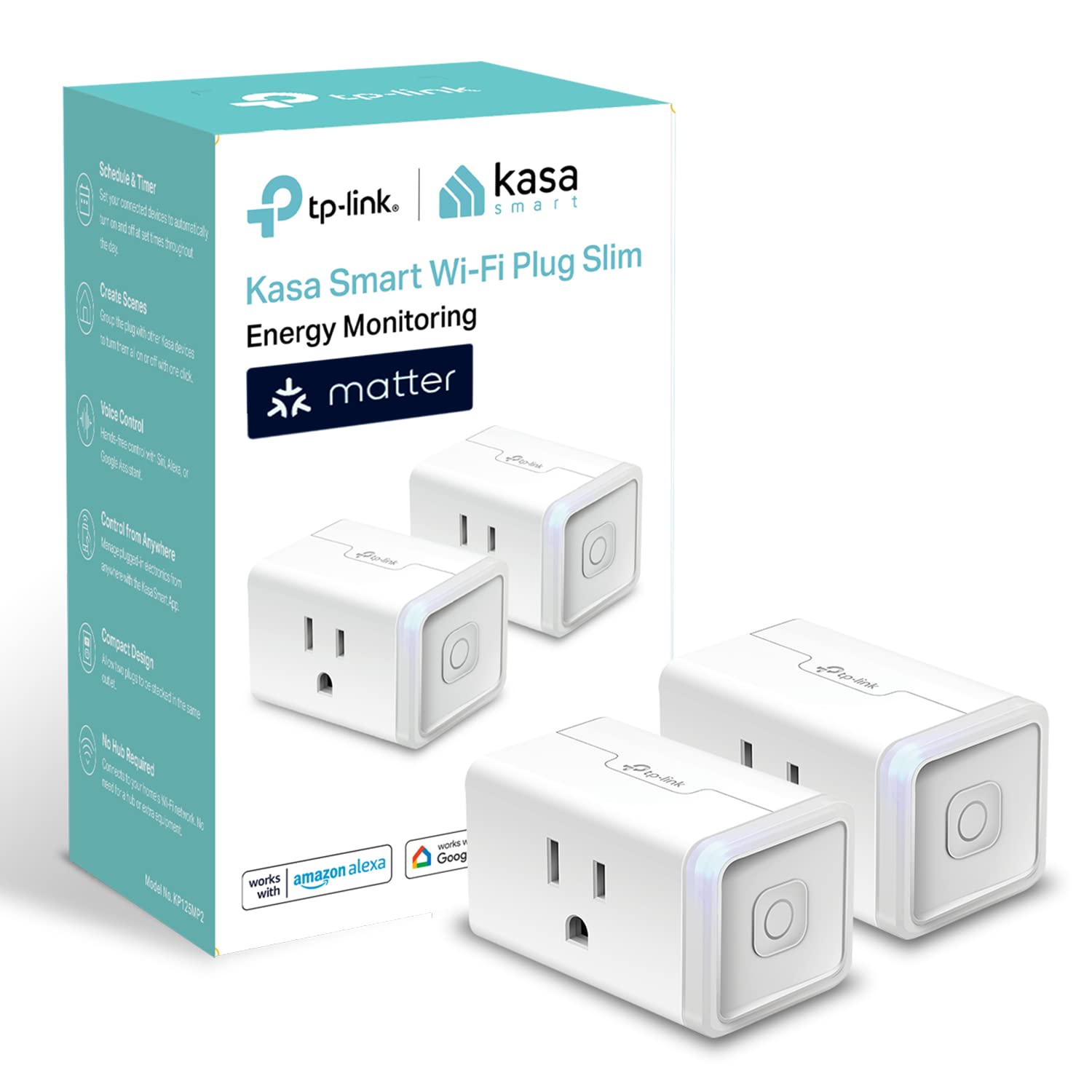
Ok so Matter. If you’ve been reading smart home stuff lately you’ve probably seen this word everywhere. Short version: it’s a universal standard that lets smart devices work across all platforms without needing specific apps or skills.
The KP125M supports Matter. The EP25 does not.
Do you need it? Honestly… probably not yet. The EP25 already works with everything — Alexa, Google, HomeKit, SmartThings. The main advantage of Matter is that it’ll keep working even if TP-Link stops updating their app someday. Which is a legitimate concern but also kind of a “what if” scenario.
We bought two KP125Ms to test. Setup was identical to the EP25. They work the same. Energy monitoring works the same. The only real difference is the price — about $10 per plug instead of $7.
My advice: if you’re buying your first smart plugs, get the EP25 four-pack. If you’re already invested and want to future-proof new additions, grab the KP125M.
Shane Whatley on YouTube did a solid breakdown comparing Matter vs non-Matter plugs and basically came to the same conclusion — Matter is nice to have but not a dealbreaker yet. The protocol is still maturing.
The Amazon Smart Plug — For Alexa Households Only
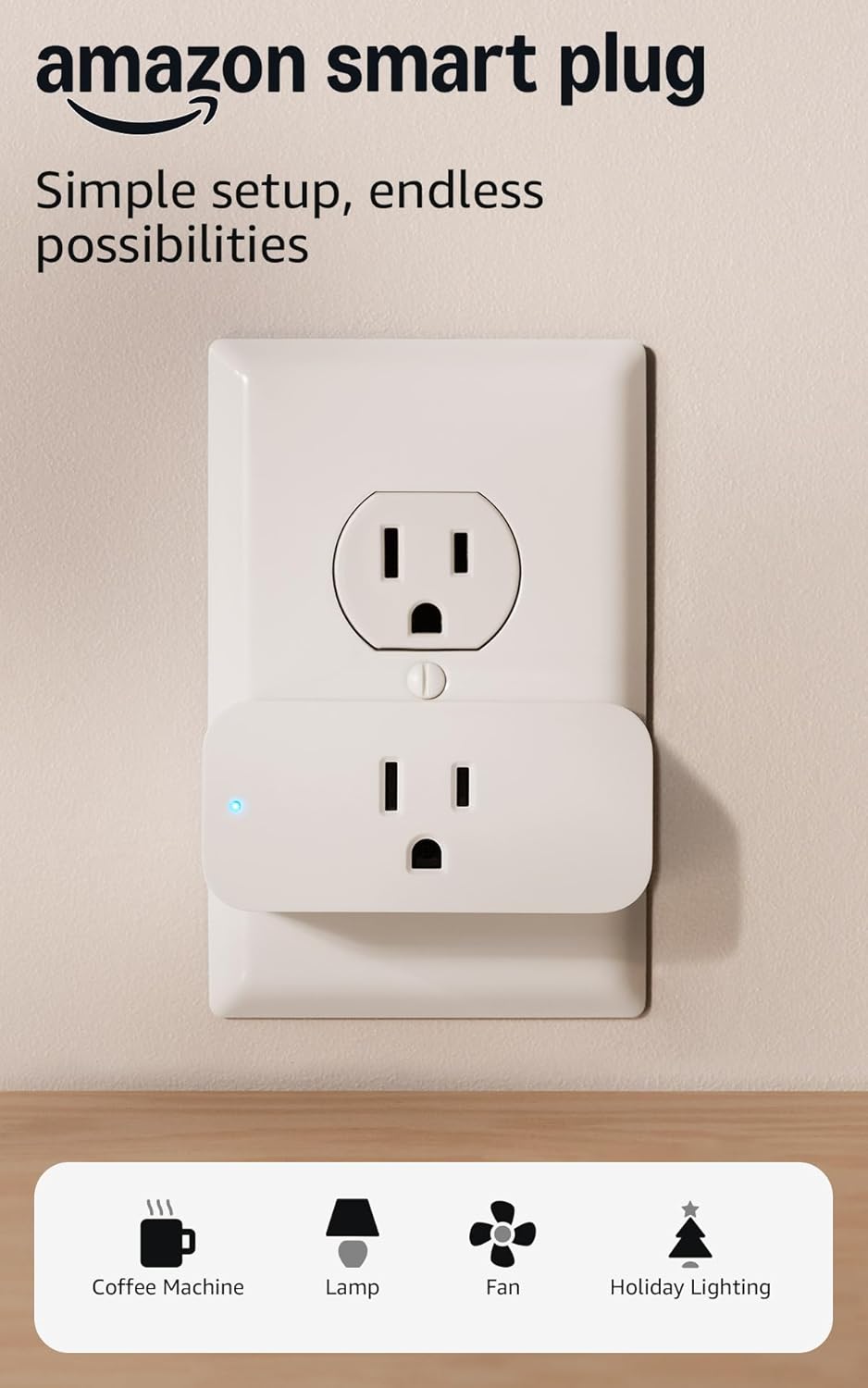
I’ll give Amazon credit for one thing: the setup experience on this plug is genuinely impressive. If you have an Echo, you open the Alexa app, it detects the plug automatically, you name it, and you’re done. Maybe 30 seconds.
But thats where the advantages end.
No Google Home. No HomeKit. No SmartThings. No Matter. No energy monitoring. It’s Alexa or nothing.
We have three of these because Amazon kept putting them on sale for $5 during Prime Day. At $5, who cares about the limitations? But at full price ($25), absolutely not. The Kasa EP25 four-pack costs $3 more and gives you four plugs that work with everything.
If your household is 100% Alexa with zero chance of switching — ok, fine, grab these on sale. Everyone else, skip it.
The Tapo P125M — Budget Matter
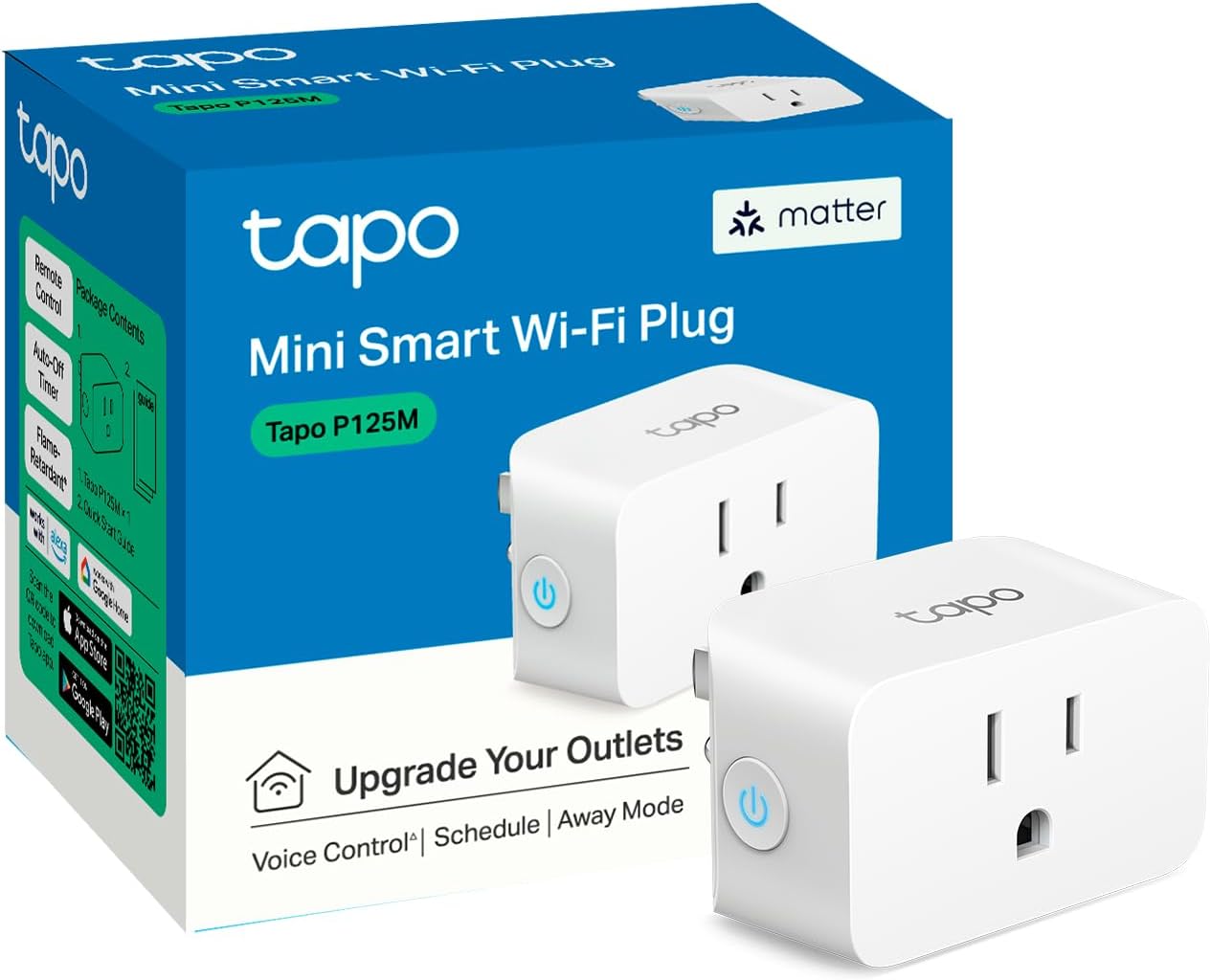
TP-Link makes this confusing by having two smart home brands — Kasa and Tapo. The Tapo P125M is basically the budget version of the Kasa KP125M. Matter support, compact design, works with everything.
The catch? No energy monitoring. And you have to use the Tapo app instead of the Kasa app (though they recently made them cross-compatible, which helps).
At $15 for a single plug it’s… fine. Not a screaming deal. The EP25 at $7/plug without Matter is a better value. The KP125M at $10/plug with Matter AND energy monitoring is a better value. The Tapo kinda sits in no-man’s land.
We bought one to test and it works perfectly well. I just can’t figure out who it’s for when the other two options exist.
Stuff I Learned After a Year of Smart Plugs
2.4GHz wifi only. Every smart plug I’ve tested only works on 2.4GHz networks. If your router combines 2.4 and 5GHz under one name (most do now), the plugs usually figure it out. But if setup fails, this is probably why. Took me 20 minutes to troubleshoot my first plug before I realized my mesh network was forcing 5GHz.
Don’t put them on anything that needs to stay on. I briefly put one on my router. Then the app couldn’t connect to the plug because… the router was off. I felt very smart that day.
The 15A limit matters. Most plugs max out at 15 amps / 1,800 watts. A space heater on high can hit that. Check your appliance’s wattage before plugging it in. My Vornado runs at about 750W on medium so it’s fine, but that old 1,400W beast would’ve been cutting it close.
Schedules > routines for reliability. Voice-triggered routines are fun but schedules built into the plug’s app work even if your wifi drops temporarily. The plug stores the schedule locally.
Buy more than you think you’ll need. I started with two. Then three. Then four more. Just get the four-pack upfront.
What About Meross, Wyze, GE, Etc?
I’ve tried a Meross plug and a Wyze plug. Both worked. Neither was bad. But neither was better than the Kasa EP25 in any meaningful way, and both had slightly clunkier apps. The Wyze plug actually disconnected twice in the first week — could’ve been my network, could’ve been the plug, I never figured it out. Returned it.
GE Cync plugs are fine but overpriced for what they are. Same with the Wemo — and Wemo just announced they’re shutting down support in January 2026 so defintely don’t buy those.
If someone you trust has a different brand and loves it, great. Use that. These things aren’t complicated enough to stress over. But if you’re starting fresh, Kasa EP25. Every time.
The Verdict
Just buy the Kasa EP25 four-pack. Twenty-eight dollars. Four plugs. Works with everything. Energy monitoring. Compact design. Rock solid reliability over 12+ months.
That’s it. That’s the whole post. I could’ve saved you 1,500 words but then you wouldn’t trust me, and honestly the internet has enough three-paragraph “reviews” written by people who never plugged anything in.
Go automate your lamps. It’s weirdly life-changing.