
I’m gonna rant for a second.
Every slow cooker review online reads like the same press release. “Set it and forget it!” “Perfect for busy families!” “Dump everything in and come home to a delicious meal!” Cool. Except nobody mentions that half these things have hot spots that burn the bottom while the top stays lukewarm. Or that the ceramic inserts crack if you look at them wrong. Or that “programmable” apparently means “has buttons that make no sense.”
I’ve owned slow cookers on and off for about six years now. My last one — some no-name 6-quart from Walmart — literally cracked its lid while I was cooking a pot roast. Just sitting there on the counter. Heard a pop, looked over, and there’s a hairline crack running across the glass. Food was fine but I was done.
So I went kind of overboard and bought three different ones over the past couple months to figure out which one is actually worth keeping. Spoiler: one of them is great, one is solid, and one surprised me in a way I didn’t expect.
The Problem With Most Slow Cookers
Here’s what nobody tells you before you buy one. The temperature on “low” varies wildly between brands. I’m talking like a 30-degree difference. One cooker’s “low” is another cooker’s “kinda medium.” That matters when you’re leaving food cooking for 8 hours while you’re at work.
The other thing is searing. If you’ve ever made a decent beef stew, you know you gotta brown the meat first. Most slow cookers can’t do this — you have to dirty a seperate pan, sear your meat, then transfer it. Its annoying and creates more dishes, which defeats the whole “easy meal” thing.
And cleanup. Lord. Ceramic inserts are heavy, they stain, and some of them aren’t even dishwasher safe. My old one had this weird textured bottom that trapped food particles like it was designed to be difficult.
What I Tested
I narrowed it down to three based on a mix of Amazon reviews (I read maybe 200 of them across all three products), some recommendations from Serious Eats, and what was actually available in my price range.
The lineup:
- GreenPan Elite 6-Quart (~$100)
- Cuisinart MSC-600 3-in-1 (~$80)
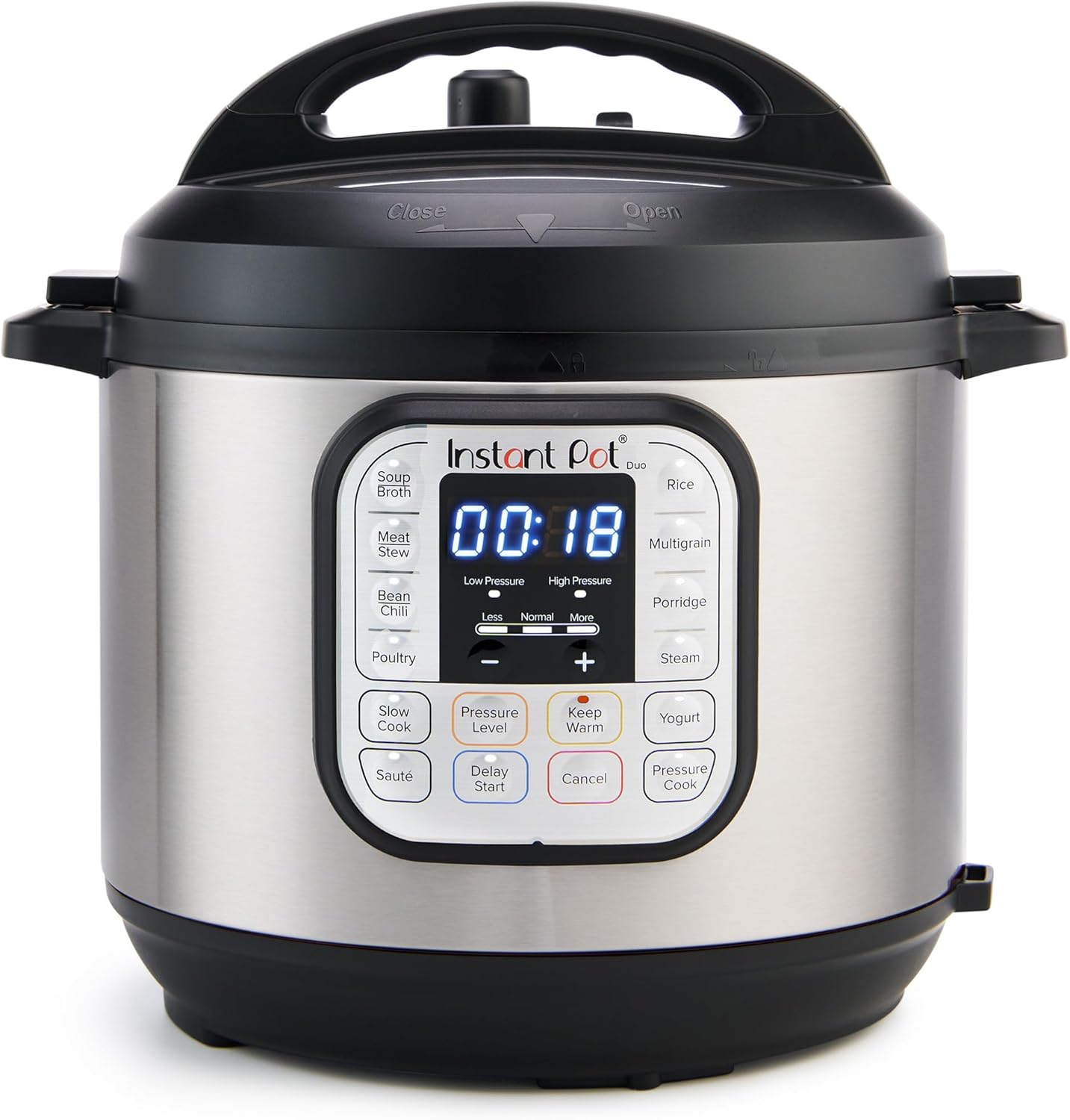
- Instant Pot Duo Plus 6-Quart (~$70)
I made the same four recipes in each one: chicken tortilla soup, pulled pork, beef stew, and a basic chili. Took about three weeks of testing because my family was getting real tired of stew by the end.
GreenPan Elite 6-Quart — The One I’m Keeping
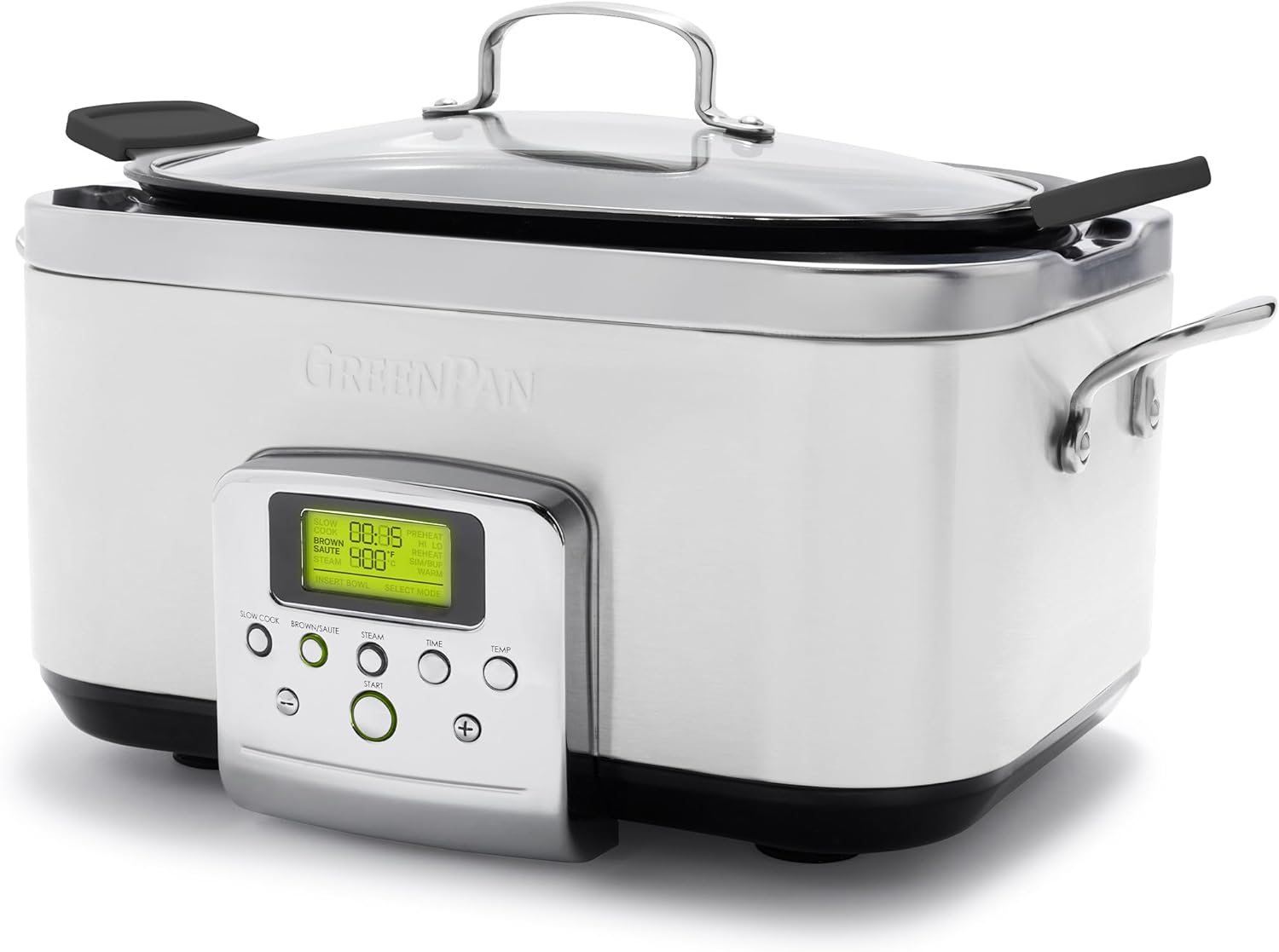
Ok so this one costs more than the others and I was skeptical. A hundred bucks for a slow cooker felt excessive when Crock-Pots exist for $30. But after cooking maybe 8 meals in this thing I get it.
The big deal is the metal pot with ceramic nonstick coating instead of the traditional heavy ceramic insert. Two advantages: it’s way lighter, and you can actually sear meat directly in it. I browned my pulled pork shoulder right in the cooker, added the liquid, switched to slow cook, and walked away. One pot. One thing to clean. That’s it.
The nonstick coating is legit — I made chili with tomato sauce and it wiped clean with a sponge. No soaking. My old ceramic insert would’ve been stained orange for eternity.
Temperature consistency was the best of the three. I stuck a probe thermometer in during a chicken soup cook and it held between 195-205°F on low for the full 8 hours. No spikes, no dips. The exterior stayed cool enough to touch too, which matters when you have kids running around the kitchen.
What bugs me: The display is kinda small and the buttons aren’t super intuitive at first. Took me two tries to figure out how to set a custom time. Also the lid handle gets warm — not hot, but warm enough that We noticed.
Cuisinart MSC-600 — Best if You’re on a Budget
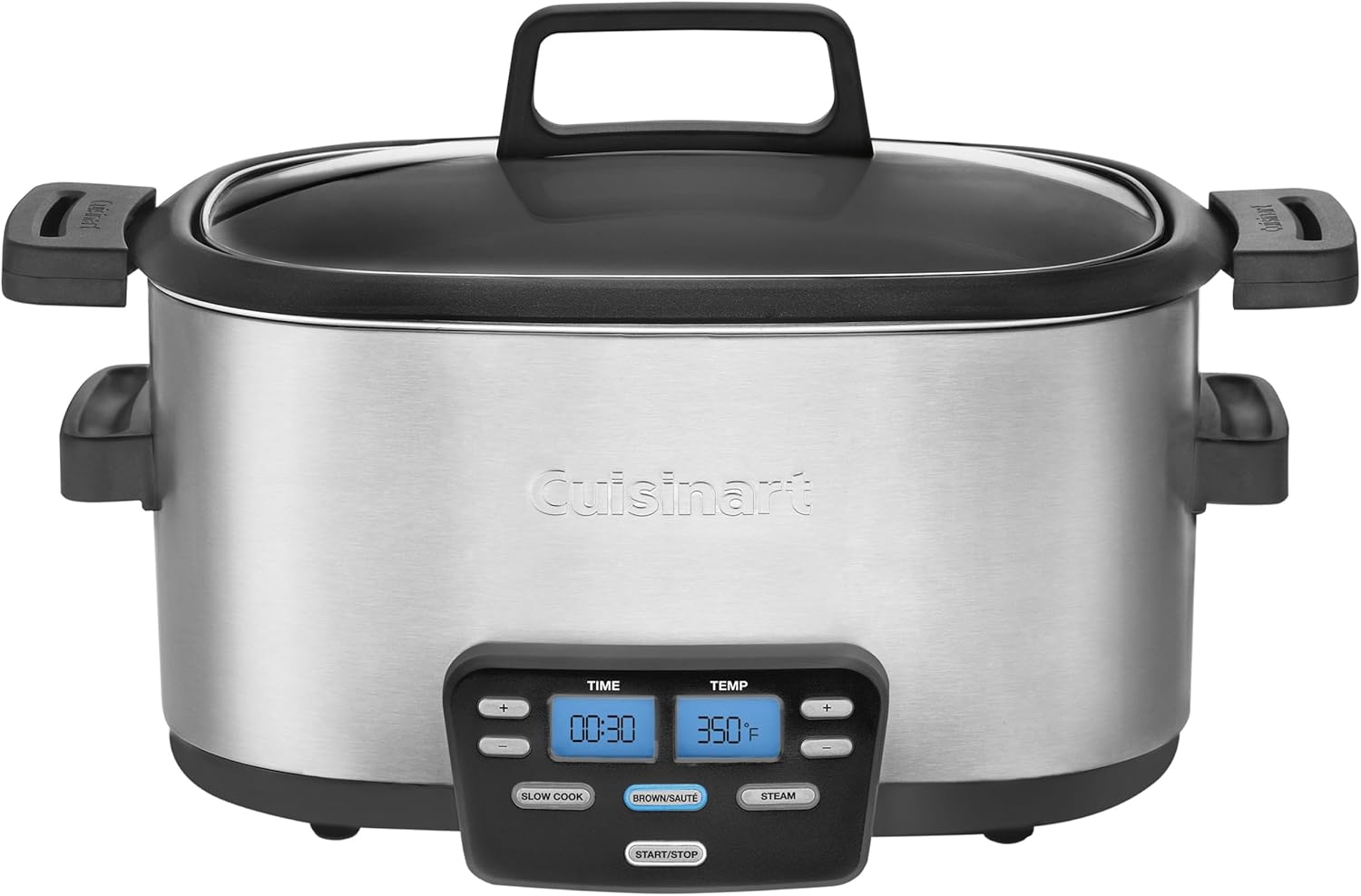
The Cuisinart came in about $20 cheaper and honestly it’s really close to the GreenPan in terms of actual cooking performance. The 3-in-1 thing means it does slow cook, brown/sauté, and steam — so you get that same one-pot searing ability.
My beef stew came out great in this one. Good browning on the chuck, nice even heat throughout. The removable pot is nonstick aluminum which cleans up easy but doesn’t feel quite as premium as the GreenPan’s ceramic coating.
Where it falls behind is temperature regulation. My thermometer readings bounced around more — saw it dip to about 185°F a couple times during an 8-hour cook. Not enough to ruin anything, but the GreenPan was steadier. A few Amazon reviewers mentioned similar issues. One verified purchase review said “the low setting runs a little cooler than my old Crock-Pot” which tracks with what I saw.
The controls are actually better than the GreenPan though. Clear LCD display, easy to read timer, straightforward mode buttons. If the interface matters to you, this wins.
The catch: The exterior gets noticeably warm during long cooks. Not burn-yourself hot, but warmer than I’d like. I wouldn’t put it right next to anything heat-sensitive on the counter.
Instant Pot Duo Plus — The Weird Surprise
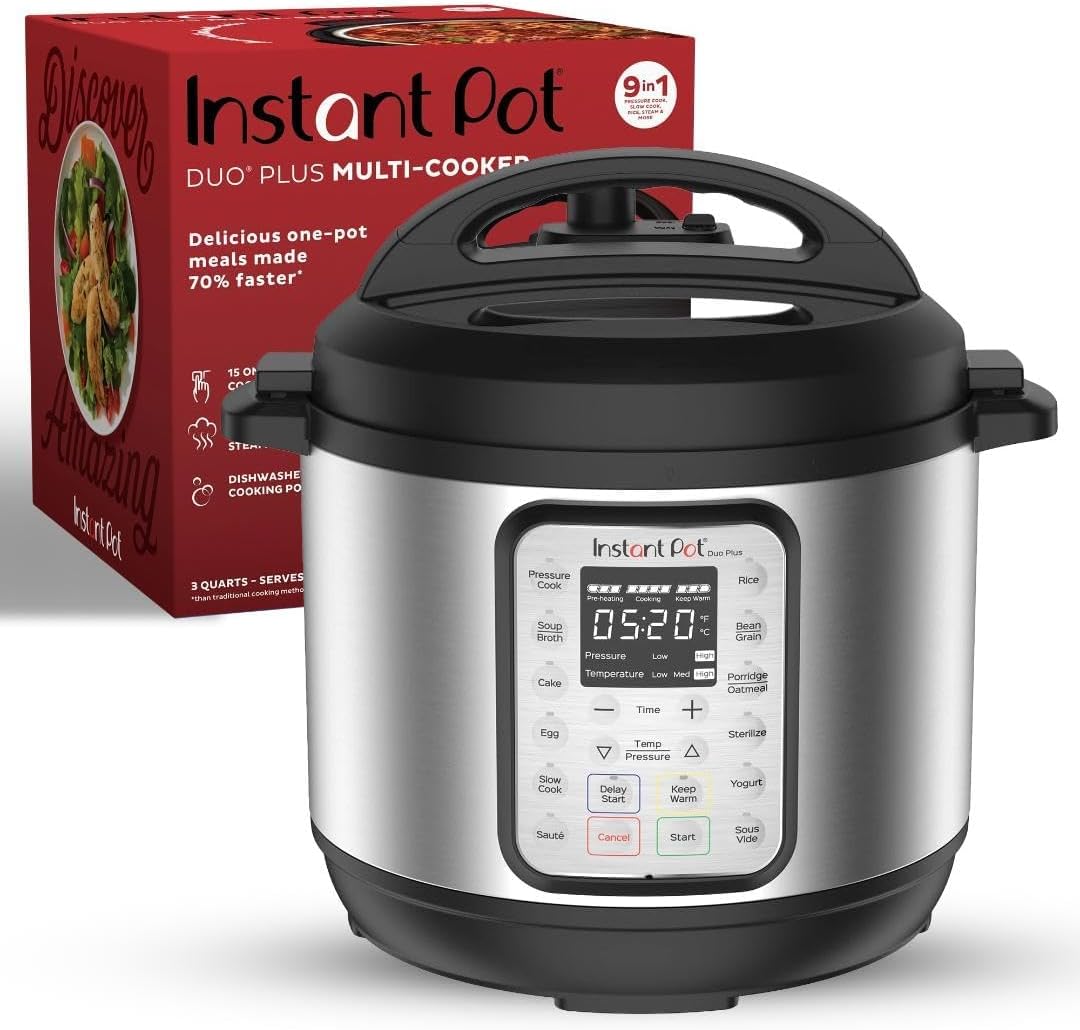
I didn’t buy this as a slow cooker. I already had it from like two years ago when everyone was obsessed with Instant Pots. But someone on a cooking forum mentioned they use theirs primarily as a slow cooker and I thought that was insane. So We tested it.
And… it’s actually decent? Not amazing, but decent.
The slow cooker function works fine for things like soups and chili. The pressure cooker seal keeps moisture in really well, so my chicken tortilla soup came out with way more liquid than the other two — which you might want or might not. The pulled pork was good but not as good as the GreenPan’s because I couldn’t get as good of a sear using the sauté function. It heats unevenly in sauté mode.
The real advantage is if you already own one. Don’t go buy an Instant Pot specifically for slow cooking — that would be dumb. But if it’s already sitting in your cabinet collecting dust, try using it as a slow cooker before buying something else. You might be surprised.
The problem: The inner pot is stainless steel with no nonstick coating. Chili welded itself to the bottom. I had to soak it overnight. For a family that’s slow cooking 3-4 times a week, this gets old fast.
So Which One Should You Actually Buy?
Look, if you’re cooking for a family and you want something that just works without creating extra dishes — get the GreenPan Elite. The hundred dollar price tag stings but you make it back in sanity. I’ve been using it 3-4 times a week since November and it still looks basically new. The nonstick hasn’t degraded, nothing’s cracked, the temperature stays consistent.
If a hundred bucks is too much and you want 90% of the performance, the Cuisinart MSC-600 is genuinely good. The temperature inconsistency I mentioned is minor — we’re talking a few degrees, not a dramatic difference. Most recipes are forgiving enough that it doesn’t matter.
And if you’ve got an Instant Pot gathering dust? Plug it in and try slow cooking something this weekend. It might save you from buying anything new.
Quick Tips I Learned the Hard Way
Don’t lift the lid. Every time you take the lid off you add like 20-30 minutes of cook time because all the heat escapes. I kept checking my first few batches and everything took forever. Just leave it alone.
Fill it right. You want the pot between half and two-thirds full. Too little and things dry out or burn. Too much and it won’t cook evenly. I overloaded the Cuisinart with chili once and the stuff on top was barely warm after 6 hours.
Sear your meat first. Even if it feels like an extra step. The flavor difference is night and day. Brown your beef or pork for like 3-4 minutes per side before adding liquid. This is why the GreenPan and Cuisinart are worth paying more for — you do it right in the pot.
Dairy goes in last. I dumped cream cheese into a soup at the beginning once. It curdled into these weird grainy chunks. Add dairy in the last 30 minutes or just stir it in after you turn the thing off.
My wife jokes that I’ve become a slow cooker evangelist which is embarassing but also kinda true. There’s something deeply satisfying about throwing stuff in a pot at 8am and coming home to a house that smells incredible. Gets me every time.