
I’m convinced my dogs are 60% fluff by volume.
Cooper and Luna are both golden retrievers. They’re wonderful, loveable, deeply stupid animals who shed enough hair every week to knit a third dog. I vacuum manually maybe twice a week and there’s still tumbleweeds drifting across the hardwood by Thursday.
So when everyone kept telling me to “just get a robot vacuum,” I figured sure, why not. How hard can it be?
Pretty hard, as it turns out.
The first robot We bought — some off-brand thing from Amazon for $180 — lasted exactly 6 weeks before the motor started making a death rattle. The second one, a mid-range Eufy, worked okay on hard floors but basically gave up on the area rugs. The brushes were so tangled with hair by day 3 that I was spending more time cleaning the vacuum than it was spending cleaning my floors.
The third time, I did actual research. Watched probably 15 hours of YouTube reviews. Read way too many Tom’s Guide and RTINGS comparisons. Stalked the r/RobotVacuums subreddit. And I finally figured out what actually matters for pet owners — and more importantly, what doesn’t.
Here’s what 4 months of testing taught me.
The number one thing I learned is that suction power numbers are mostly meaningless without the right brush design. My first vacuum had “2500Pa suction!” plastered all over the box. Cool. It still couldn’t handle Cooper’s undercoat because the bristle brush turned into a hair cocoon after every run.
The robot vacuums that actually work for pets use rubber extractors instead of bristle brushes. Roomba pioneered this, and now most premium brands have copied it. The rubber doesn’t grab hair the same way — it kind of pulls it through and deposits it in the bin instead of wrapping around the brush like a hairy burrito.
This is the single most important feature for pet owners. I cannot stress this enough. If you buy nothing else from this article, remember: rubber extractors, not bristle brushes.
The second thing that matters is self-emptying capability. And I thought this was a gimmick until I lived with it.
With my first couple vacuums, I had to empty the dustbin after every single run. Sometimes mid-run, because the bin would fill up before it finished the house. With two dogs shedding constantly, that’s a lot of emptying. I started skipping runs because I didn’t want to deal with it.
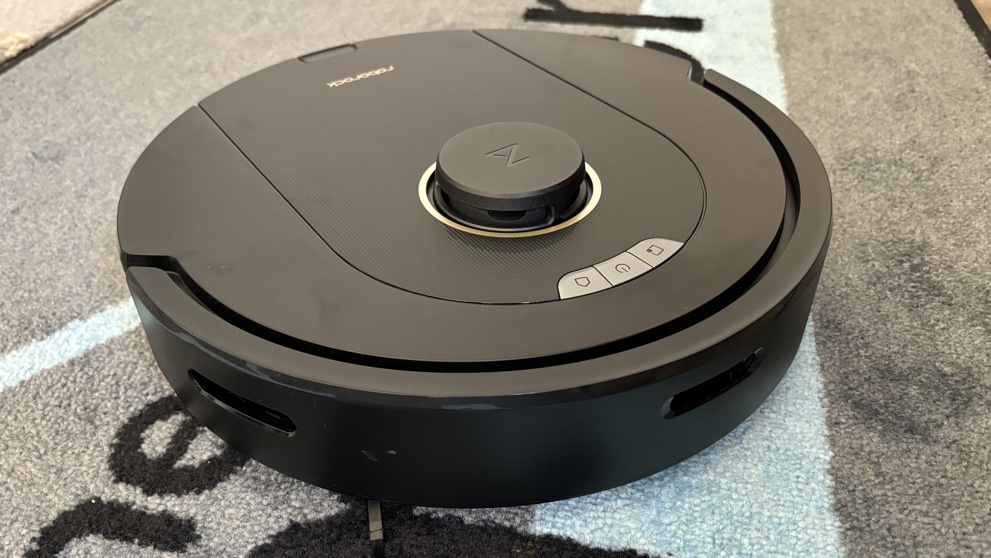
The self-emptying docks solve this completely. My current vacuum (spoiler: it’s the Roborock S8 MaxV Ultra) empties into a bag that I change maybe once every 6-8 weeks. I set it to run every morning at 8am while I’m walking the dogs, and I literally don’t think about it. The house is vacuumed daily and I do almost nothing.
That convenience is worth real money to us.
Okay, let us tell you about the three robots I actually tested extensively.
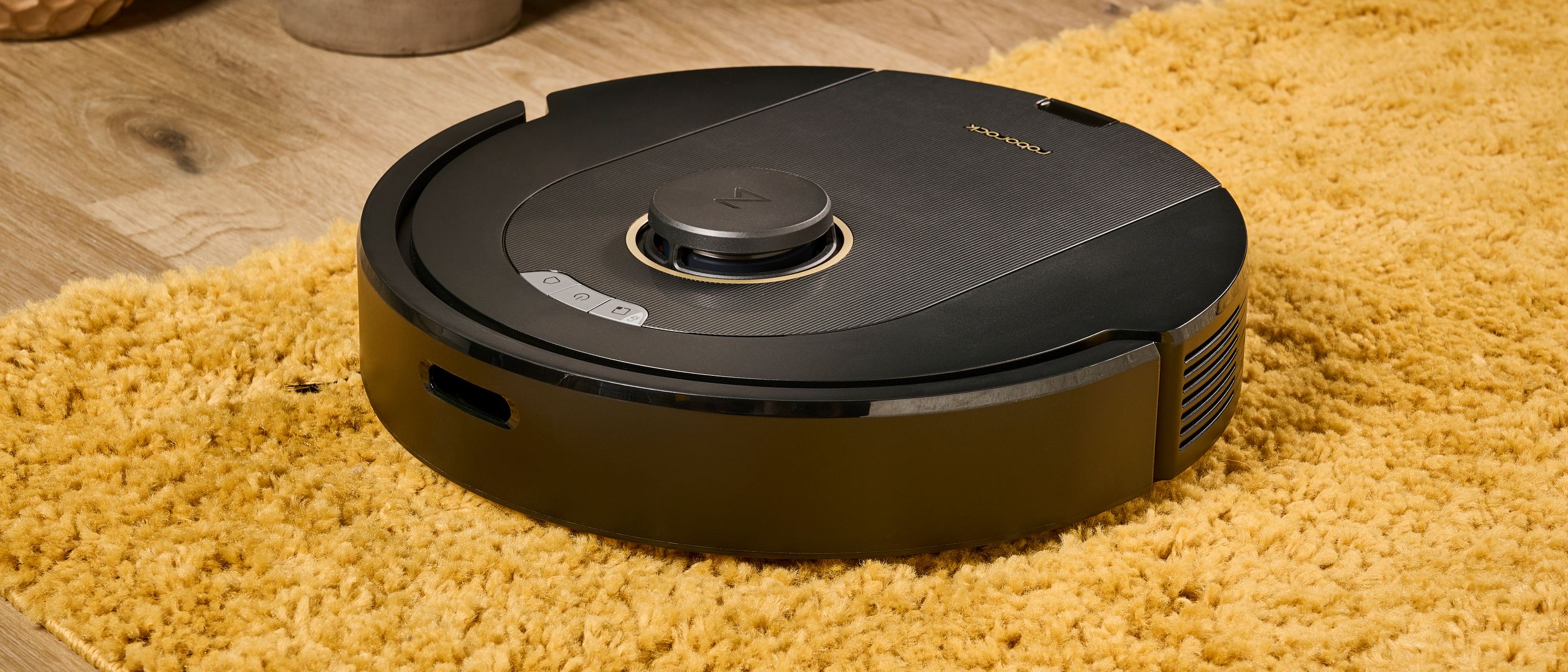
The Roborock S8 MaxV Ultra is the one I kept. It’s currently on sale for $849 down from the original $1400 price, which makes it almost reasonable. The 10,000Pa suction is legitimately impressive — I’ve watched it pull embedded pet hair out of my rugs that I didn’t even know was there. The rubber brush doesn’t tangle. The dock washes and dries the mop pads automatically. The obstacle avoidance actually works, which matters when your dogs leave toys scattered everywhere.
The mopping is surprisingly good too. I didn’t think I cared about a vacuum that mops, but having it do a quick wet clean after vacuuming means my hardwood looks noticeably better. It’s not replacing actual mopping for deep cleaning, but for maintenance between proper mops? Perfect.
PCMag gave it high marks for pet hair specifically, and RTINGS noted the suction is genuinely excellent on carpet. My own testing confirms this — it handles my wool area rugs without the motor straining, which my cheaper vacuums definitely could not do.
The downsides: the dock is massive. Like, find a dedicated corner massive. And the initial setup took me about 45 minutes to get the mapping right. But once it’s dialed in, it just works.
The iRobot Roomba j7+ is what I’d recommend if you have a pet accident problem. At around $449 on Amazon, it’s significantly cheaper than the Roborock, and it has one killer feature: P.O.O.P. detection. (Yes, that’s really what iRobot calls it. PrecisionVision Object Avoidance for Pet Obstacles and Pet waste.)
My dogs are house-trained, so this isn’t a huge concern for us. But I’ve heard horror stories from friends whose robots ran through a fresh accident and spread it across three rooms. The j7+ will spot it, avoid it, and send you a notification. If you have a puppy or an older dog with occasional issues, this alone might be worth the purchase.
The cleaning performance is solid — not quite as strong as the Roborock, but the dual rubber brushes handle pet hair well. Tom’s Guide noted the pet hair pickup on carpet “could be better,” but on hard floors it’s excellent. And the self-emptying dock means minimal maintenance.
My main complaint is it can’t navigate in the dark. If you want to run it at night while sleeping, that’s a problem. The Roborock uses LiDAR which works in pitch black. The j7+ uses cameras that need some ambient light.
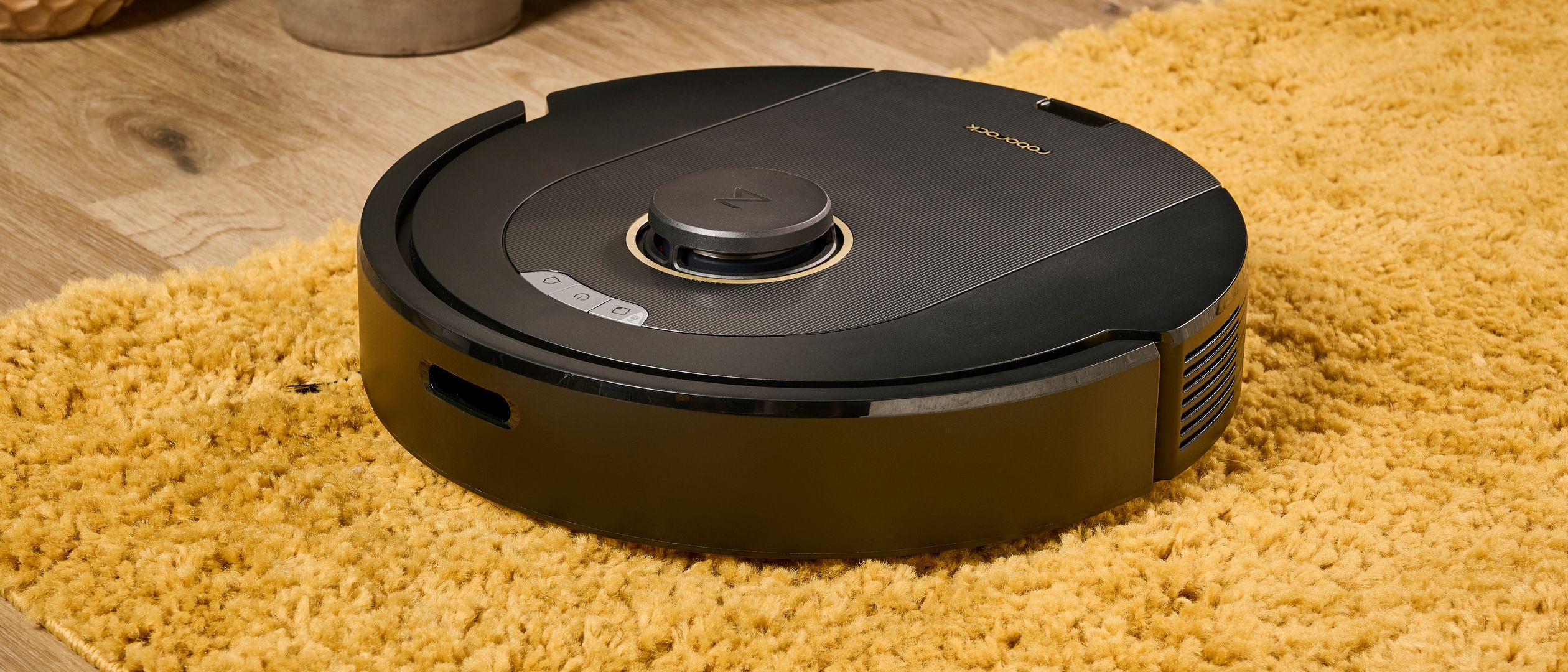
The Roborock Q5 Pro+ is the budget pick at around $400. We tested this for about 3 weeks before upgrading to the S8 MaxV.
For the price, it’s genuinely impressive. 5500Pa suction handles moderate shedding fine. The LiDAR navigation is accurate. The self-emptying dock works well. And the DuoRoller brush system resists tangling better than most competitors at this price point.
But — and this is a significant but — it struggled with my heavier rugs and the dust bin filled up faster than the premium models. If you have one light-shedding pet and mostly hard floors, this is probably all you need. With two golden retrievers and multiple area rugs, We found myself wanting more.
Some stuff I learned the hard way:
The “pet hair” marketing means nothing. Almost every robot vacuum says it’s good for pet hair now. What actually matters is the brush type, suction power, and bin capacity. Ignore the marketing, look at the specs.
Edge cleaning varies wildly. My dogs shed everywhere, including along baseboards. Some robots leave a noticeable strip of fur along every wall. The S8 MaxV has a side brush that extends for better edge cleaning, which actually helps. RTINGS tests this specifically, and it’s worth checking their reviews if edge cleaning matters to you.
App quality matters more than you’d think. I’ve used apps that crashed constantly, took forever to connect, or had features buried in confusing menus. The Roborock app is actually good — it’s not amazing, but it’s reliable and logically organized. The iRobot app is similar. Some cheaper brands have terrible apps that make the whole experience frustrating.
You might want to replace filters more often than recommended. With heavy pet dander, I swap the HEPA filter every 2-3 months instead of the recommended 6 months. Filters are cheap, and you’ll notice if they get clogged.
Running it daily is better than running it once. We used to do big weekly vacuum sessions. Now my robot runs for 30-40 minutes every morning. The difference in floor cleanliness is dramatic because it never lets the hair accumulate. Less hair per run also means less wear on the robot.
Look, We know $850 sounds insane for a vacuum. That’s what I thought too. But here’s my math:
My previous manual vacuum was a $300 Dyson that We used twice a week. Each session took maybe 30 minutes including setup, emptying, and wrestling with the cord. That’s an hour per week, 52 hours per year. In four years — the typical lifespan of a good vacuum — that’s 208 hours of vacuuming.
The robot runs itself. The time I spend on it is maybe 5 minutes per week checking the bin and occasionally cleaning sensors. Let’s call it 4 hours per year. Over four years, that’s 16 hours total.
I’m “spending” $850 to save 192 hours over four years. That’s about $4.40 per hour, which is way less than my time is worth. And my floors are cleaner because it runs daily instead of twice weekly.
Your math might be different. If you have a small apartment with hard floors and one short-haired cat, a $300 robot is probably fine. But if you’re drowning in pet hair like I was, the premium models justify themselves pretty quickly.
My recommendation: If budget allows, the Roborock S8 MaxV Ultra is the best robot vacuum for heavy pet hair that I’ve tested. The combination of suction power, rubber extractors, self-emptying, and self-cleaning mop means it handles everything my dogs throw at it without complaining.
If $850 is too much, the Roomba j7+ at $449 is excellent for hard floors and has unmatched accident avoidance. And if you’re trying to stay under $400, the Roborock Q5 Pro+ is the best budget option I’ve found that doesn’t feel like a compromise.
Cooper and Luna will keep shedding. But at least now, I don’t have to keep up with them manually.