

My gym closed early for three weeks during a renovation. I had a doorway and the internet. That combination led to a lot of research, four different bars, and an opinion I now hold pretty strongly.
The opinion: doorway pull-up bars are legitimately useful, most of the drama around them is overblown, and the difference between a $20 and $40 version isn’t minor — it’s the difference between something that flexes and something that doesn’t.
Here’s what actually happened.
The Problem With Budget Pull-Up Bars
I bought the cheapest option I could find first. Under $20, hard plastic grips, standard width. First few sessions were fine. Then one evening I was midway through a set and I heard a sound I can only describe as “concerning plastic flex.”
I looked up. The plastic bracket that hooks over the door trim was bowing under my weight. Not breaking — just bending in a way that made every subsequent rep feel like a question.
I returned it the next day.
The issue isn’t weight rating — cheap bars are usually rated at 200+ lbs too. It’s material rigidity. Plastic has a quality that steel doesn’t: it flexes before it breaks. You get a warning. But a flexing pull-up bar is also a bar you don’t fully trust, which means you’re not lifting with the focus you should.
Steel doesn’t flex. It either holds or it doesn’t, and for reputable bars it holds.
The Iron Gym: What $35 Actually Buys You
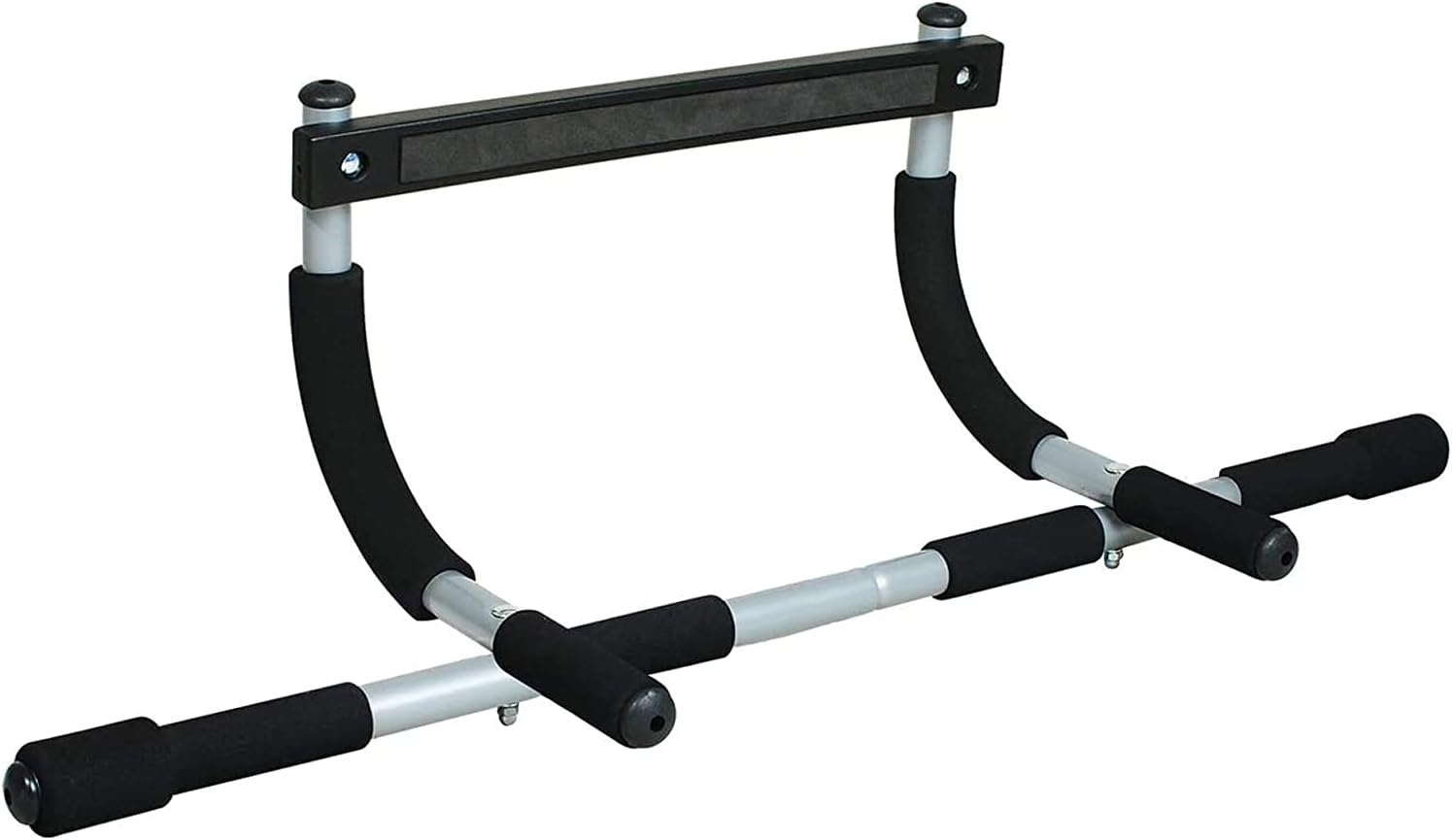
The Iron Gym Total Upper Body Workout Bar is the answer most people should land on.
Setup takes under two minutes. The bar hooks over the door trim, rests on the inside of the doorframe, and your bodyweight pressing down keeps it in place. No screws, no tools.
The steel frame is noticeably heavier than budget bars — that weight is rigidity. When I’m at the top of a rep and my full 195 lbs is hanging from my arms, the bar doesn’t move. It doesn’t creak. It feels like it’s part of the wall.
Grip positions: Wide overhand (standard pull-up), neutral grip (hands facing each other), narrow underhand (chin-up). The different positions matter more than most beginners realize — neutral grip is actually easiest for most people starting out, and having that option built in is genuinely valuable.
The doorframe marks issue: Over six weeks of daily use, my white trim developed faint gray pressure marks where the metal contacts the wood. Not scratches — pressure discoloration. They wiped off with a Magic Eraser with moderate effort. If you want zero marks ever, add a strip of felt tape under each contact point.
Who should NOT buy this: If your doorway molding is narrow (under 2 inches of flat surface), the bar won’t sit properly. Some modern interior doors have very thin profile trim — measure before buying.
The Upgrade Pick: Perfect Fitness Multi-Gym
The Perfect Fitness Multi-Gym runs about $50. It’s the same basic design as the Iron Gym but adds a stabilizing bar that extends along the floor when you use it for push-up or dip variations.
In practice, this means you can use the bar on the floor for push-up grips that are elevated and angled — it opens up more exercise variety than the bare Iron Gym.
The honest verdict on upgrading: If all you’re doing is pull-ups and chin-ups, the Iron Gym is the same result for $15 less. If you want one piece of equipment that also handles push-up variations, the Perfect Fitness earns the extra money.
What About Mounted Bars?
There’s a whole category of bars that screw directly into wall studs or the doorframe itself. These are significantly more stable — you’re attached to the structure of the house, not just resting on trim.
These cost $40–$60 and require drilling four holes. For renters this is usually not an option. For homeowners, a mounted bar is the right long-term move — it’s more stable, handles heavier loads, and doesn’t have any of the doorframe-marking concerns.
If you own your home and plan to use this permanently, don’t buy a no-screw bar. Spend the extra $15 and mount it properly.
What I Actually Use
I’ve had the Iron Gym on my bedroom door for eight months now. It comes down and goes back up in under a minute. I’ve done hundreds of sessions on it without anything shifting, cracking, or worrying me.
The test I use to judge any piece of home gym equipment: does the equipment ever become the thing I’m thinking about during a set? With the Iron Gym, the answer is no. That’s high praise.
If your budget is tight, start here. If you want slightly more versatility, go Perfect Fitness. If you own your home, mount a bar properly.
Don’t buy the plastic one.
Side-by-Side Comparison
| Bar | Price | Material | Weight Limit | Grip Options | Best For |
|---|---|---|---|---|---|
| Budget no-name | ~$15 | Plastic bracket | 200 lbs | 1-2 | Skip it |
| Iron Gym Total | ~$35 | Steel | 300 lbs | 3 | Most people |
| Perfect Fitness Multi | ~$50 | Steel | 300 lbs | 3 + floor | Want more variety |
| Titan Doorway Mounted | ~$55 | Steel (screwed in) | 400 lbs | 3 | Homeowners only |