
We may earn a commission from purchases made through links in this article, at no extra cost to you.
Your audio is bad. You know it, your viewers know it, and the YouTube algorithm definitely knows it. You’ve watched the same “best microphone” videos everyone else has, but they all seem sponsored by whoever paid the most. Meanwhile, your built-in camera mic picks up your neighbor’s lawnmower, your AC unit, and somehow every car that drives past.
We analyzed creator forums, professional audio reviews, and real-world user feedback to find which microphones actually deliver for content creators. Here’s the honest breakdown: the right mic depends entirely on how you create content—and most creators are choosing the wrong type for their needs.
Quick Verdict: Which Microphone Should You Buy?
| Creator Type | Our Pick | Price | Why |
|---|---|---|---|
| Mobile/Vlog Creators | DJI Mic 2 | $349 | 32-bit float prevents clipping, best noise cancellation |
| Interview/Documentary | Rode Wireless Go II | $299 | Dual transmitter, proven reliability, safety channel |
| Podcasters/Streamers | Shure MV7+ | $279 | Studio quality, USB/XLR flexibility, built-in DSP |
| Budget Wireless | Rode Wireless Go II (Single) | $199 | Same quality, one transmitter |
Bottom line: The DJI Mic 2 is the best all-around wireless microphone for mobile content creators. Only choose the Shure MV7+ if you’re primarily desk-based, or the Rode if you need dual-person interviews on a tighter budget.
#1: DJI Mic 2 — Best Wireless Mic for Content Creators
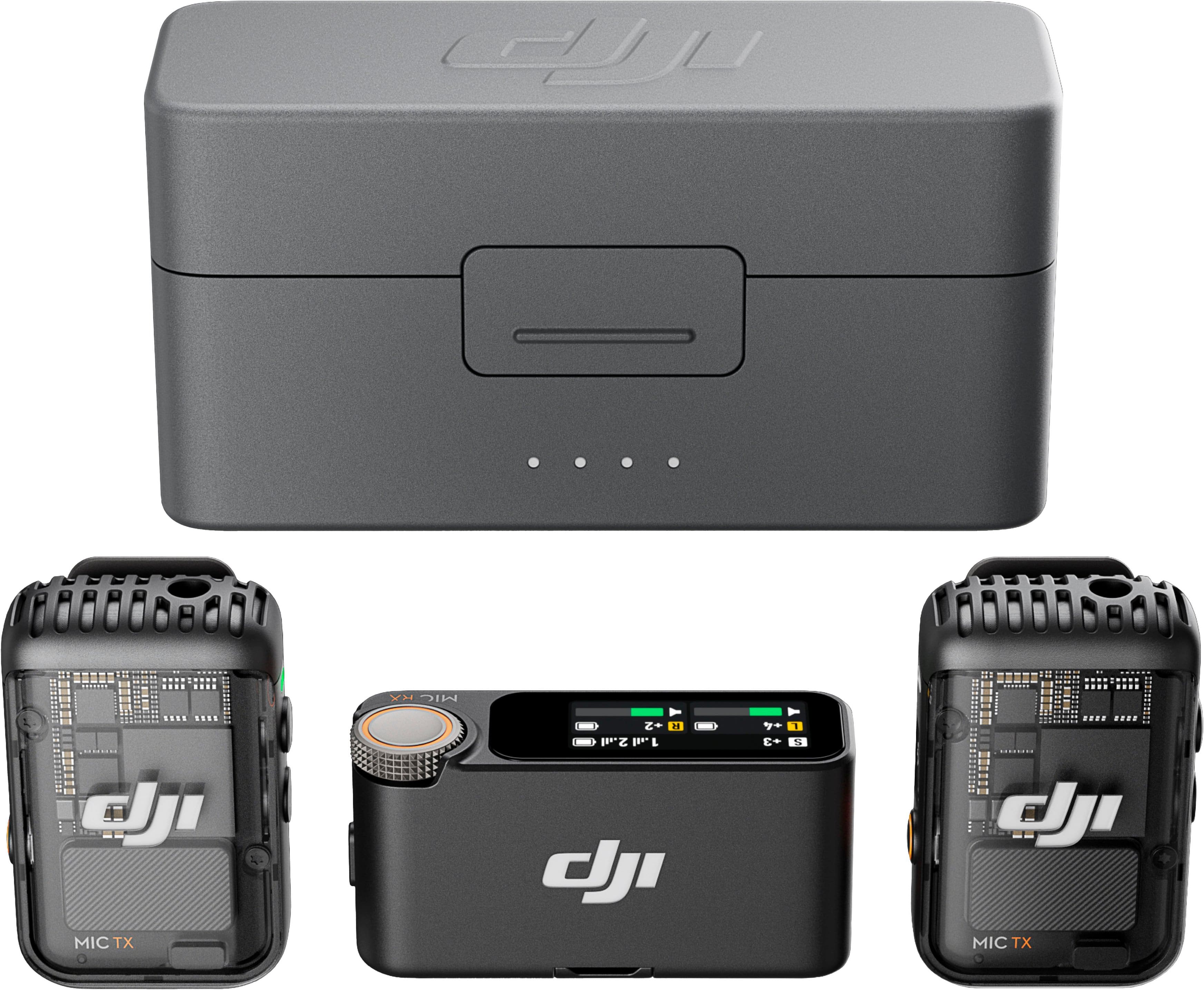
$349 (Dual Transmitter Kit) | Check Price on Amazon
The DJI Mic 2 has become “the best wireless microphone for most content creators” according to multiple professional reviews—and the real-world feedback backs it up. It’s the mic you see clipped to nearly every serious YouTuber and vlogger in 2026.
Why It Dominates for Creators
32-bit float recording saves your audio. This is the killer feature. Traditional mics clip when audio gets too loud—that’s ruined footage. The DJI Mic 2’s 32-bit float captures an enormous dynamic range, meaning you can rescue audio that would be destroyed on other mics. For creators who can’t do second takes, this is invaluable.
Intelligent noise cancellation actually works. DJI’s noise reduction has been “significantly improved” over the original Mic, according to hands-on testing. Wind noise, background chatter, traffic—the Mic 2 handles environments that would ruin audio from competitors.
All-in-one transmitter design. Each transmitter is the microphone. No separate lavalier to fumble with, no cables to hide. Clip it on and go. The magnetic attachment is stronger than the original, addressing user complaints.
Internal recording backup. The transmitters record locally as a safety net. If your camera cuts, your wireless drops, or you forget to hit record—your audio is still there. Multiple creators have called this “genius” for field work.
18 hours of battery life with case. Six hours per transmitter charge, with the charging case tripling that. You can film all day without worrying about power.
The Honest Downsides
Wireless range doesn’t match claims. DJI advertises 820 feet (250m), but real-world testing shows reliable performance at around 200 feet. Beyond 125 feet with any obstruction, expect dropouts. Multiple users on forums confirm this limitation.
Connection issues when switching devices. Some users report frustration when pairing with different cameras. As one r/videography user noted: “Bluetooth connection can be finicky when switching between phone and camera.”
LiveStreaming audio sync problems. Several creators have reported audio drift during extended livestreams. For recorded content this isn’t an issue, but streamers should test thoroughly.
No locking connector. Unlike the Rode Wireless Pro, the DJI uses a standard connection that can work loose during active shooting. Professional users may find this limiting.
Premium price. At $349 for the dual kit, it’s the most expensive option in this roundup. Worth it for serious creators, but a significant investment for hobbyists.
Specs at a Glance
| Spec | Details |
|---|---|
| Recording | 32-bit float, 24-bit/48kHz uncompressed |
| Transmission Range | 250m claimed (200ft reliable) |
| Noise Cancellation | Intelligent NC + wind reduction |
| Battery | 6 hours per TX, 18 hours with case |
| Internal Storage | 8GB per transmitter |
| Weight | 30g per transmitter |
| Compatibility | Camera, phone (USB-C/Lightning), computer |
Best For:
- ✓ Vloggers and mobile creators
- ✓ Run-and-gun documentary work
- ✓ Solo creators who can’t afford clipped audio
- ✓ Anyone filming in unpredictable environments
Skip If:
- ✗ You primarily create desk-based content
- ✗ Budget is a major constraint
- ✗ You need proven reliability for paid gigs
#2: Rode Wireless Go II — Best for Interviews & Reliability
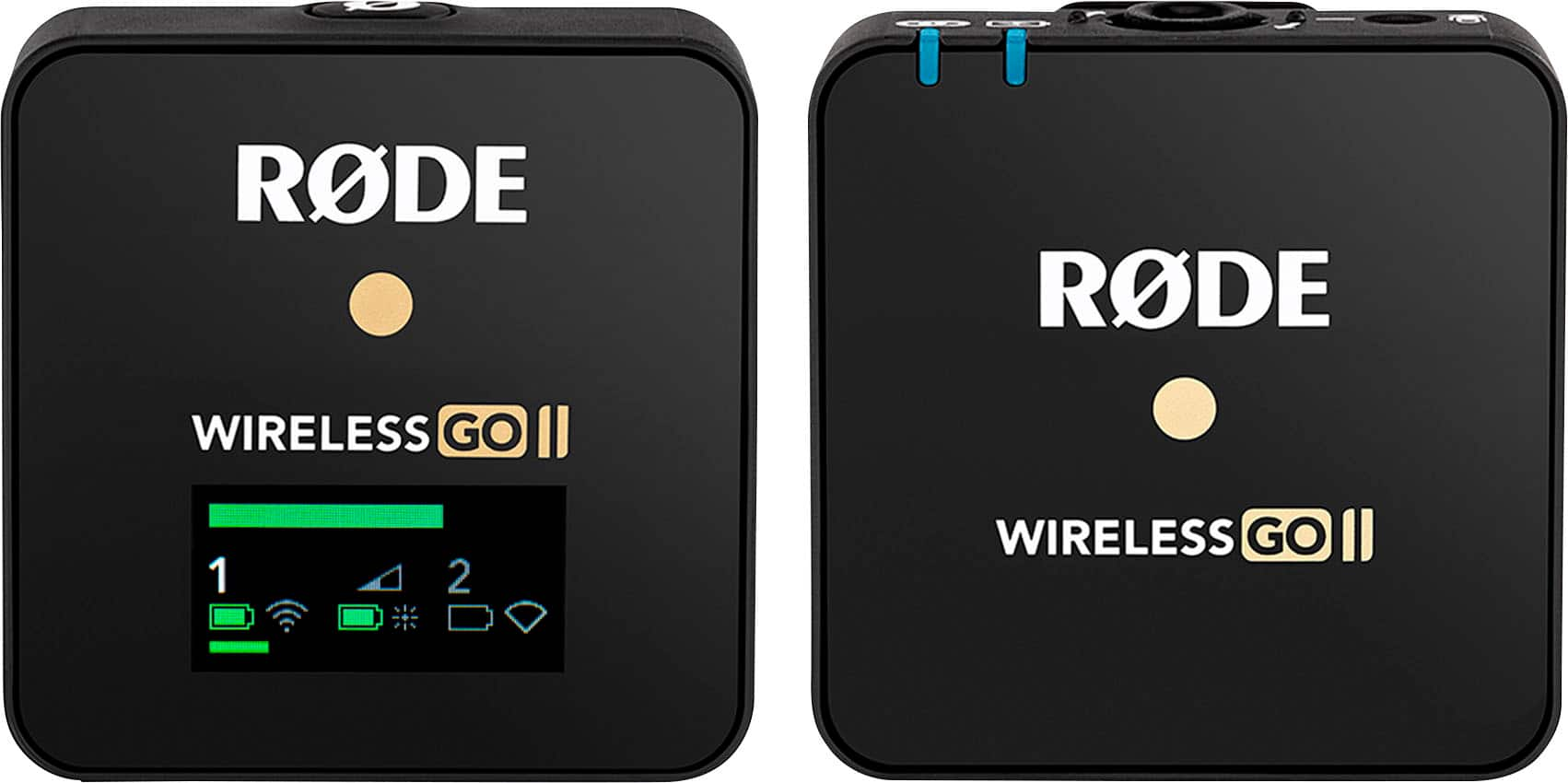
$299 (Dual Kit) | $199 (Single) | Check Price on Amazon
The Rode Wireless Go II was “a spectacular leap forward from the first generation” and remains the go-to choice for interview-based creators. Where the DJI excels in convenience, the Rode offers battle-tested reliability and a lower price point.
Why Creators Trust It
True dual-channel recording. Each transmitter records to its own channel, giving you complete control in post. For interviews, this is essential—you can adjust each speaker’s levels independently.
200m proven range. While DJI overclaims, Rode’s 200m line-of-sight spec actually holds up in testing. The system is remarkably stable within its rated range.
Safety channel is brilliant. The Rode records a -20dB backup track automatically. If your main audio clips, you have a usable fallback. This feature alone has saved countless interviews.
40 hours of onboard recording. The transmitters store audio internally as backup. That’s significantly more than the DJI’s 8GB per unit.
Seven hours battery life. Slightly longer than the DJI per charge, and USB-C charging means any modern cable works.
Works with everything. Camera, phone, computer, audio recorder—the Wireless Go II plays nice with virtually any device. The included cable variety covers most scenarios.
The Honest Downsides
Settings require a computer. This is the biggest frustration. To access advanced features—gain staging, low-cut filters, safety channel settings—you need to connect to Rode Central on a computer. A mobile app would make this far more practical for field work.
Firmware update headaches. Multiple users report issues after firmware updates, from pairing problems to intermittent dropouts. As one Reddit user complained: “Every firmware update seems to break something new.”
No 32-bit float. The Rode records 24-bit audio, which is excellent but less forgiving than 32-bit float. Proper gain staging is essential.
WiFi interference sensitivity. In environments with heavy 2.4GHz traffic (conventions, crowded venues), some users experience increased dropouts. The DJI handles interference better.
iPhone compatibility frustrations. Multiple users report issues with iOS connectivity and the Rode Central app. “iPhone users tend to have more problems,” one forum user noted.
Specs at a Glance
| Spec | Details |
|---|---|
| Recording | 24-bit/48kHz, -20dB safety channel |
| Transmission Range | 200m line-of-sight |
| Battery | 7 hours per unit |
| Internal Storage | 40 hours per transmitter |
| Weight | 31g per transmitter |
| Compatibility | Camera, phone, computer, audio interfaces |
Best For:
- ✓ Interview-based content (podcasts, documentaries)
- ✓ Creators who prioritize reliability over features
- ✓ Budget-conscious professionals
- ✓ Two-person setups
Skip If:
- ✗ You need mobile-friendly settings adjustment
- ✗ You film in high-interference environments
- ✗ Clipping prevention is critical (get 32-bit float)
#3: Shure MV7+ — Best for Podcasters & Streamers
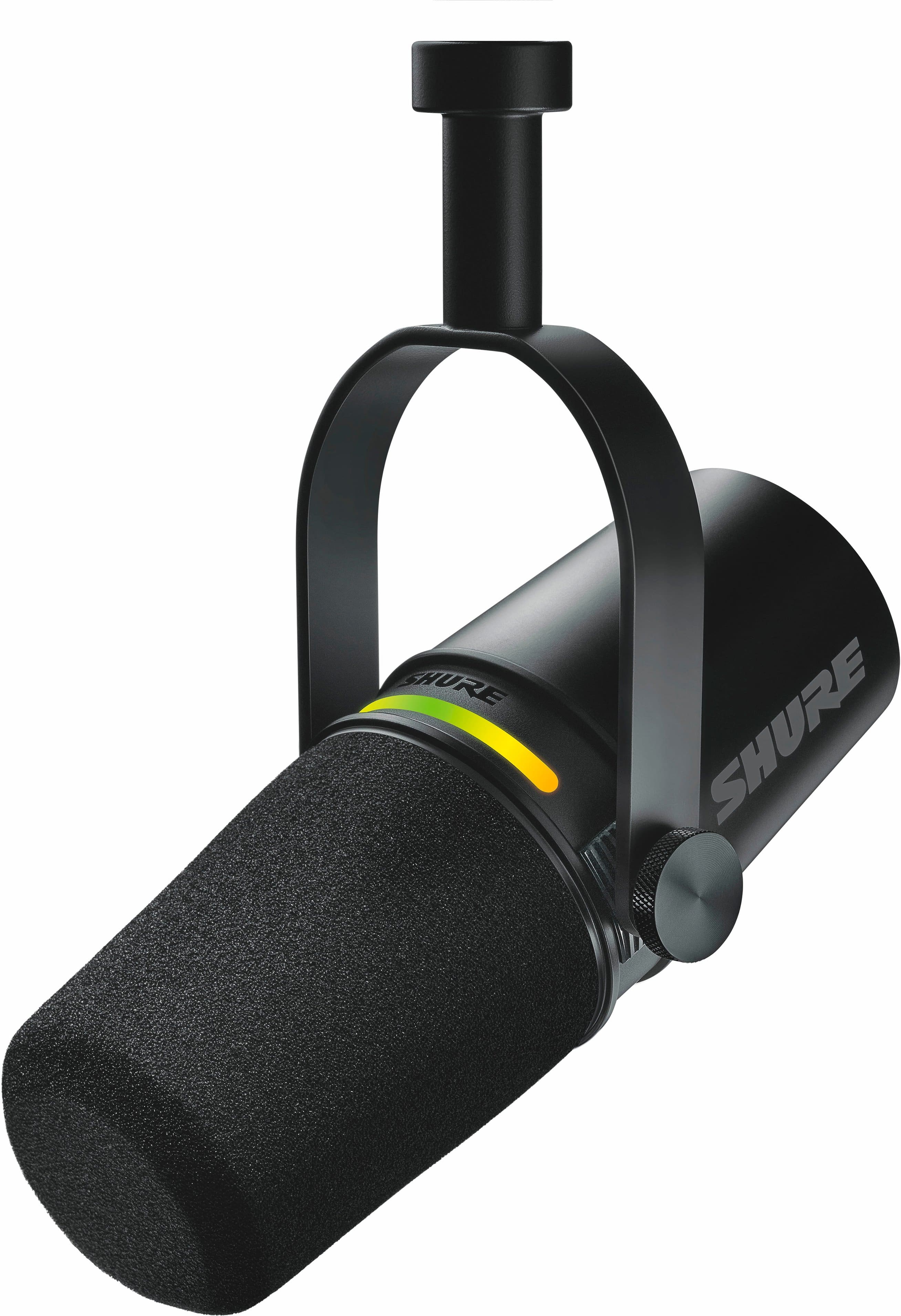
$279 | Check Price on Amazon
Here’s the truth: if you’re primarily desk-based, you don’t need wireless. The Shure MV7+ delivers studio-quality audio that wireless mics simply can’t match, at a lower price than the DJI. It’s “the closest you can get to an SM7B with the convenience of USB connectivity.”
Why Podcasters Love It
Hybrid USB-C and XLR. Plug into your laptop via USB-C for instant setup with built-in DSP processing. Or connect via XLR to a professional interface for maximum quality. Having both options future-proofs your investment.
Improved plosive handling. The MV7+ features a redesigned windscreen with an air gap between the screen and capsule—directly addressing the biggest complaint about the original MV7. Those harsh “P” and “B” sounds are significantly reduced.
Built-in denoiser is exceptional. Shure’s DSP processing “effortlessly removes preamp hiss and ambient noise without getting in the way.” For creators without treated rooms, this is a major advantage.
One-click presets that work. The MOTIV Mix software includes “Podcast” and “Live Stream” presets that sound genuinely good out of the box. You can also deep-dive into compression, EQ, and high-pass filters if you want control.
Touch-sensitive controls. The new light bar acts as a mute button and offers color customization. It’s more intuitive than the original MV7’s physical controls.
Excellent off-axis rejection. The cardioid pattern is tight, meaning less room noise and keyboard clatter in your recordings. Podcastage testing confirmed strong rejection from the sides.
The Honest Downsides
MOTIV Mix software frustrations. The software is desktop-only—no mobile app support yet. Shure is transitioning from ShurePlus MOTIV to the new Mix software, and some users find the transition rocky.
Noticeable USB monitoring latency. When using USB with headphone monitoring, there’s perceptible delay—especially at low headphone volumes. The Rode PodMic USB gets “far closer to zero-latency monitoring.”
DSP only works over USB. Those fancy processing features? They require USB connection. Through XLR, you get a clean mic signal but none of the built-in effects.
USB-C connection feels wobbly. Multiple reviewers note the USB port doesn’t have a confident connection. In a fixed desk setup this is fine, but any movement can be concerning.
More competition at this price. The Rode PodMic USB offers similar features at $199, making the MV7+ harder to justify unless you specifically want the Shure sound signature.
Specs at a Glance
| Spec | Details |
|---|---|
| Connection | USB-C, XLR |
| Frequency Response | 50Hz - 16kHz |
| Polar Pattern | Cardioid |
| Sample Rate | 24-bit/48kHz |
| DSP Features | EQ, compression, denoiser, limiter, reverb |
| Sensitivity | -55dBV (XLR) |
| Max SPL | 128dB (USB) |
Best For:
- ✓ Podcasters and streamers
- ✓ Desk-based YouTubers
- ✓ Creators wanting studio quality without complexity
- ✓ Anyone who might upgrade to XLR later
Skip If:
- ✗ You need mobile recording
- ✗ Zero-latency monitoring is critical
- ✗ You only need USB (consider cheaper options)
Head-to-Head Comparison
| Feature | DJI Mic 2 | Rode Wireless Go II | Shure MV7+ |
|---|---|---|---|
| Price | $349 | $299 ($199 single) | $279 |
| Type | Wireless Lav | Wireless Lav | USB/XLR Desk |
| Best For | Mobile creators | Interviews | Podcasters |
| Recording | 32-bit float | 24-bit + safety | 24-bit |
| Range | 200ft real | 200m reliable | N/A (wired) |
| Noise Cancellation | ✓ AI-powered | ✗ Basic | ✓ DSP denoiser |
| Internal Backup | ✓ 8GB | ✓ 40hrs | ✗ N/A |
| Battery | 18hrs w/case | 7hrs | N/A (USB power) |
| Mobile Settings | ✓ App | ✗ Desktop only | ✗ Desktop only |
| Learning Curve | Low | Medium | Low |
How to Choose: The Real Decision Tree
Start here: Where do you create content?
Mostly mobile/on-location → Get the DJI Mic 2. The 32-bit float recording, intelligent noise cancellation, and all-in-one convenience justify the premium. You’re investing in audio insurance.
Split between desk and mobile → Get the Rode Wireless Go II. It’s versatile enough for field work and reliable enough for interviews. The lower price leaves budget for a desk mic later.
Primarily desk-based → Get the Shure MV7+. Wireless mics are a compromise for mobility—if you don’t need mobility, don’t compromise. The MV7+ sounds better than any wireless option.
Starting out with limited budget → Get the Rode Wireless Go II Single ($199) or look for a used original Shure MV7 (~$200). Both are proven performers that won’t limit your growth.
Our Recommendation
For serious content creators who film on the go: The DJI Mic 2 is the clear winner. Yes, it’s the most expensive option, but 32-bit float recording is genuine peace of mind. You can’t fix clipped audio in post—but you also can’t clip 32-bit audio. For creators whose income depends on usable footage, that’s worth the premium.
For interview-based creators and budget-conscious professionals: The Rode Wireless Go II remains excellent value. It’s been refined over years of real-world use, the dual-channel recording is perfectly suited for conversations, and the safety channel adds welcome protection.
For podcasters, streamers, and desk-based creators: The Shure MV7+ delivers audio quality that wireless mics can’t touch. The hybrid USB/XLR design grows with your setup, and the built-in DSP processing means great sound with minimal effort.
The Bottom Line
Bad audio kills content faster than bad video. Viewers will watch grainy footage with clear sound, but they’ll click away from 4K video with muddy audio in seconds.
The good news: all three microphones in this guide deliver professional-quality audio. The choice comes down to how you create content, not which mic is “best” in absolute terms.
Mobile creators: DJI Mic 2 Interview creators: Rode Wireless Go II Desk creators: Shure MV7+
Pick the one that matches your workflow, invest in good technique (mic placement matters more than price), and stop worrying about gear. Your audience cares about your content—and now they’ll actually be able to hear it.
Last updated: February 2026. Prices and availability subject to change.