
I’ll be honest — up until about two months ago, I thought LED strip lights were all basically the same thing. Cheap Chinese strips you slap behind your TV, they glow purple for a week, then half the LEDs die and you throw the whole thing away.
I was wrong. Like, embarassingly wrong.
My girlfriend wanted ambient lighting for our living room and bedroom, so I figured I’d just grab whatever was cheapest on Amazon and call it a day. But then I made the mistake of going down a YouTube rabbit hole. Shane Craig from Shane Whatley did a comparison video that made me realize these things range from absolute garbage to genuinely impressive. And the price difference isn’t even that crazy.
So I did what any reasonable person would do — I ordered five different strips and tested them all over the past 8 weeks. Here’s what I found.
The Five Strips I Tested
Quick overview before I get into the details:
- KSIPZE 100ft RGB Strip — $14.99 (the ultra-budget pick)
- Govee RGBIC 16.4ft — $15.99 (the internet’s darling)
- Govee 100ft RGBIC WiFi — $29.99 (the “best value” everyone recommends)
- Nanoleaf Essentials Lightstrip — $39.99 (the smart home pick)
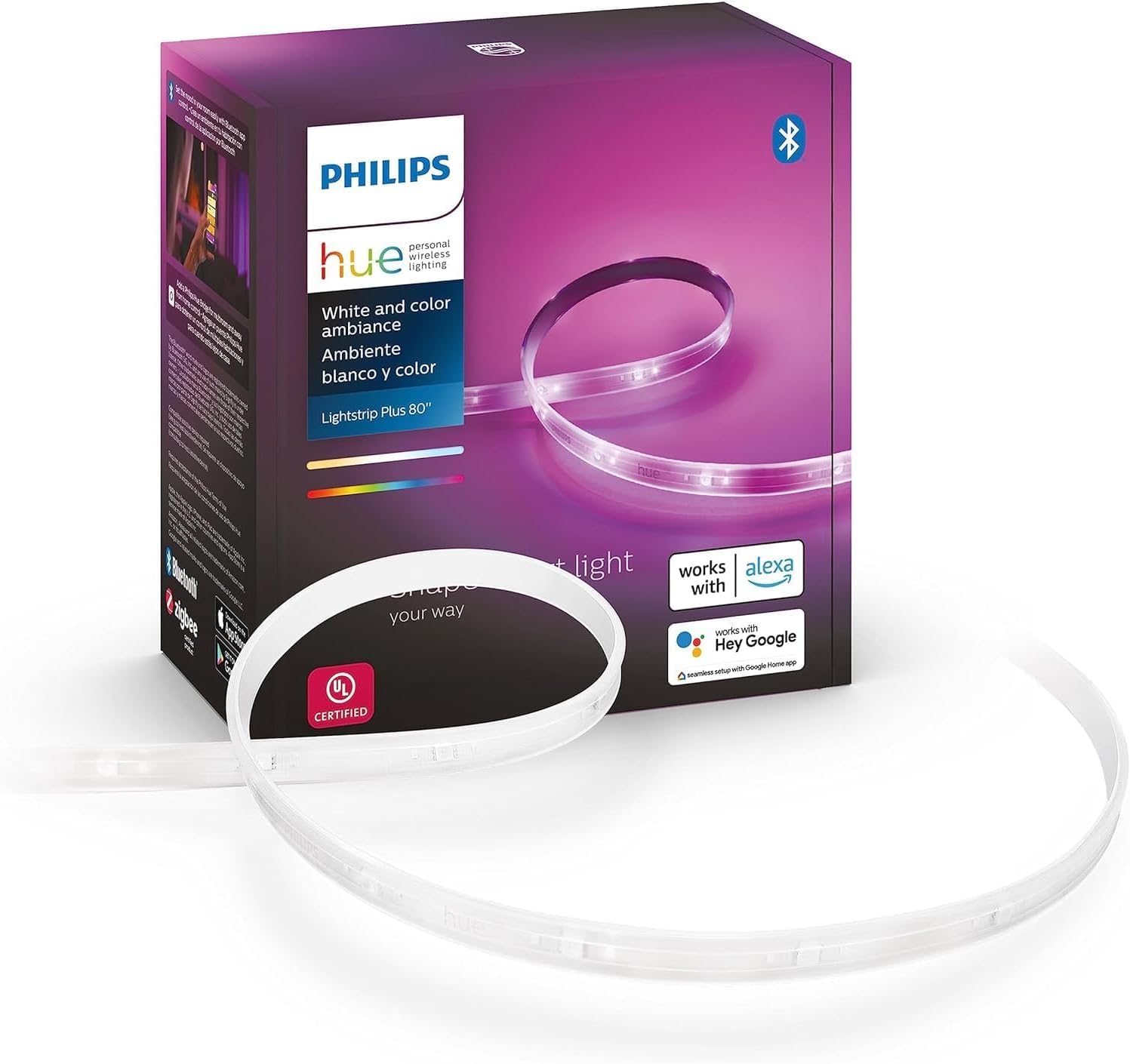
- Philips Hue Lightstrip Plus — $69.99 (the “premium” option)
I installed each one in a different spot — behind the TV, under kitchen cabinets, around my desk, along the bedroom ceiling, and in the hallway. Rotated them around after the first month so each strip got tested in multiple locations.
The $15 Strip That Changed My Mind
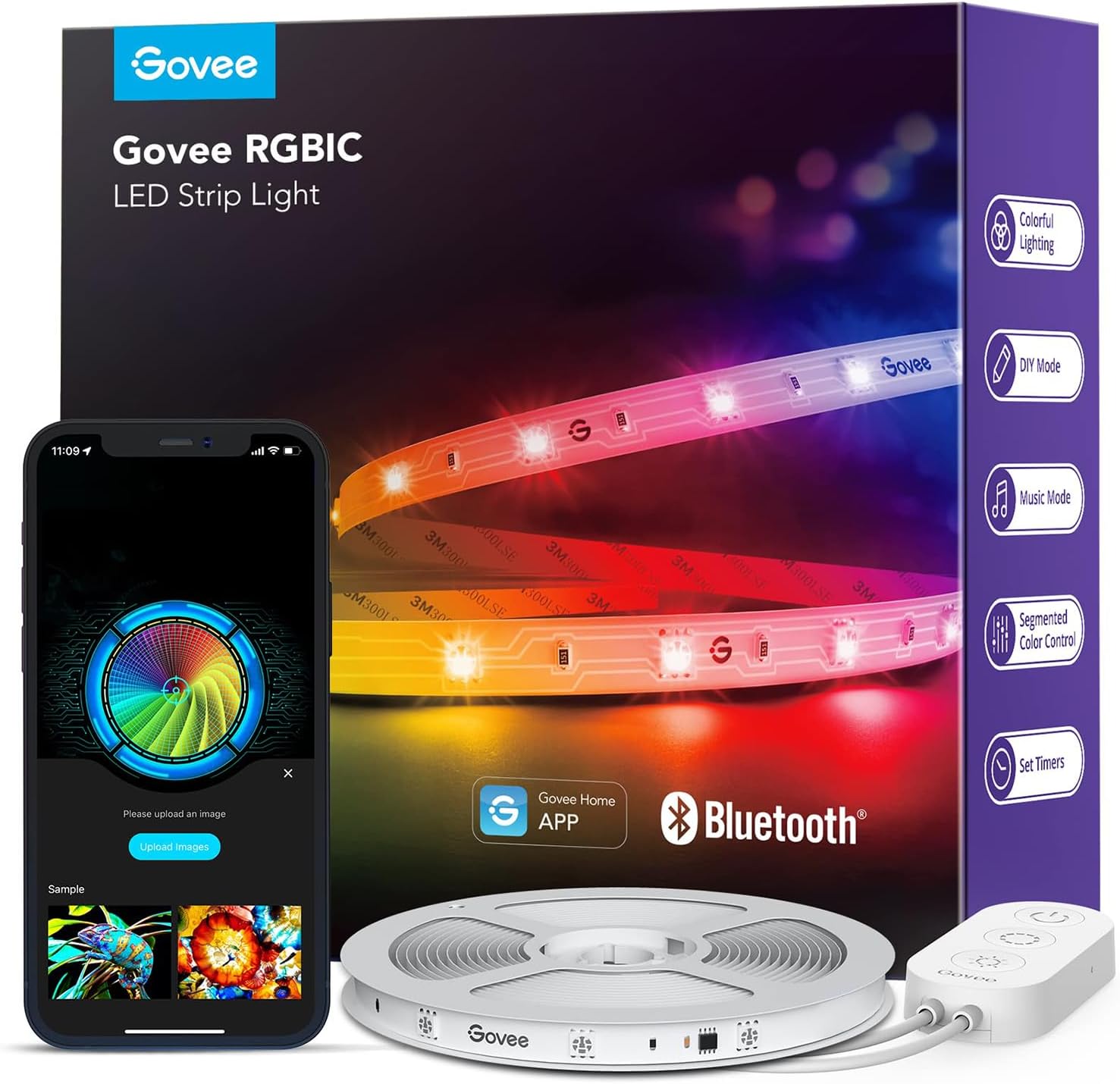
Look, the Govee RGBIC 16.4ft strip has like 90,000 reviews on Amazon for a reason. I was skeptical because… 90,000 reviews? That screams fake to me. But no — this thing is actually legit.
The RGBIC technology means each section of the strip can display a different color at the same time. My cheap KSIPZE strip? One color for the whole thing. The Govee looks like a rainbow while the KSIPZE looks like a glowstick. Massive difference for basically the same price.
The Govee Home app is suprisingly decent too. Music sync worked right away through the phone’s microphone — no special hardware needed. Put on some lo-fi beats and the strip behind my desk was pulsing along within seconds. My buddy who does video production said it looked like a proper streaming setup.
Check the Govee RGBIC 16.4ft on Amazon
What About the Ultra-Budget Option?
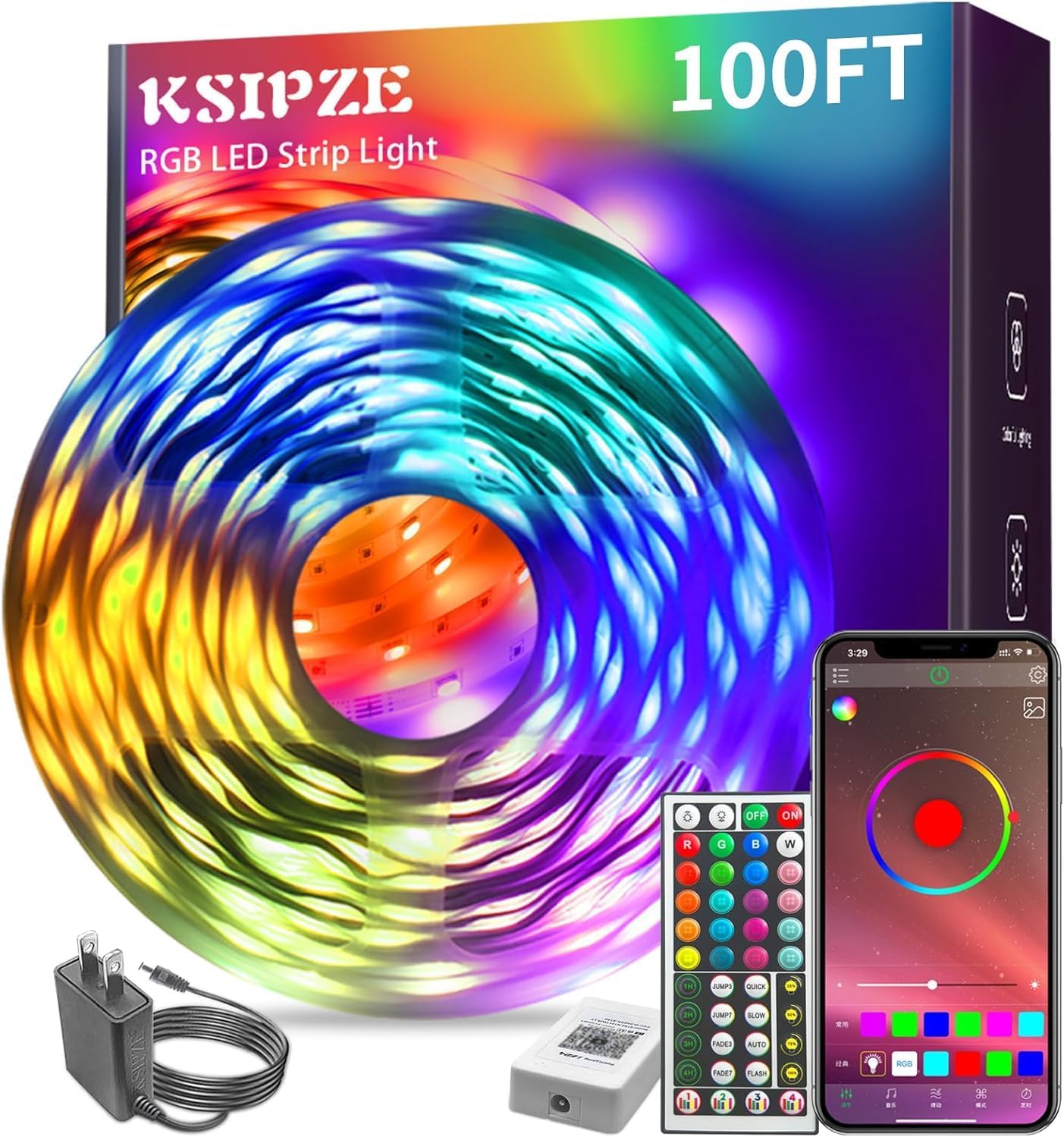
The KSIPZE 100ft strip is… fine. For fifteen bucks you get a LOT of strip. Like, way more than most people need. I wrapped my entire bedroom ceiling and still had leftover.
But here’s the thing — its just plain RGB. One color at a time across the whole strip. The colors are kinda washed out compared to the Govee, especially the whites. “Warm white” looked more like sick yellow. Cool white was acceptable but not great.
The IR remote it comes with works, but you gotta point it directly at the receiver box. From across the room at an angle? Forget about it. The app exists but its clunky and slow.
If you literally just want purple mood lighting in a dorm room and nothing else, sure. It works for that. But for $1 more you could get the 16ft Govee and have something significantly better — just shorter.
The Govee 100ft WiFi — My Actual Recommendation
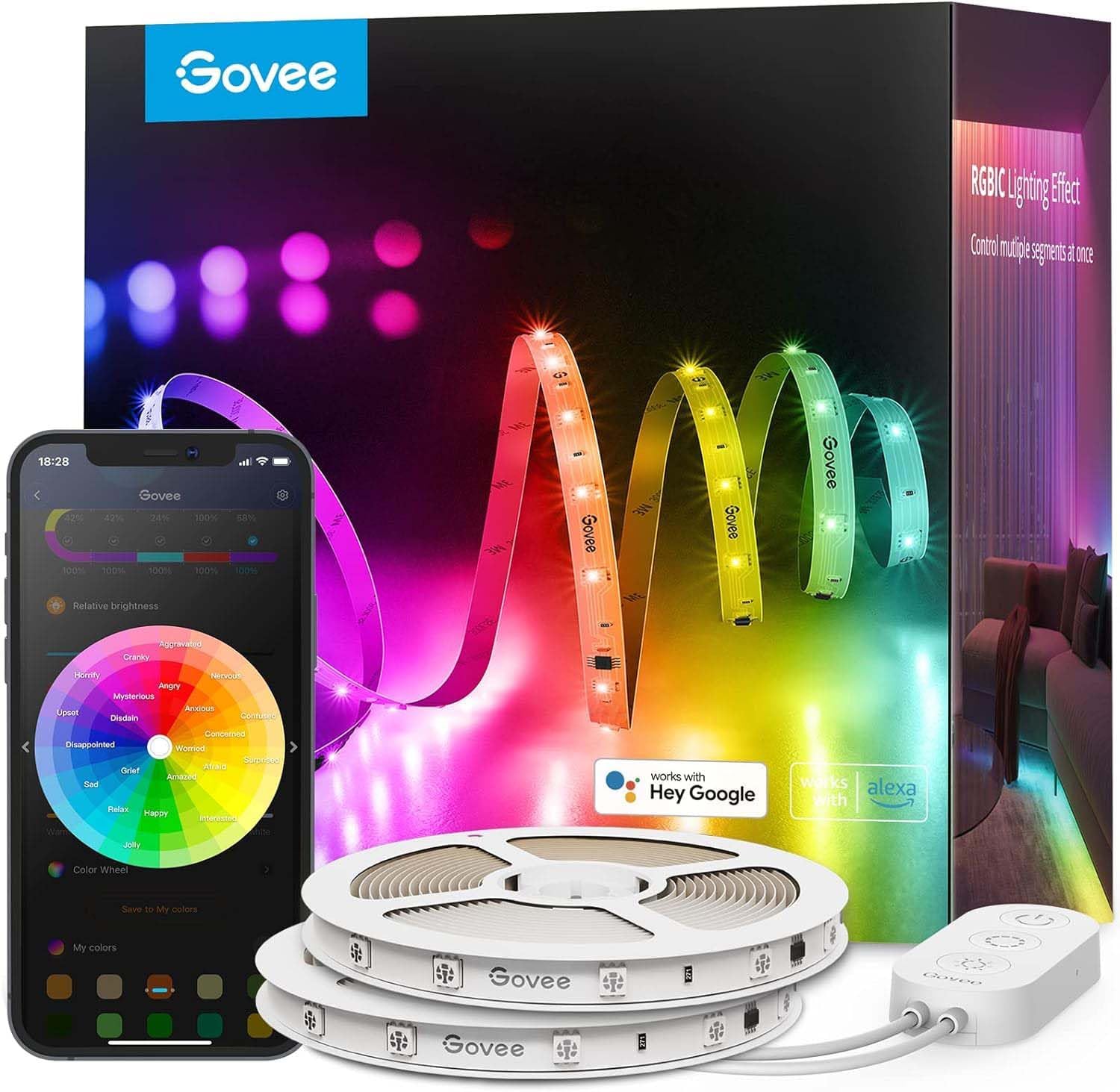
Ok so if I had to pick ONE strip for most people, this is it. The Govee 100ft RGBIC WiFi version gives you everything the 16ft version does but adds WiFi and Alexa/Google integration. And you get 100 feet of strip for thirty bucks.
I ran this one around the entire perimeter of my living room ceiling. Took maybe 45 minutes to install, mostly because I kept second-guessing my corner technique. The adhesive held up fine on drywall — two months later and nothing has fallen down. My buddy’s strips fell off his textured ceiling after a week though, so your mileage may vary.
The WiFi connection means you can control it without Bluetooth range limits. I can turn the lights on from the couch, from bed, from work — wherever. “Hey Google, set the living room strips to movie mode” actually works and I feel like I’m living in the future every time I say it.
Colors are vibrant, the RGBIC segmented control looks fantastic, and the music sync through WiFi is noticeably better than the Bluetooth version. Less latency. More responsive.
The only downside? Two rolls of 50ft each, connected by a cable. The connection point is visible if you look closely. Not a dealbreaker but worth mentioning.
See the Govee 100ft WiFi on Amazon
The Smart Home Contender: Nanoleaf Essentials
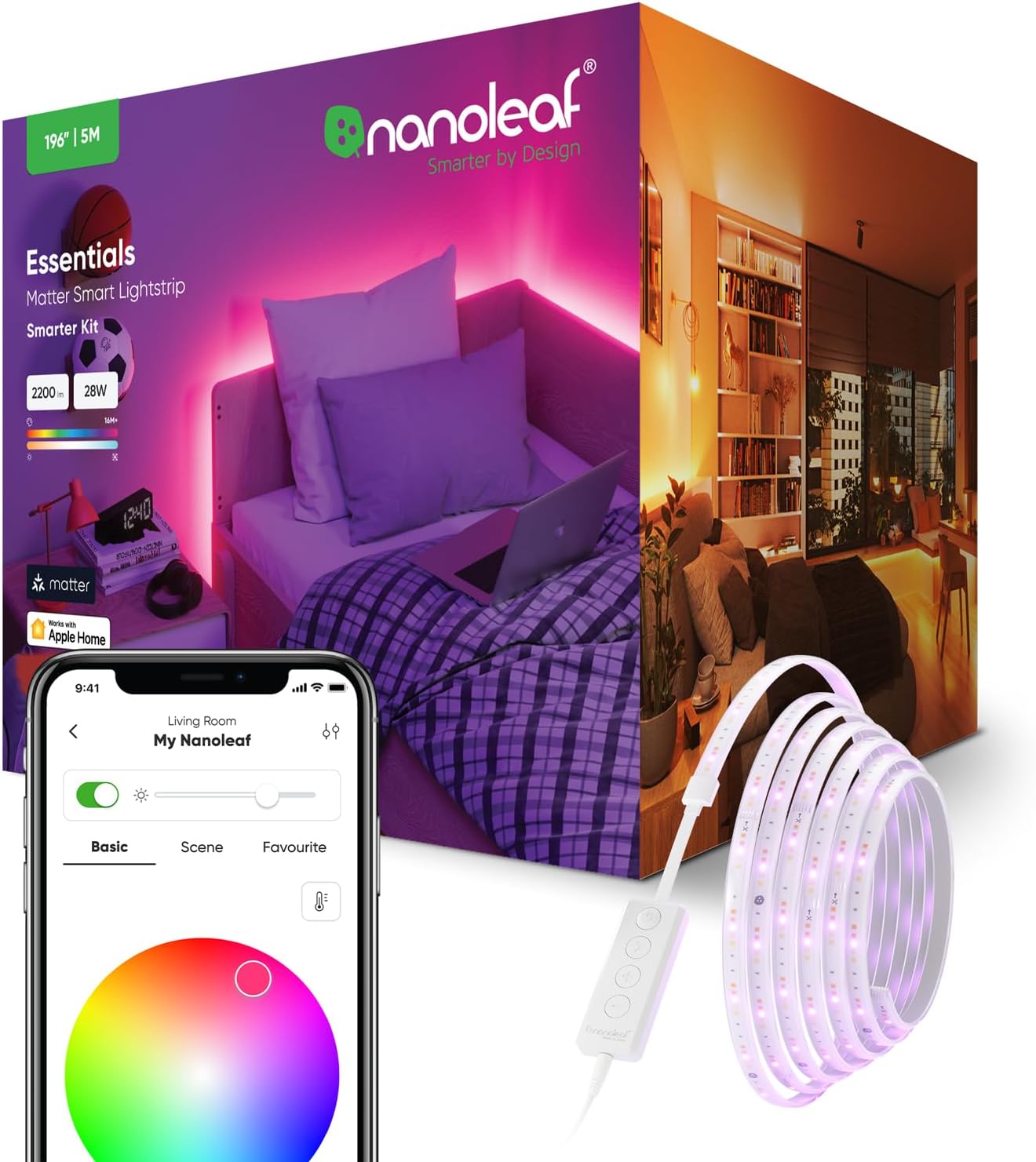
Nanoleaf is the brand you see all over Instagram with those triangle light panels. Their strip light is… interesting. It’s the only one here that supports Matter and Thread natively, which matters if you’re deep into Apple HomeKit or building a serious smart home setup.
The color accuracy on the Nanoleaf is actually the best of the bunch. Like, the reds look RED, not orange-red. The greens don’t lean blue. If color accuracy matters to you — maybe you’re a photographer or just picky — the Nanoleaf wins this category.
But at $40 for 16 feet, its twice the price of the Govee for similar length. And the app? The Nanoleaf app is the worst of the group by far. Slow to load. Crashes on my Pixel 8. The Bluetooth pairing took four attempts. Once its connected through HomeKit everything is smooth, but getting there was genuinely frustrating.
I wouldn’t recommend this unless you’re specifically using Apple Home or need Matter compatibility. For everyone else, the Govee does 90% of what this does for half the price.
Check the Nanoleaf Essentials on Amazon
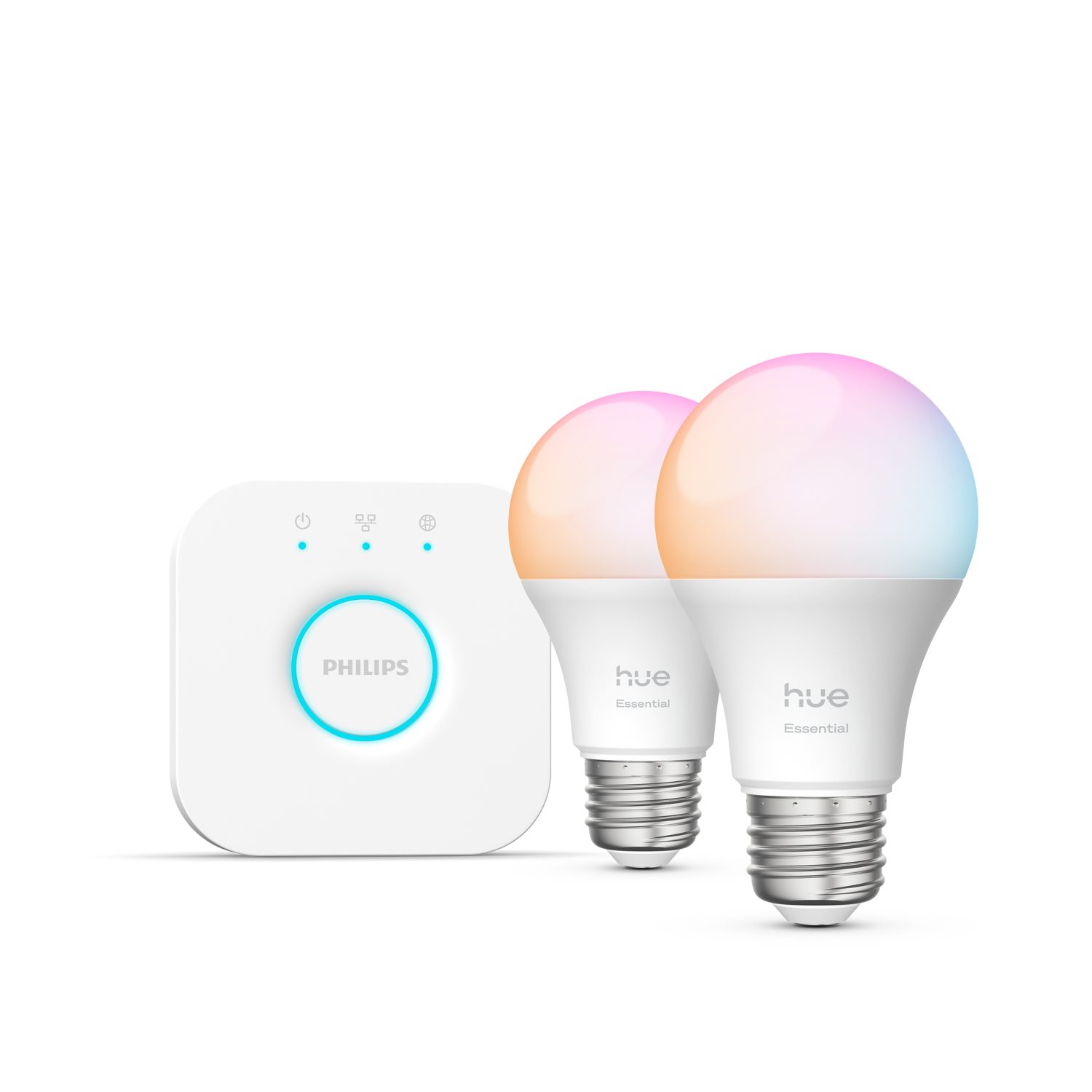
The Premium Pick: Philips Hue Lightstrip Plus
Right. So this is where I’m gonna be a little controversial.
The Philips Hue Lightstrip Plus costs $70 for 6.6 feet. Six and a half feet. For seventy dollars. The Govee gives you 100 feet for $30.
Is it better? Yes, technically. The white light on the Hue is genuinely beautiful — it produces a warm, natural white that none of the others come close to matching. If you’re using strips for under-cabinet kitchen lighting and you want it to look like actual light (not LED light), the Hue is unmatched.
The color reproduction is excellent. The Hue ecosystem integration is rock solid. The light output per foot is brighter than anything else I tested.
But the value proposition just isn’t there for most people. You need the Hue Bridge ($60 separately) for full functionality. The strip itself covers a laughably small area. Want to do a full room? You’re looking at $300+ easily.
A YouTuber called HueBlog did a side-by-side of the Hue vs Govee COB strips and honestly… in a dark room with colored lighting, most people couldn’t tell the difference. The Hue’s advantage shows up primarily with whites and in bright environments.
My verdict on Hue: amazing product, terrible value. Get it only if you’re already in the Hue ecosystem and primarily want white task lighting.
What I Actually Learned After 2 Months
A few things surprised me that I didn’t expect:
Adhesive matters more than you think. The KSIPZE adhesive started peeling in the bathroom (humidity, I guess). The Govee and Hue strips are still stuck solid everywhere. If you’re putting these in a bathroom or kitchen, don’t cheap out on the adhesive — or just use 3M command clips.
RGBIC vs RGB is a bigger deal than I assumed. Once you see a strip doing multiple colors at once, going back to single-color feels like going from color TV to black and white. It’s one of those things where you didn’t know you wanted it until you had it.
Smart home integration is overrated for most people. I thought I’d use voice control all the time. Turns out I mostly just open the app, pick a color, and forget about it. The Alexa/Google stuff is cool for the first week then you kinda stop caring. Unless you’re setting up automations (lights on at sunset, etc.), you don’t really need WiFi.
Brightness varies wildly. The Hue at full brightness lit up my entire kitchen counter area. The KSIPZE at full brightness was more of a gentle glow. Same “LED strip” category, completley different output.
So Which One Should You Buy?
Here’s my honest breakdown after living with all five:
Just want cheap room vibes: Govee RGBIC 16.4ft ($16). Don’t overthink it. It’s $16 and it looks great.
Want to light up a whole room: Govee 100ft RGBIC WiFi ($30). Best value by a mile. This is what I kept installed in my living room.
Deep into Apple HomeKit: Nanoleaf Essentials ($40). The Matter/Thread support is genuinely useful if you’ve got a HomePod and want everything integrated.
Need premium white light: Philips Hue Lightstrip Plus ($70). If you know, you know. But most people don’t need this.
On the absolute tightest budget: KSIPZE 100ft ($15). It works. That’s about the nicest thing I can say. But for $1 more the Govee 16ft is significantly better.
I paid for every strip in this comparison myself. Nobody sent me free stuff, nobody asked me to write this. I just spent too much money on LED strips and figured I’d share what I learned so you don’t have to.