
We need to rant for a second.
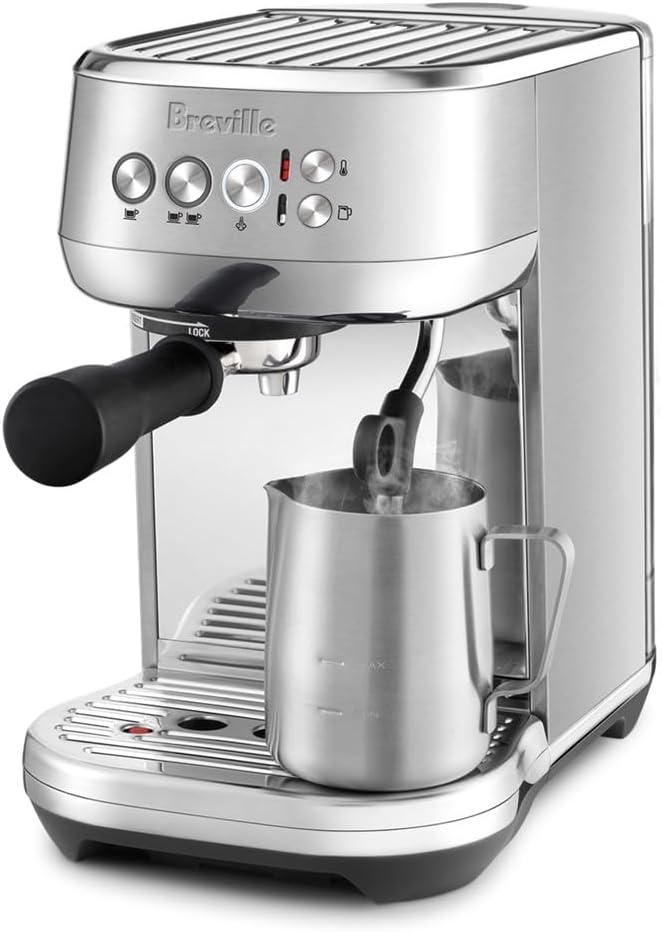
My coworker just spent $279 on a Breville drip machine. Two hundred and seventy nine dollars. For a thing that heats water and pours it over ground beans. She was showing it off in the break room last week like she’d just bought a Tesla and I had to physically stop myself from saying anything because I didn’t want to be that guy.
But I’m going to be that guy right now, here, on the internet, where nobody can stop me.
French press coffee is better than drip. Period. And it costs between $25 and $40. I’ve been making my coffee this way for about a year now — started with a cheap Bodum, upgraded to an Espro, and also tried a Mueller stainless steel one that my brother-in-law swore by. We know exactly what’s worth buying and what isn’t.
So let us answer every question you probably have.
“But Isn’t French Press Coffee… Gritty?”
This is the number one thing people say and it drives me nuts. Yes, cheap french presses can leave sediment in your cup. My old $15 one from Target definately did. But that’s a filter problem, not a french press problem.
The Espro P3 basically solved this. It has two micro-mesh filters instead of one, and I’m not exaggerating when I say my coffee comes out cleaner than most drip machines I’ve used. No grit. No sludge at the bottom of the cup. I was shocked honestly.
The Bodum Chambord — which is the “classic” french press that everyone pictures — does leave a tiny bit of sediment. It’s not bad, maybe a few particles at the very bottom of your mug. Some people actually prefer that. It adds body. But if it bothers you, the Espro fixes it completely.
“How Much Better Does It Actually Taste?”
Night and day. And I’m not being dramatic.
Here’s the thing about drip coffee machines: they pass water through the grounds once. French press lets the grounds steep in the water for 4 minutes. All that flavor, all those oils — they stay in the coffee instead of getting trapped in a paper filter.
I did a side-by-side test with my wife’s Keurig last month using the same beans (Kirkland medium roast, because I’m not a coffee snob). The french press version was richer, smoother, and had this almost chocolatey undertone that the Keurig completely missed. My wife — who is very much a Keurig loyalist — admitted the french press tasted better. She still uses her Keurig though because she’s stubborn. Love her.
Amazon reviewers back this up. One verified purchase review on the Espro P3 said “I threw away my $200 Cuisinart after the first cup from this thing.” That’s a real review. I read through like 300 of them when I was researching.
“Which One Should I Actually Buy?”
Depends on what you care about. Let me break down the three I’ve used.
The Espro P3 — Best Overall
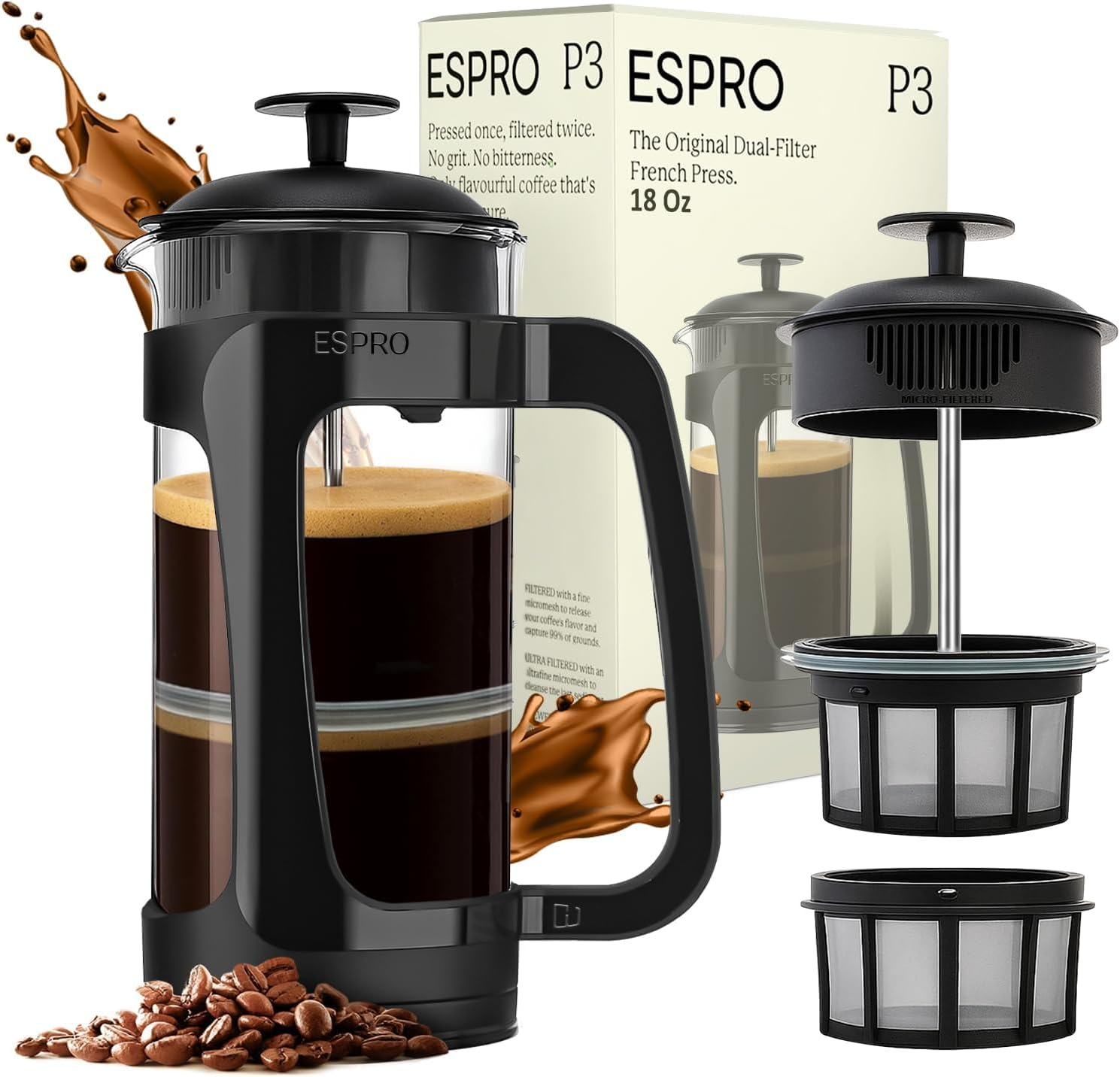
This is the one We use every single morning. The dual filter is genuinley the best innovation in french press design in like 50 years. Wirecutter picked it as their top choice too, and for once I actually agree with them.
What We like:
- Zero sediment. Seriously zero.
- Glass is thick — I’ve dropped the plunger on the counter twice and nothing happened
- Easy to take apart and clean
- Makes 32oz which is exactly two big mugs
What I don’t like:
- The plastic frame feels a little cheap compared to the Bodum’s metal
- It’s wider than most french presses so it takes up more counter space
- The lid doesn’t lock in place which is annoying when you’re pouring
I paid $37 for mine on Amazon. At that price it’s stupid not to try it.
The Bodum Chambord — The Classic
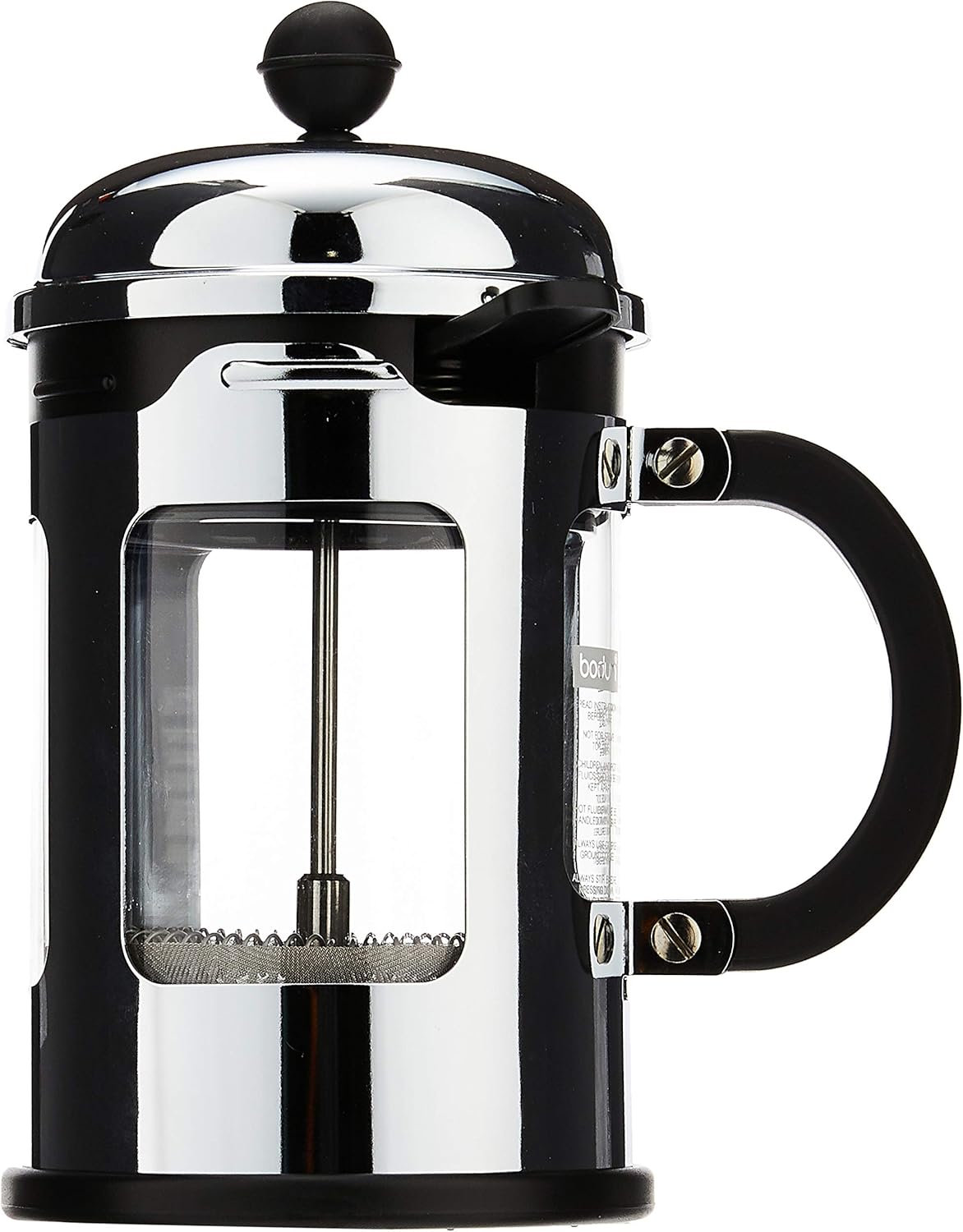
If you’ve ever seen a french press in a movie or a coffee shop, it was probably a Chambord. This thing has been around since the 1950s and theres a reason — it’s beautiful, it works, and it feels like a real piece of kitchen equipment.
The chrome frame is solid. The glass beaker is borosilicate which means it handles temperature changes without cracking. And it just looks good sitting on your counter, which sounds superficial but honestly matters when you use something every day.
The downside is the single mesh filter. It does let some fine grounds through — not a lot, but enough that you’ll notice if you’re comparing it to the Espro. Also the glass beaker is replaceable but costs like $38 which is almost what a whole new Chambord costs. Ask me how We know. (My cat knocked it off the counter in October.)
I’d say the Chambord is for people who care about aesthetics and don’t mind a tiny bit of body in their coffee. It makes great coffee. Just not quite as clean as the Espro.
The Mueller Stainless Steel — For the Clumsy
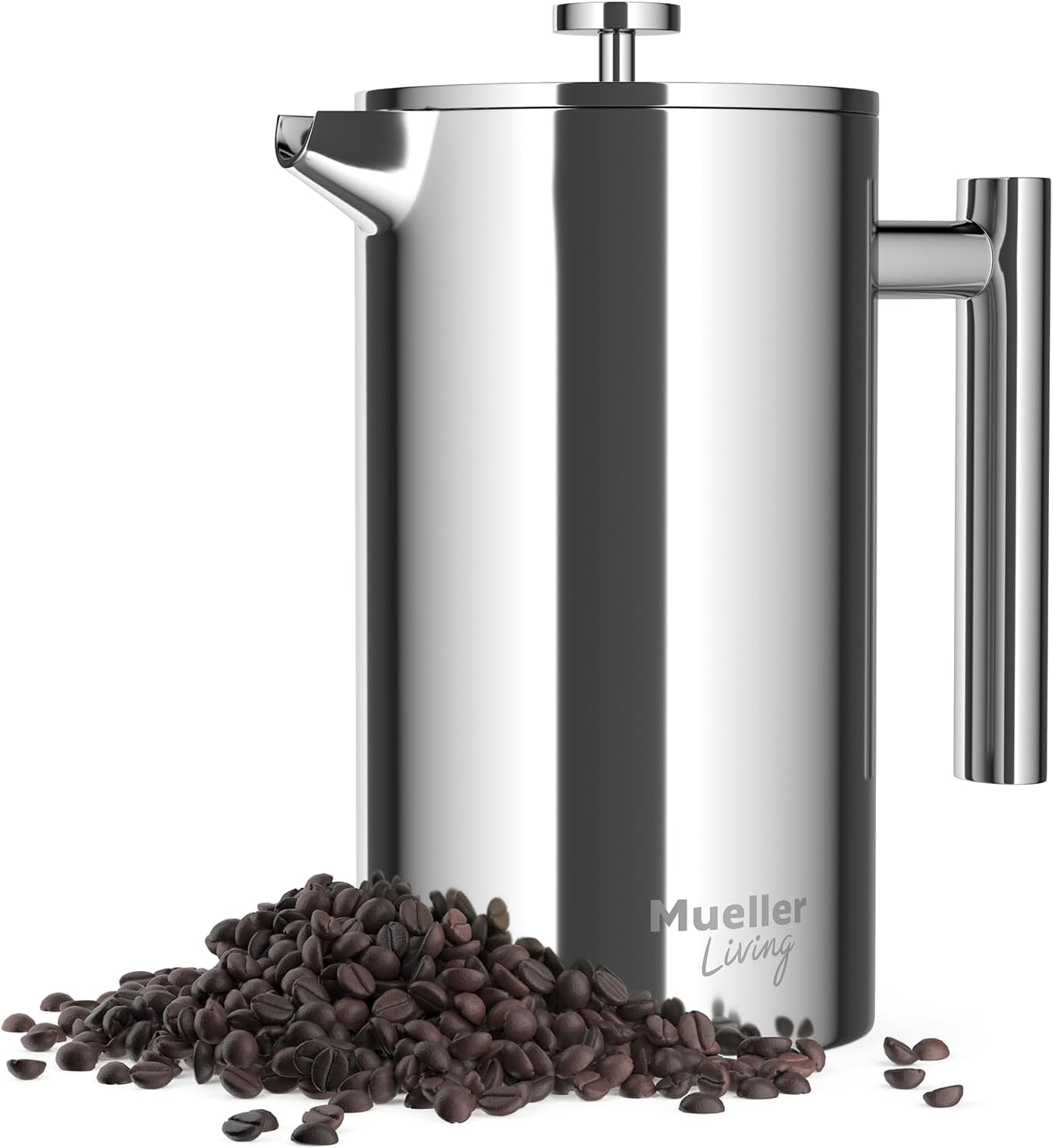
My brother-in-law has had this thing for three years. He has two kids under five. He’s dropped it more times than he can count and it still works perfectly because — surprise — stainless steel doesn’t shatter.
The Mueller is double-walled which means it keeps your coffee hot way longer than glass presses. We tested it once: after 45 minutes, the coffee in the Mueller was still warm enough to drink comfortably. The Espro was lukewarm at best.
But there’s a tradeoff. You can’t see the coffee while it’s brewing which makes it harder to judge the color and strength. You’re basically guessing or timing it. Also the steel gives the coffee a very slight metallic taste — I notice it, my wife doesn’t, so your mileage may vary.
Best for: parents with young kids, anyone who takes their french press camping or to the office, or people who’ve broken more than one glass press (no judgment).
“Is French Press Bad for Your Cholesterol?”
I’m gonna be honest, this one worried me when I first read about it. French press coffee doesn’t use a paper filter, which means it contains cafestol and kahweol — compounds that can raise your LDL cholesterol.
But here’s what the actual research says: you’d need to drink 5-6 cups of french press coffee a day for it to meaningfully impact your cholesterol. I drink two cups. My doctor said it’s fine. If you’re drinking six cups of any kind of coffee daily you probably have bigger things to worry about than your brewing method.
That said, if your doctor has specifically told you to watch your cholesterol, maybe stick with paper-filtered coffee. Or use the Espro P3 which catches way more of those compounds than a standard mesh filter. Not as much as paper, but significantly more than nothing.
“How Do I Actually Make Good French Press Coffee?”
Okay this is where most people screw up. They dump in some pre-ground Folgers, add boiling water, and then wonder why it tastes bitter and terrible.
Here’s my exact process:
Grind your own beans. Coarse grind, like sea salt texture. Pre-ground coffee is too fine for french press and that’s why people get muddy bitter coffee. We use a Javapresse hand grinder that cost $40 and it works great.
Use water that’s just off boil. Boil your kettle, then wait 30 seconds. You want around 200°F. Boiling water scorches the grounds and makes everything bitter.
Ratio: 1 gram of coffee per 15 grams of water. Or if you dont have a scale, roughly 2 tablespoons per 6oz of water. I eyeball it now but when I started I actually measured.
Pour, stir once, wait 4 minutes. Don’t plunge at 2 minutes because you’re impatient. Don’t wait 6 minutes because you got distracted by your phone. Four minutes. Set a timer.
Plunge slowly. Like 20-30 seconds to push the plunger down. If you slam it, you force grounds through the filter and make the coffee bitter.
Pour immediately. Don’t let coffee sit in the press after plunging. It’s still extracting and will get bitter. Pour the whole thing into your mug or a thermal carafe.
That’s it. Takes 5 minutes total. Tastes better than any drip machine I’ve ever used.
“What About Cleanup? Isn’t It Annoying?”
Little bit. I won’t lie.
You can’t just dump the grounds in the sink because they’ll clog your drain. I keep a small mesh strainer over my compost bin and knock the grounds into that. Takes maybe 15 seconds.
Then rinse the glass, pop out the filter assembly, rinse that, done. Total cleanup time is under a minute. The Espro is slightly more annoying to clean because you have two filters to rinse instead of one but we’re talking an extra 10 seconds.
Compared to cleaning a drip machine — descaling, replacing filters, wiping the hot plate, dealing with the carafe — I’d argue french press cleanup is actually easier. Just more frequent since you do it every time.
“Can I Make Tea In It?”
Yeah actually. We use my Bodum for loose leaf tea sometimes. Same process — add tea leaves, pour hot water, steep, plunge. Works perfectly. The Espro works even better for tea because the finer filter catches tiny tea particles that a regular french press misses.
Don’t use the same press for coffee and tea without a thorough cleaning though. Unless you want your green tea tasting like medium roast, which… actually that might be interesting. I haven’t tried it. Maybe I should.
My Final Take
If you’re spending more than $50 on a coffee maker and you haven’t tried a french press, you’re doing it wrong. Get the Espro P3 if you want the cleanest cup possible, the Bodum Chambord if you want something beautiful on your counter, or the Mueller if you need something indestructable.
I genuinely believe french press makes the best home coffee for the money. Fight me in the comments. Or don’t, because there are no comments. Just buy one and see for yourself.