
Look, I’m just gonna be upfront about something — We spent way too much money figuring out espresso machines. Like, embarassingly too much. Three machines over two years, bags of specialty beans that cost more than some peoples’ grocery bills, and a grinder that my wife still gives me side-eye about.
But here’s what I figured out: the price tier you buy into matters way more than the specific model. A $120 machine and a $150 machine? Basically the same experience. A $120 machine vs a $500 machine? Completely different universe.
So instead of ranking 15 machines I’ve never touched, I’m breaking this down by what your money actually buys you. Because that’s really what most people want to know.
The Budget Tier: Under $150
De’Longhi Stilosa ($120)
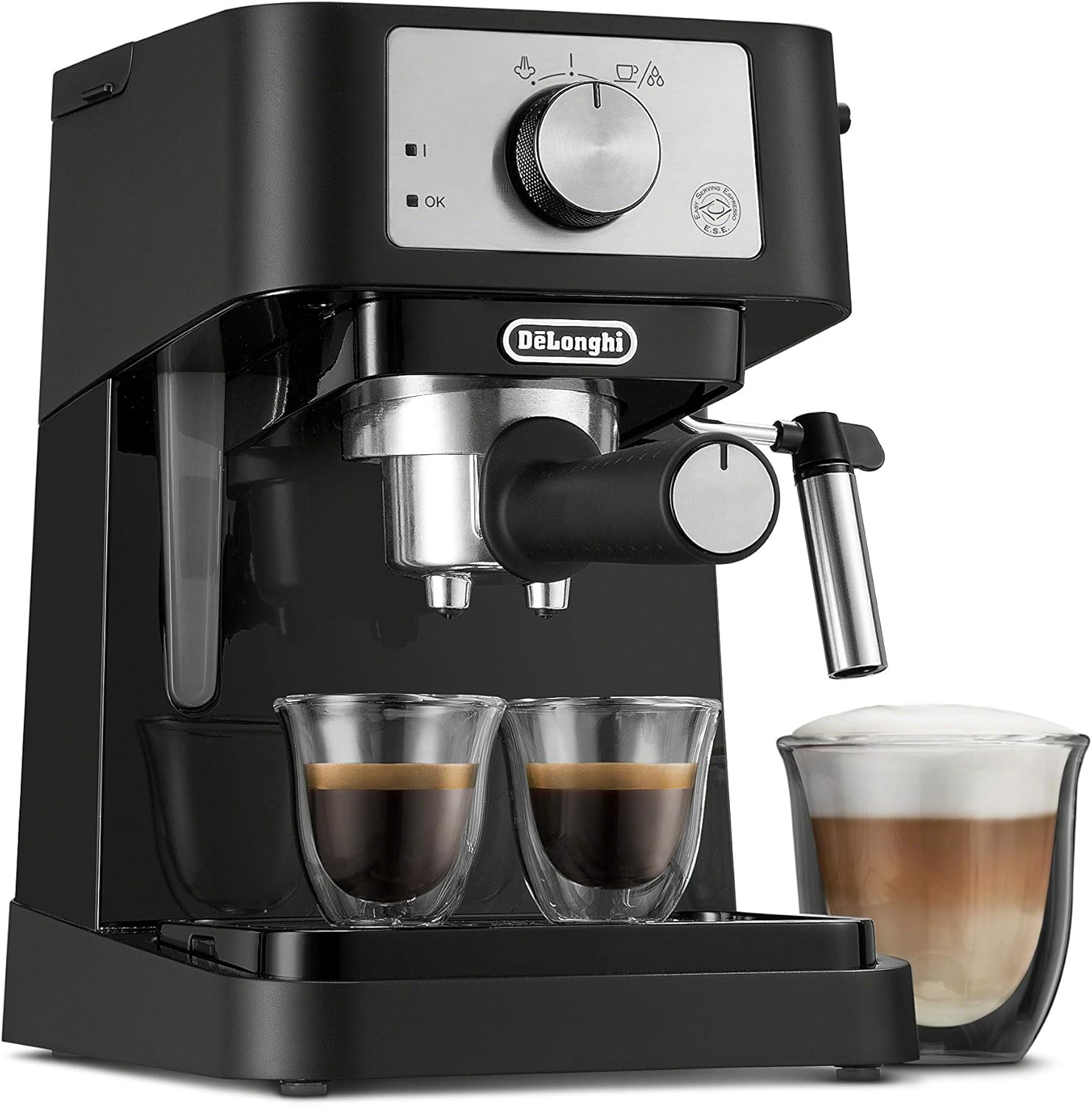
I started here. Bought the De’Longhi Stilosa off Amazon for like $118 on a random Tuesday because I was tired of spending $6 on lattes.
Here’s the thing about cheap espresso machines that nobody tells you — they’re pressurized. That means the machine does most of the work creating crema, not your grind or tamp technique. Some coffee snobs will tell you that’s “fake crema” and honestly… they’re kinda right. But does it matter when you’re making a latte at 6:30am before work? Not really.
What I liked:
- Dead simple to use. Literally turn a dial
- The steam wand actually works decent for milk. Not great, but decent
- Small footprint — fit perfectly next to my microwave
- Comes with a tamper (cheap one, but still)
What annoyed me:
- The drip tray is tiny. I was emptying it every other day
- No PID temperature control so shots can be inconsistant
- The portafilter feels cheap and plasticky
- Steam pressure takes forever to build up
We used the Stilosa for about 8 months before upgrading. And you know what — it made perfectly fine lattes. If your budget is firm at around $100-120, this is the one I’d grab. The Mr. Coffee and Chefman machines at this price point are noticably worse in our experience.
The Sweet Spot: $400-500
This is where things get real. You go from “pressurized basket toy” to actual espresso machine.
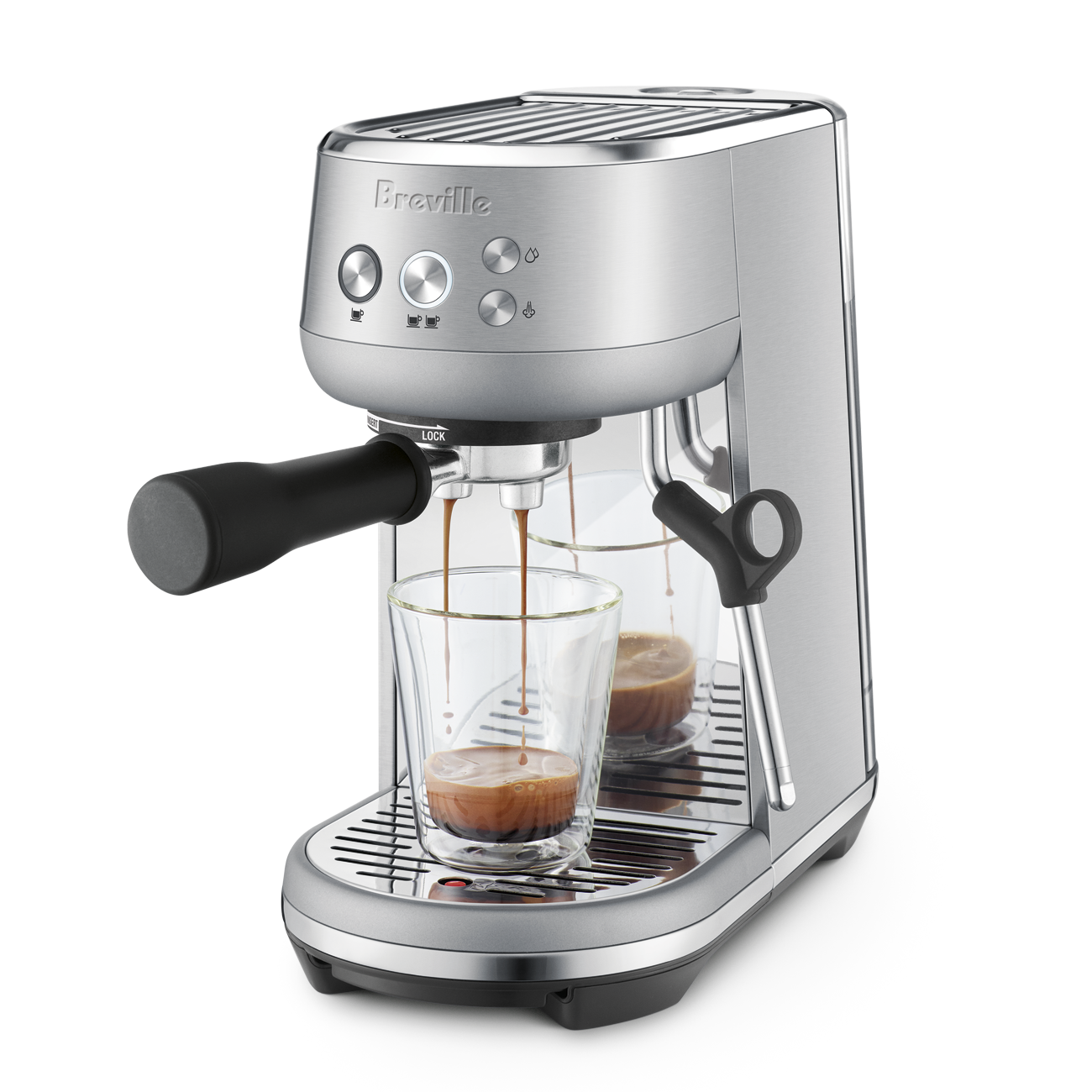
Breville Bambino Plus ($500) — My Pick
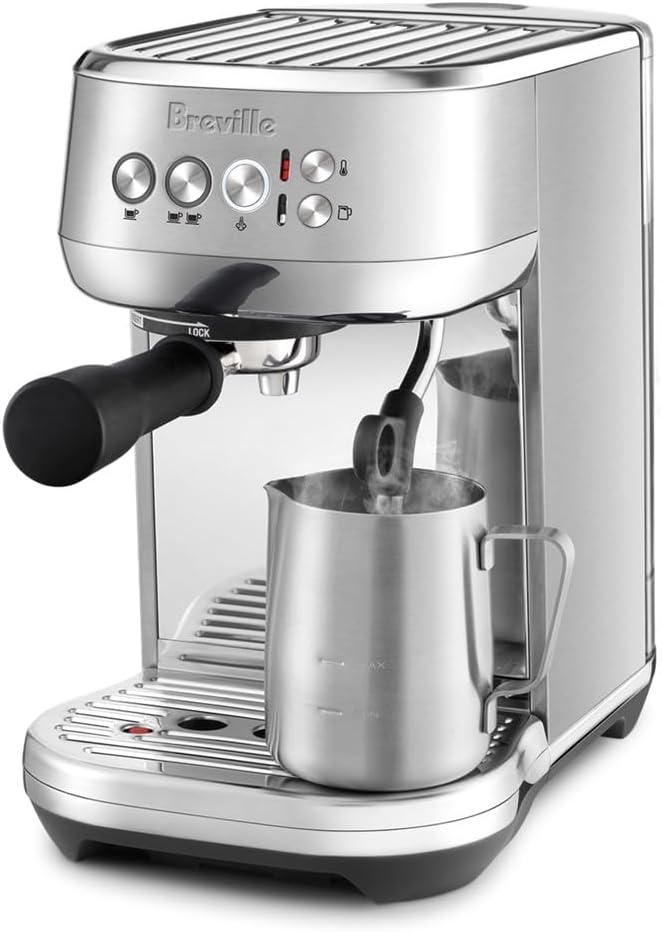
The Breville Bambino Plus is what I upgraded to after the Stilosa, and honestly it felt like going from a Honda Civic to a BMW. That sounds dramatic but I’m serious.
Three second heat-up time. PID temperature control. An auto steam wand that froths milk better than I can manually. And it comes with both pressurized AND non-pressurized baskets, so you can start easy and level up when you’re ready.
I’ve been pulling shots on this thing for over a year now and here are my honest thoughts:
The good stuff:
- Heat up in 3 seconds. THREE. The Stilosa took like 45 seconds
- Auto milk frothing is genuinely great. Microfoam comes out silky
- Non-pressurized basket means real espresso once you get a proper grinder
- Compact — barely bigger than the Stilosa honestly
- Purge function cleans the group head automatically
The not so good:
- $500 is real money. And you still need a grinder ($150-200 more)
- The water tank is on the small side. I refill it daily
- The drip tray sensor is annoying — beeps at you constantly
- Stock tamper is garbage, buy a proper 54mm one
The auto steam wand deserves its own mention because it changed how I make coffee. You put the milk pitcher under, press a button, and walk away. Comes out with proper microfoam every single time. I went from making sad flat lattes to actual latte art (well, attempting it) within a week.
One tip: use the non-pressurized basket with freshly ground beans. The pressurized basket is fine for pre-ground, but the difference with fresh grounds in the regular basket is night and day. We use a 1Zpresso JX-Pro hand grinder and it takes maybe 30 seconds to grind a dose.
Gaggia Classic Pro ($449) — The Tinkerer’s Choice
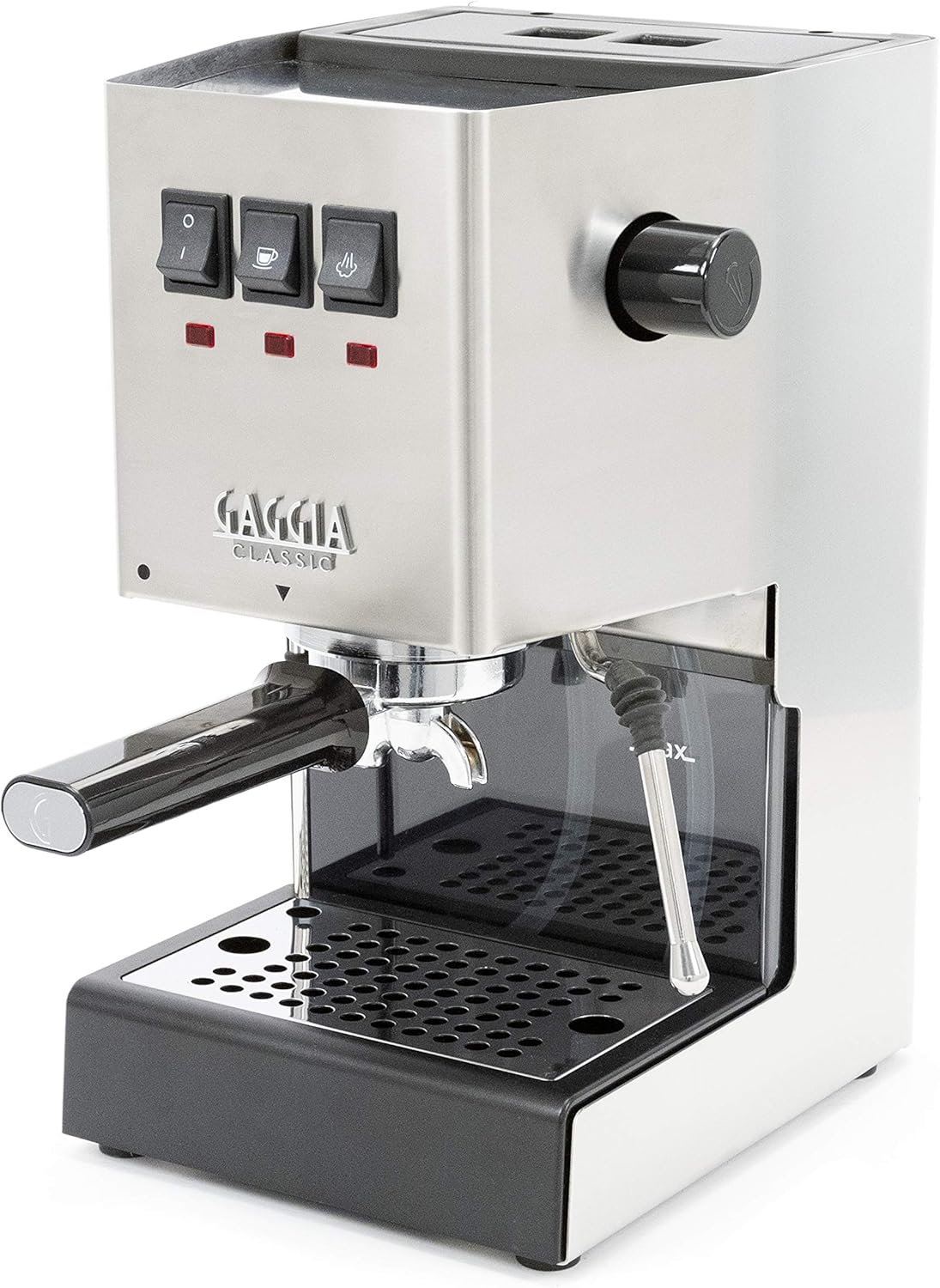
My buddy Jake has had a Gaggia Classic Pro for like 4 years and the thing looks like it’ll outlive us both. This is the machine that r/espresso basically worships, and after pulling some shots on his, I get why.
The Gaggia is more “manual” than the Bambino. No auto-frothing, no PID out of the box (though you can add one for ~$50), no hand-holding. You gotta learn to steam milk yourself, dial in your grind, manage temperature surfing. But the payoff is shots that taste noticeably better than what the Bambino produces — once you know what you’re doing.
I almost bought this instead of the Bambino. What stopped me was the learning curve. I wanted good espresso NOW, not in 3 months after watching 40 YouTube tutorials from James Hoffmann.
Why people love it:
- Commercial-grade 58mm portafilter (industry standard)
- Built like absolute tank — all metal construction
- Massive modding community. PID kits, OPV springs, bottomless portafilters
- Pulls incredible shots once dialed in
- Will literally last 10+ years
Why I went with the Bambino instead:
- No auto milk frothing — you gotta learn the hard way
- Temperature surfing is a whole thing until you add a PID
- Bigger footprint than the Bambino
- Steeper learning curve overall
- Longer heat-up time (~15 min for the boiler to stabilize)
If you’re the type of person who enjoys the process of learning and tweaking, the Gaggia is probably the better long-term investment. The modding potential alone is worth it — Jake’s spent maybe $100 on upgrades and his machine pulls shots that rival $2000 setups.
But if you want great espresso with minimal fuss? Bambino Plus.
The All-In-One: $600+
Breville Barista Express Impress ($600)
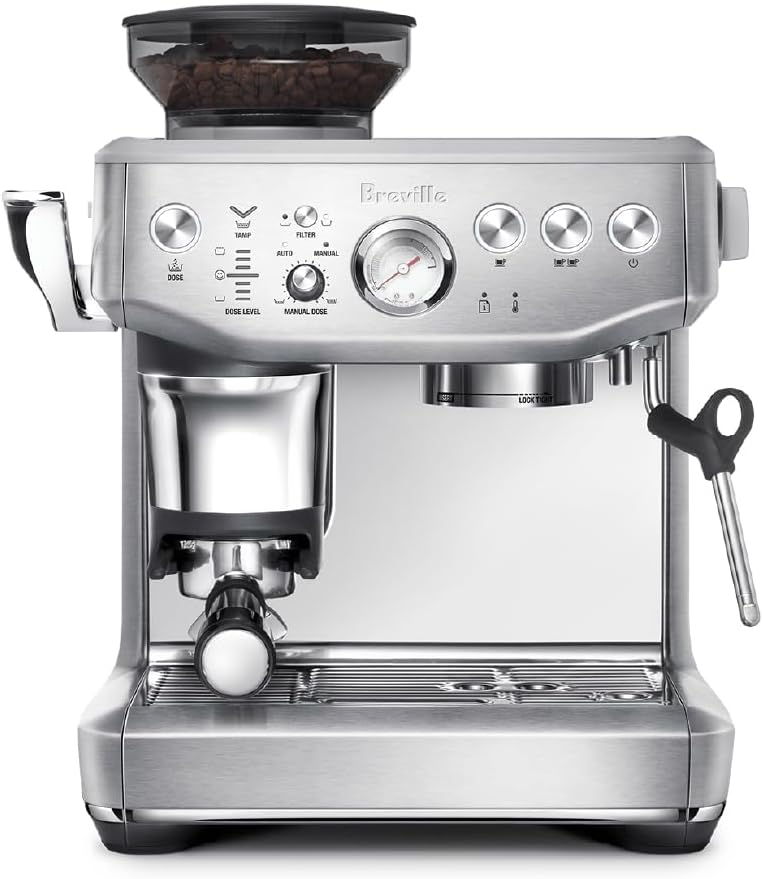
The Barista Express Impress is what I’d buy if I was starting over from scratch and wanted one purchase to cover everything. Built-in burr grinder, assisted tamping (it literally tamps for you with consistent pressure), dose control, the works.
We spent a weekend with my brother’s machine over Thanksgiving and came away pretty impressed. The assisted tamping is genuinley clever — you pull a lever, it applies exactly the right pressure every time, and gives you a little indicator showing if your dose was right. Takes so much guesswork out of the process.
The case for it:
- Built-in grinder means no separate purchase ($150-200 savings)
- Assisted tamping eliminates a major beginner mistake
- Dose indicator tells you if you used too much or too little
- Pressure gauge shows extraction in real-time
- One machine, one purchase, done
The case against:
- Built-in grinder isn’t as good as a standalone (like a Baratza Sette or Niche Zero)
- If the grinder breaks, the whole machine goes to the shop
- It’s BIG. Like, really big. Dominated my brother’s counter
- $600 is a lot for a first machine
- The grinder retention is kinda high — wastes beans between doses
If counter space isn’t an issue and you dont want to deal with buying a separate grinder, this is the move. But personally We prefer having separate components — if my grinder dies I can still make espresso with pre-ground while I get it fixed.
So What Should YOU Actually Buy?
Here’s my honest breakdown after two years in this rabbit hole:
Get the De’Longhi Stilosa if: You just want lattes at home, your budget is tight, and you’re not trying to become a coffee person. It works. It’s fine. No shame in it.
Get the Breville Bambino Plus if: You want genuinely good espresso without spending months learning. Best balance of quality and convenience I’ve found. This is what We use daily and We have zero regrets.
Get the Gaggia Classic Pro if: You enjoy the hobby aspect. You want to learn, tinker, upgrade. You watch James Hoffmann videos for fun. This machine will grow with you for years.
Get the Barista Express Impress if: You want everything in one box and have the counter space. Great for someone who wants good espresso but doesn’t want to research grinders separately.
One last thing — whatever you buy, get good beans. Seriously. The beans matter more than the machine. I get mine from a local roaster but if you’re buying online, Happy Mug and Trade Coffee are both solid. Fresh roasted within 2 weeks, medium roast, designed for espresso. That alone will improve your coffee more than any machine upgrade.
Happy brewing. ☕