
Everyone says you need a brighter desk lamp if your eyes hurt after long screen sessions. Get more light. Turn up the brightness. Buy one of those big architect lamps and point it at your keyboard.
That’s wrong. Like, completely backwards wrong.
We spent three years doing exactly that — buying increasingly expensive desk lamps, positioning them at different angles, trying warm bulbs and cool bulbs and those fancy “daylight” LEDs. My eyes still felt like sandpaper by 4pm every single day. Headaches most afternoons. That fun thing where you close your eyes and still see the ghost of your monitor burned into your eyelids.
The problem was never brightness. It was contrast.
What nobody tells you about desk lighting
Here’s what We wish someone had explained to us years ago. When you have a bright screen in a dim room, your pupils are constantly trying to adjust between the screen and everything around it. Even if you have a lamp on your desk, its creating a bright spot in one area and shadows everywhere else. Your eyes are doing gymnastics all day trying to handle three different light levels — screen, lamp pool, dark everything else.
Monitor light bars fix this by illuminating your entire desk surface evenly without throwing any light onto the screen itself. The screen-to-surroundings contrast drops dramatically and your eyes just… relax.
We know it sounds like marketing BS. I thought so too until We tried one.
The one that fixed everything: BenQ ScreenBar Halo
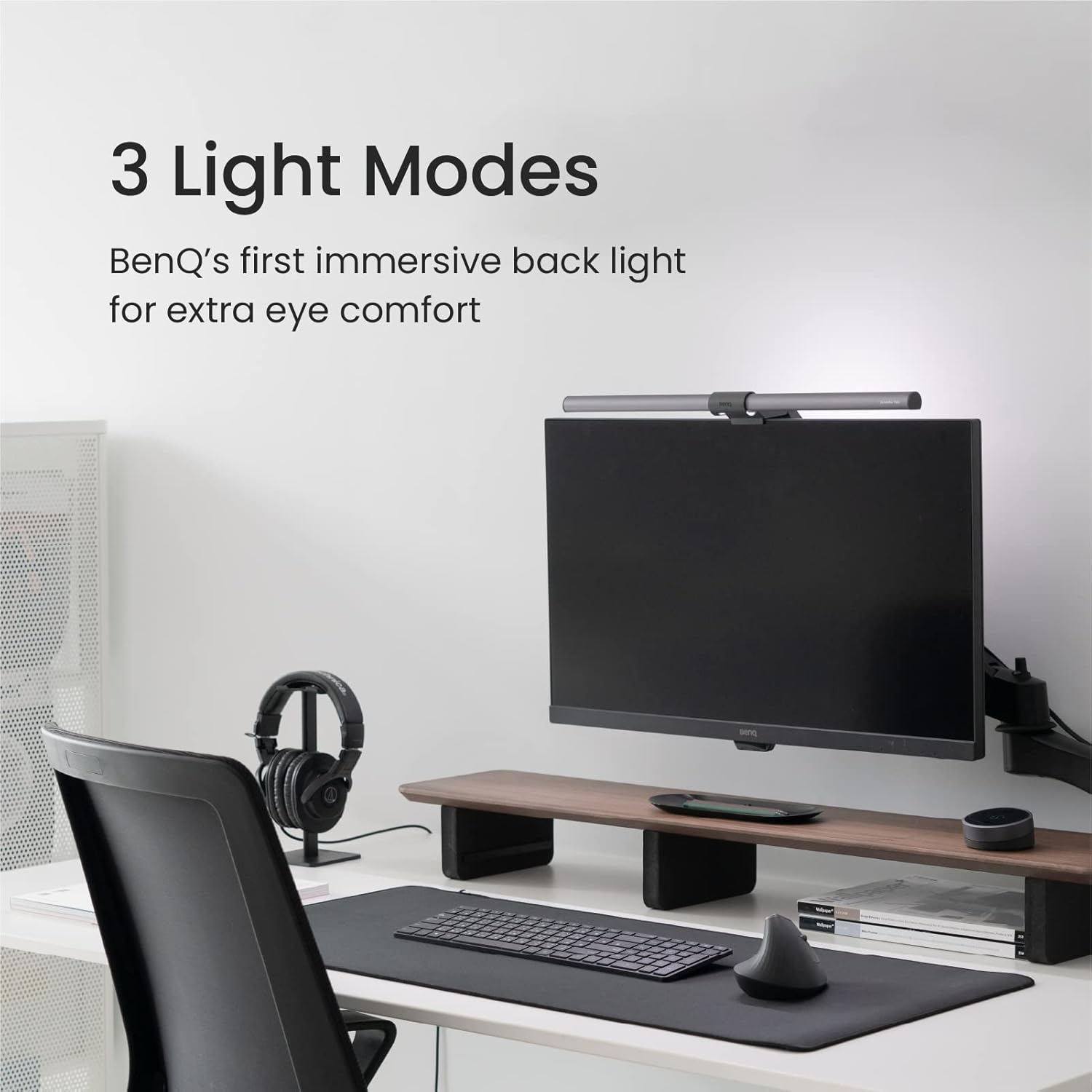
$170. Yeah, We know. Stupid expensive for what looks like a stick you clip onto your monitor.
But listen. We bought this thing in early December, mostly out of desperation. Had been averaging maybe 10 hours of screen time daily between work and everything else, and my optometrist told us my eye strain was “concerning” at my last appointment. Real motivating stuff.
Setup took literally 90 seconds. You clip it on top of your monitor — there’s this weighted clamp that just balances there, no screws or adhesive or anything. Plug the USB-C cable into the back of your monitor or a USB port. Done.
The wireless dial controller is genuinely nice. Little puck that sits on your desk, you spin it to adjust brightness, press the top to toggle between front light, back light, or both. There’s an auto mode that reads the ambient light and adjusts automatically, and honestly? I just leave it on auto 95% of the time.
First night using it We noticed something weird. It was 8pm and my eyes didn’t hurt. Not even a little. I actually checked the clock because I assumed it was earlier than it was.
By day three I was a believer. By week two I was that annoying person telling everyone about monitor light bars.
The backlight feature is the part that really separates this from cheaper options. It throws a soft glow on the wall behind your monitor, which fills in that last bit of contrast your eyes were fighting. It’s like the ambilight thing on those fancy Philips TVs but for your desk setup.
The budget option that’s surprisingly good: Quntis ScreenLinear
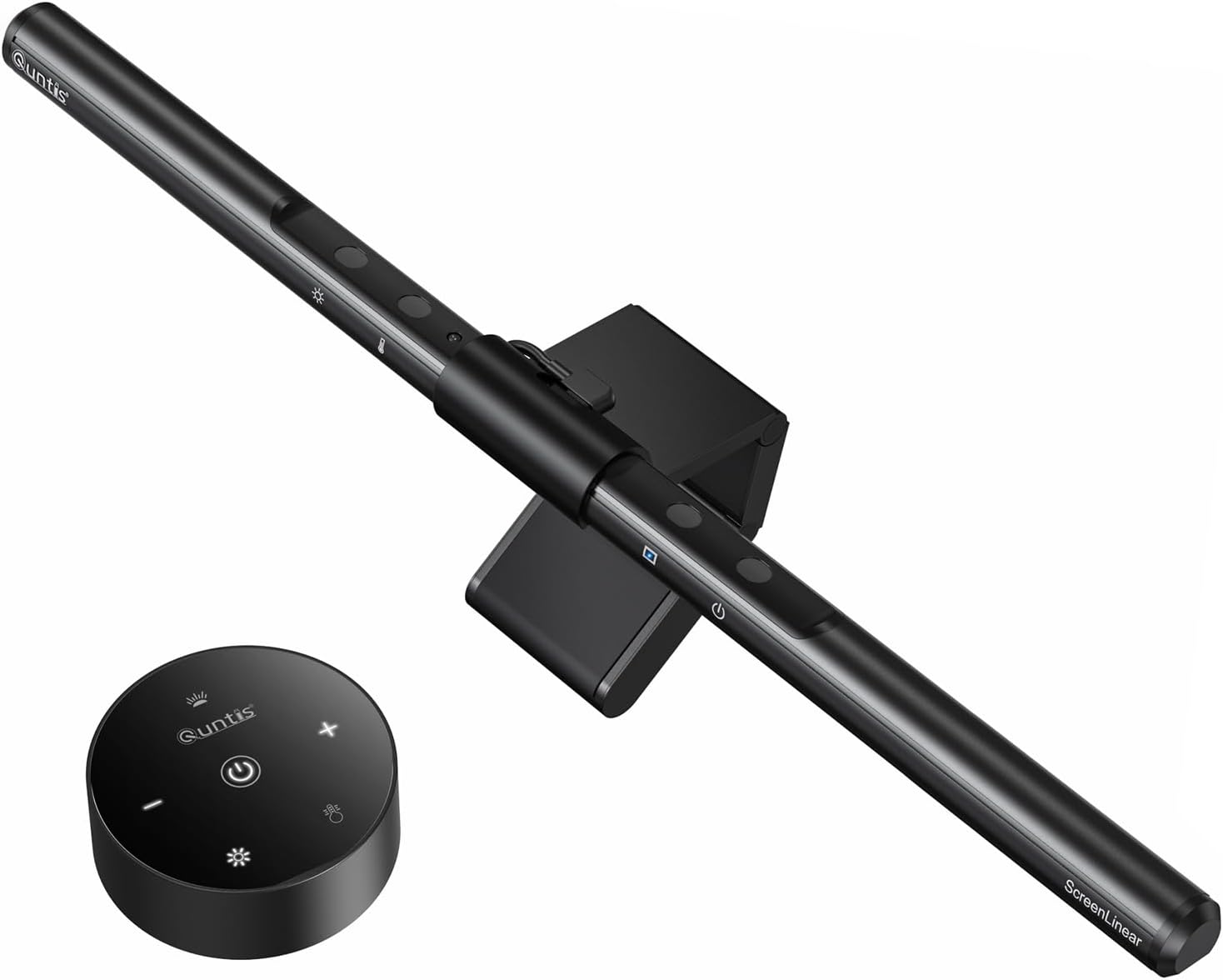
$43. And honestly it does about 80% of what the BenQ does.
We bought the Quntis first actually, before the BenQ. Found it because it’s literally the #1 best seller in USB reading lights on Amazon — something like 8,000 reviews with a 4.6 average. Those numbers don’t lie.
The build quality is… fine. Plasticky compared to the BenQ’s aluminum but it works. The clamp mechanism is similar, maybe slightly less refined. It held steady on my 27-inch Dell monitor without any issues over three weeks of use.
Light quality is solid. Touch controls on the bar itself for brightness and color temperature, plus a little wireless remote. No backlight feature though — just the front-facing desk illumination. And no auto-dimming sensor, so you’re manually adjusting throughout the day as natural light changes.
One Amazon reviewer put it perfectly: “bought this instead of the BenQ expecting to be disappointed, ended up keeping it.” I read through probably 200 reviews before buying and that sentiment came up over and over. People who expected garbage and got something legitimately useful.
Where it falls short compared to the BenQ: the asymmetric light design isn’t quite as good. You get a tiny bit of light bleed onto the bottom edge of the screen. Not enough to be annoying during normal use, but if you’re in a pitch dark room you’ll notice it. BTOD did a comparison test of the top 5 light bars on Amazon and flagged the same thing.
For $43 though? Hard to complain.
What about regular desk lamps?
Look, I’m not saying traditional desk lamps are useless. They’re fine for reading, crafts, non-screen work. But for reducing eye strain during computer use specifically, they’re the wrong tool.
I still have my Lepro LED Desk Lamp on my desk and I do use it occasionally — mostly when I’m reading paperwork or soldering stuff at my desk on weekends.
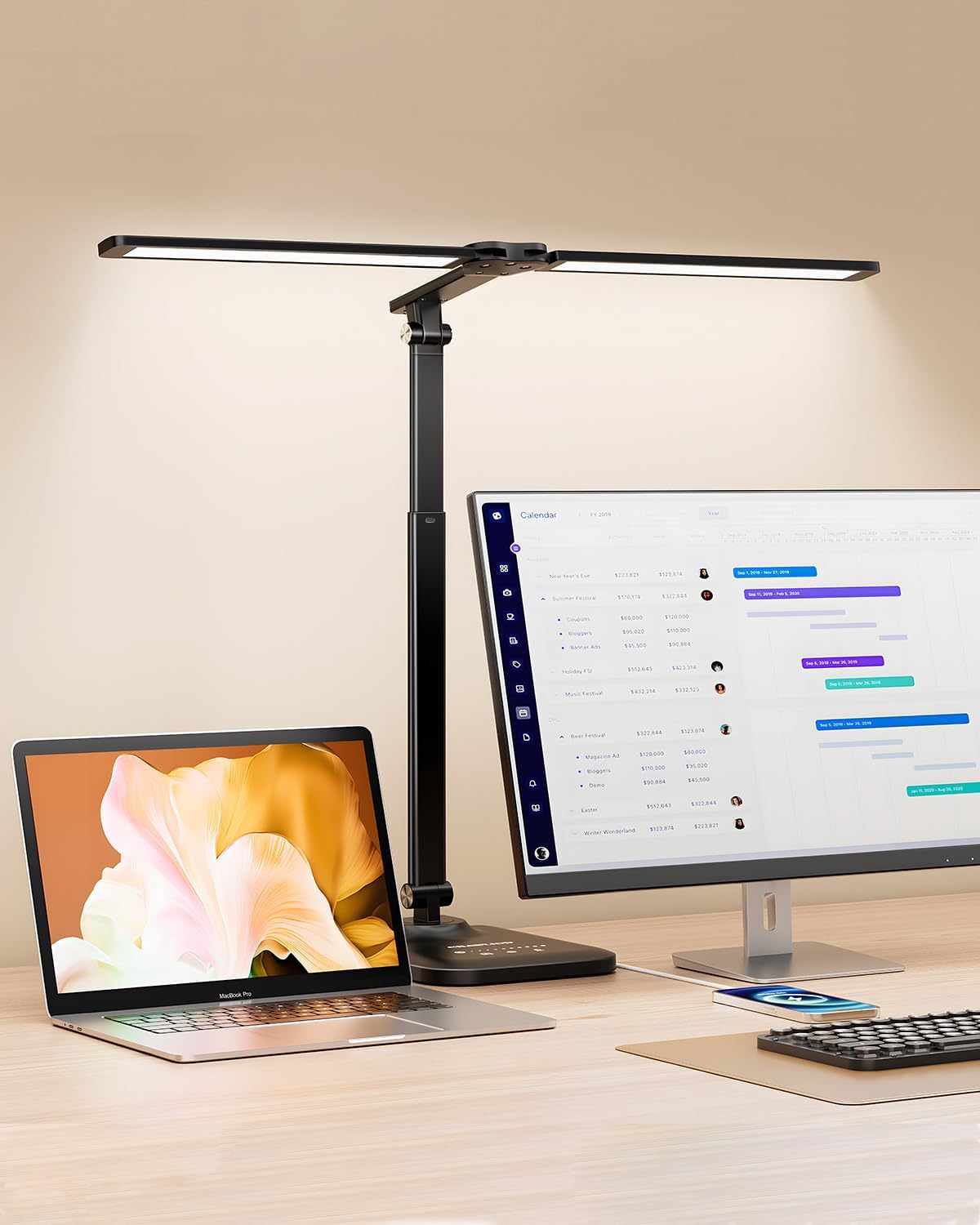
It’s a $30 lamp with 5 color modes and 5 brightness levels. Metal construction which is nice at this price. Touch controls work well. For what it is, its really good — 4.7 stars on Amazon across thousands of reviews, and thats after ReviewMeta filtered out the suspicious ones.
But it creates exactly the problem I described earlier. Bright pool of light in one spot, shadows everywhere else, and inevitably some glare bouncing off my screen no matter how I angle it. For screen work, it made my eye strain worse not better.
If you need a desk lamp for non-computer stuff, the Lepro is great. Grab one here. Just don’t expect it to help with screen-related eye strain.
The upgrade I don’t think most people need: BenQ ScreenBar Halo 2
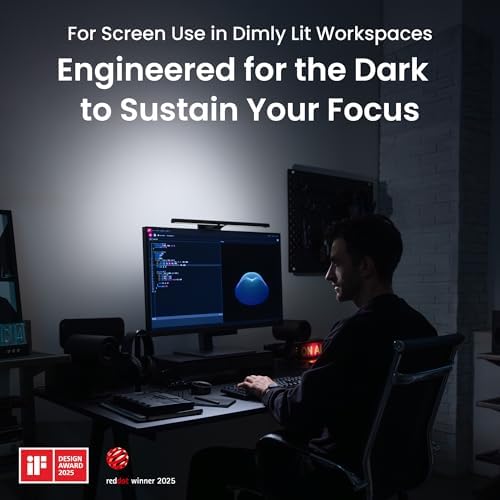
BenQ released the Halo 2 recently at around $190. New features include a motion sensor (auto on/off when you sit down or leave), curved monitor compatibility, and some refined light distribution stuff.
Is it better than the original Halo? Probably slightly.
Is it $20 better? Eh. Not really. The motion sensor is cool but I just leave my light on during work hours anyway. And unless you have a curved ultrawide monitor, the original Halo fits fine on flat screens.
If you’re buying fresh with no preference, sure get the Halo 2. But if the original is on sale — which it frequently is for around $150 — just get that one. Save the twenty bucks.
So what should you actually buy?
If you work at a computer 6+ hours a day and get eye strain: Get the BenQ ScreenBar Halo. Yes, $170 is a lot for a light. But We spent more than that on eye drops and blue light glasses over the past couple years and neither of those actually fixed anything. The Halo did. Sometimes the expensive thing is the cheap thing long-term.
If you want to try the monitor light bar concept without spending BenQ money: Quntis at $43 is the move. You’ll get most of the benefit for a quarter of the price. If you love it, you can always upgrade later.
If you mostly need a lamp for non-screen tasks: Lepro at $30. Solid, good-looking, works great for its intended purpose.
If money is truly no object: BenQ Halo 2 at $190. It’s the best one. But the original Halo at $170 (or less on sale) is like 95% as good.
The thing that actually surprises me
It’s been about two and a half months now with the ScreenBar Halo. My afternoon headaches are basically gone. Not reduced — gone. I can work until 6 or 7pm without that gritty dry-eye feeling. My optometrist appointment is next month and I’m genuinely curious if she’ll notice a difference.
And the wildest part? My wife — who has never once cared about my desk setup — walked into my office last week and said “your desk looks really nice with that light.” So apparently it’s also an aesthetic upgrade.
$170 for functional eyes and a compliment from my wife. I’ll take that deal every time.