

You know that smell. That damp, musty, vaguely moldy smell that hits you the second you walk down the basement stairs. The one you try to ignore for way too long because dealing with it seems complicated.
That was my basement from April through basically September last year.
I kept telling myself it wasn’t that bad. Opened a window sometimes. Put a fan down there. Convinced myself the smell was just “old house character” since we’re in a 1962 split-level. My wife finally had enough and told us to fix it or she was calling someone to waterproof the whole basement, which is apparently a $15k+ job.
So I dove into researching dehumidifiers. And honestly? The whole thing is way more confusing than it needs to be.
The specs make zero sense. Manufacturers throw around numbers like “50 pints per day” and “4,500 square feet coverage” but nobody tells you what those actually mean for a typical basement. Like, is my 900 square foot basement “large” or “medium”? Does the 50 pint rating matter if my humidity is only 65% instead of 90%?
We spent probably two weeks reading Reddit threads and Amazon reviews before pulling the trigger on anything. Here’s what We wish someone had told us upfront.
The first thing I learned from r/BuyItForLife is that basically no dehumidifier lasts more than a few years anymore. Someone posted “I’ve gone through 7 dehumidifiers in 10 years” and that comment had like 200 upvotes. Another person said “the coils eventually ice over and they’re done after that.”
Not exactly inspiring.
But digging deeper, most of the failures people talk about are either cheap no-name brands from Amazon, or units that were running way harder than they needed to. Oversizing is apparently a real problem — a unit cycling on and off constantly wears out faster than one running steady.
The other big issue people mentioned was the bucket. Everyone hates emptying the bucket. A bunch of threads had comments like “the drain hose option is a must” and “for the love of god get one with a pump.”
That last point stuck with us. My basement doesn’t have a floor drain anywhere convenient. The only drain is in the laundry room corner, and running a hose across the floor seemed sketchy. So I specifically looked for units with a built-in pump that could push water uphill to a drain or out a window.
After filtering for pump, decent reviews, and not-crazy expensive, I landed on three options:
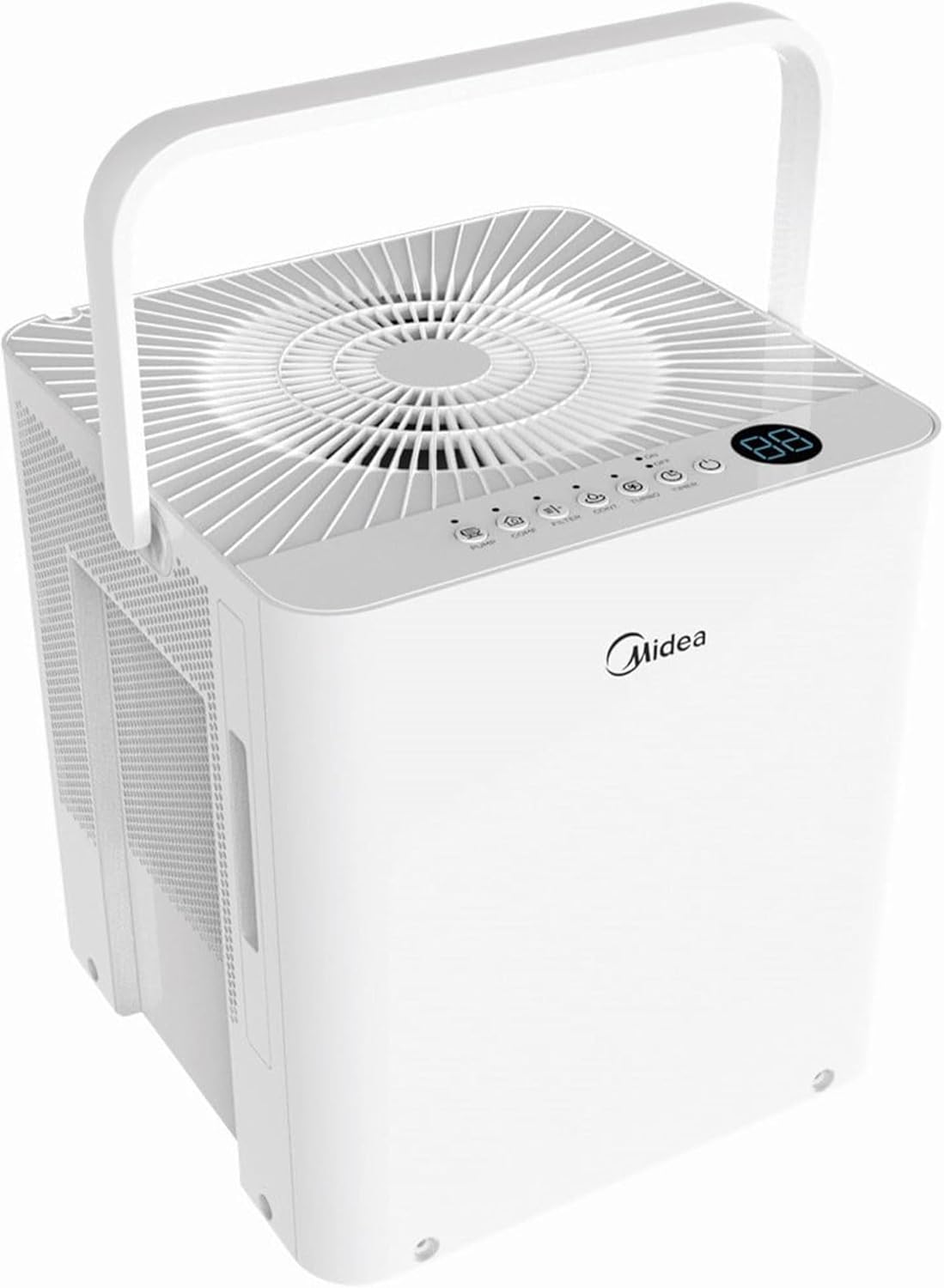
The Midea Cube 50 Pint with Pump — around $320, compact design, has that square shape everyone seems to like
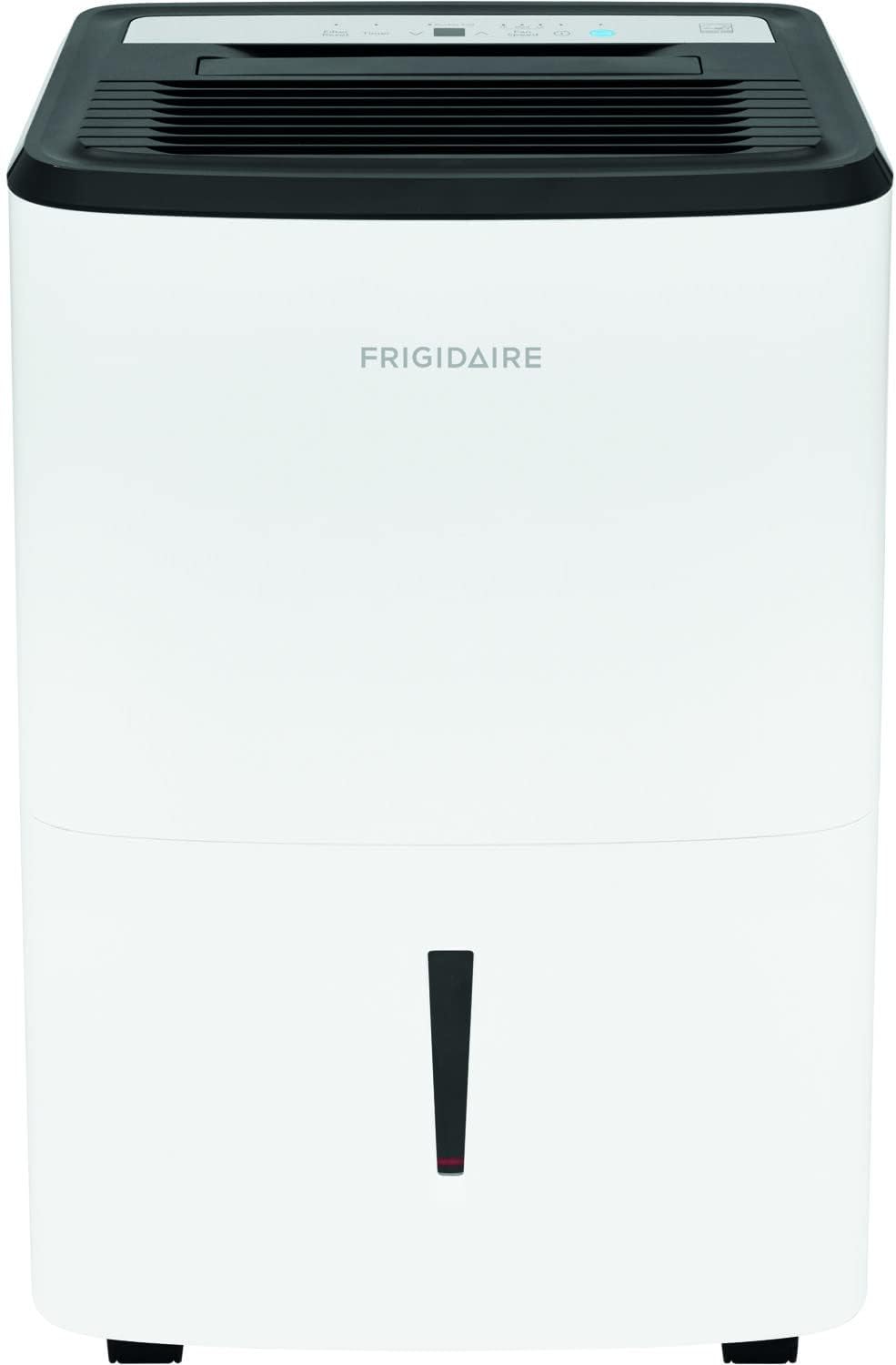
The Frigidaire 50 Pint with Pump — around $350, traditional design, been around forever
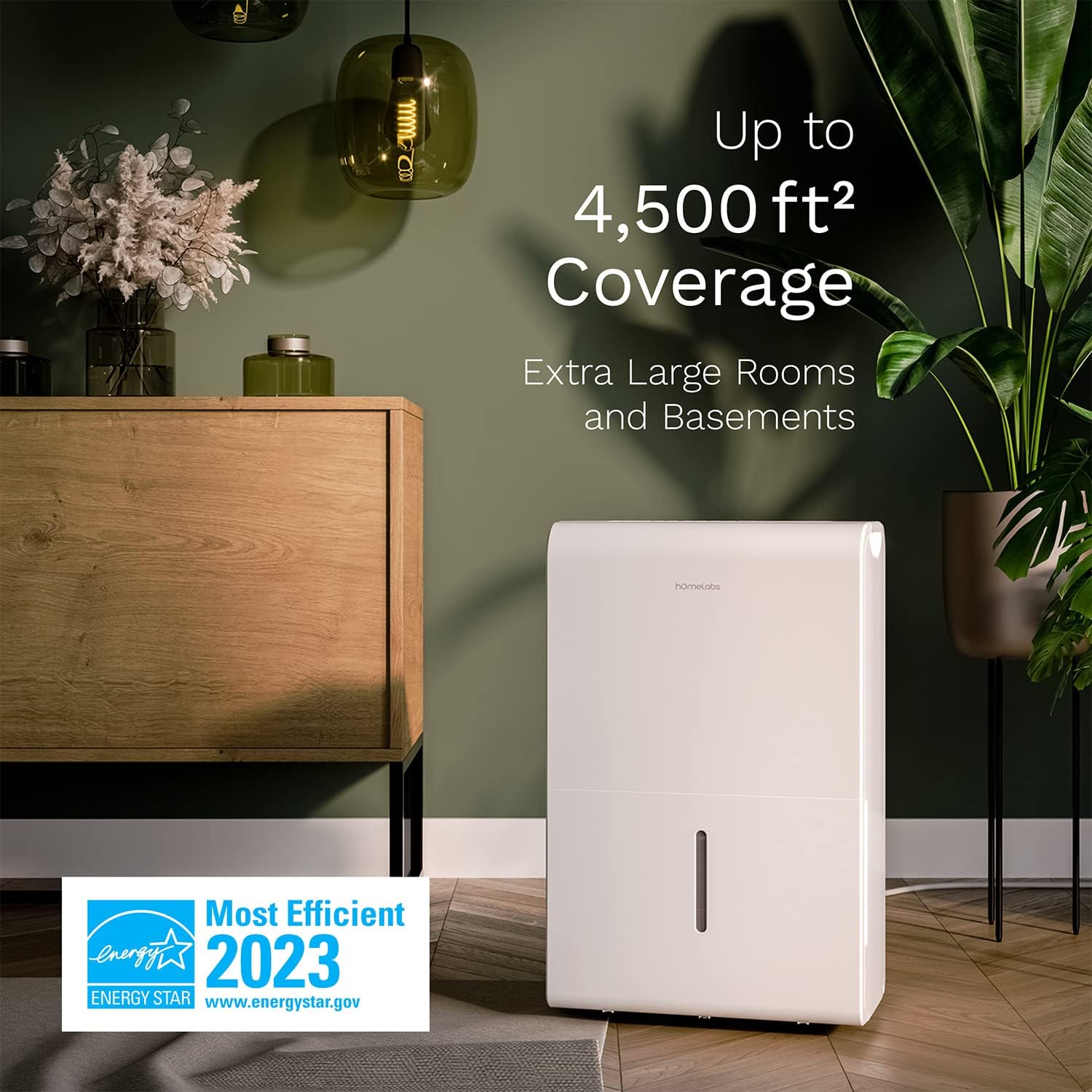
The hOmeLabs 4500 Sq Ft with Pump — around $280, slightly bigger coverage claims
I went with the Midea based purely on the form factor. The cube shape takes up way less floor space than the traditional tower designs, and I could actually fit it in the corner behind the stairs where nobody sees it.
Setting it up took maybe 15 minutes. The pump hose is long enough (16 feet) that I ran it across the ceiling joists to the laundry sink drain. Used some of those plastic cable clips from Amazon to keep it in place. Not pretty but nobody sees it.
First time I turned it on was late October. Humidity was reading 68% on my cheap hygrometer. I set the target to 50% and let it run.
Within like 6 hours it had already pulled the humidity down to 54%. By the next morning it was hovering at 50% and cycling on and off to maintain. The bucket fills up about every 10-12 hours if you’re not using the drain, which confirmed I made the right call on the pump.
The smell was gone within a week. Not exaggerating. That musty basement odor just… disappeared. My wife thought I’d cleaned something down there when really I’d just been running the dehumidifer.
Now its been about 4 months. The unit runs maybe 30% of the time now that the initial moisture is gone. Energy cost has been noticably lower than I expected — our electric bill went up maybe $15-20/month when it was running constantly, and now it’s probably $8-10 extra.
A few things I learned after the fact that would have helped earlier:
The “50 pint” rating is tested at 80°F and 60% relative humidity. Your basement is probably cooler than that, especially in winter, which means real-world performance is lower. The Midea still works fine down to about 41°F before it starts struggling with frost on the coils.
Built-in pumps aren’t technically as reliable as external ones, according to some Reddit threads. The logic is that if the pump fails in a combo unit, the whole thing might be toast. But honestly, I’d rather deal with that potentail problem than run a separate pump. The convenience factor is huge.
Noise isn’t as bad as reviews make it sound. People complain about dehumidifier noise constantly online, but it’s basically just a hum. We have mine running in a finished basement that’s sometimes used as a home office. It’s noticeable if you’re actively listening for it. Otherwise it fades into background noise pretty quick.
WiFi connectivity is nice but not essential. The Midea connects to their app and works with Alexa. I’ve used it maybe three times. Set it and forget it is the actual use case for most people.
The Frigidaire and hOmeLabs would probably work fine too. I’ve seen the Frigidaire at my parents’ house and its solid — maybe slightly louder than the Midea but also more intuitive controls if you hate apps. The hOmeLabs has a longer warranty (5 years vs 2) but also more mixed reviews on longevity.
If I had to buy again tomorrow I’d probably stick with the Midea Cube. The compact design actually matters when you’re trying to tuck it in a corner, and so far the reliability has been fine.
For sizing, the general rule We found is: basement under 1000 sq ft with moderate humidity (55-70%) = 50 pint unit is probably enough. Bigger basement or really wet conditions = look at 70 pint. Don’t oversize too much though, that cycling issue is real.
The main takeaway? Don’t overthink this like I did.
Get a 50 pint unit with a pump if you don’t have a convenient floor drain. Run the drain hose somewhere. Set the target humidity to 50% and forget about it. Your basement will stop smelling like wet dog in about a week.
That $320 We spent saved a $15,000 waterproofing conversation with my wife. Pretty good ROI if you ask me.